
Google Unveils AI-Assisted Vulnerability Management Blueprint as Cybercriminals Exploit Flaws Before Patches Exist
Google's Mandiant team has released a comprehensive framework for safely deploying AI agents in vulnerability management, balancing automation with human oversight, Zero Trust security, and risk-based prioritization to combat increasingly sophisticated cyber threats.
Xcademia Team
Xcademia Research Team
Introduction
Artificial intelligence is rapidly reshaping cybersecurity. Security teams are increasingly turning to AI-powered tools to identify vulnerabilities, prioritize risks, generate remediation guidance, and accelerate incident response. However, as organizations rush to integrate large language models (LLMs) and autonomous agents into security operations, a fundamental challenge emerges: how can enterprises safely leverage AI without introducing new attack vectors or compromising critical systems?
This question has become increasingly urgent. According to Google's Mandiant M-Trends 2026 report, the average Time-to-Exploit (TTE) has dropped to negative seven days. In practical terms, attackers are now exploiting vulnerabilities before vendors even release official patches. Traditional vulnerability management processes, which often rely on manual triage and delayed remediation cycles, are struggling to keep pace.
To address this challenge, Google's Mandiant Consulting team has published a detailed blueprint for AI-assisted vulnerability management. Rather than advocating for fully autonomous security operations, the framework promotes a balanced model that combines AI-driven automation, deterministic security controls, human expertise, threat intelligence, and governance mechanisms.
The result is a practical roadmap for organizations seeking to improve vulnerability management while maintaining security, accountability, and operational resilience.
This guidance arrives at a critical moment as enterprises worldwide evaluate how AI can help close the growing gap between increasingly automated attackers and overstretched security teams.
Why AI-Assisted Vulnerability Management Matters
Modern organizations operate across increasingly complex environments that include cloud infrastructure, containerized applications, APIs, SaaS platforms, software supply chains, remote workforces, and hybrid networks. Every new technology expands the attack surface and increases the number of potential vulnerabilities that security teams must monitor and remediate.
Traditional vulnerability management programs were already struggling under the weight of growing alert volumes. Today's security teams must analyze findings from:
Vulnerability scanners
Cloud Security Posture Management (CSPM) platforms
External Attack Surface Management (EASM) tools
Continuous Threat Exposure Management (CTEM) solutions
Threat intelligence feeds
Endpoint security platforms
Software supply chain monitoring systems
The challenge is not simply discovering vulnerabilities. It is determining which vulnerabilities actually matter.
Security teams often face tens of thousands of findings while operating with limited personnel and resources. Many organizations spend significant time addressing low-risk vulnerabilities while more dangerous exposures remain unresolved.
At the same time, cybercriminals have become increasingly efficient. Threat actors now automate reconnaissance, exploit development, and attack execution at unprecedented speed. Vulnerabilities that once remained unexploited for months can now be weaponized within days or even hours.
AI offers a potential solution by helping organizations:
Analyze findings faster
Correlate threat intelligence automatically
Prioritize remediation efforts
Generate security insights
Assist developers with secure coding
Accelerate vulnerability response workflows
However, Google warns that adopting AI without appropriate safeguards can create new risks that may outweigh the benefits.
Google's Core Philosophy: AI Requires Guardrails
One of the most important messages in Google's framework is that AI should not operate independently.
Many organizations are exploring autonomous agents capable of reviewing source code, generating fixes, creating pull requests, and even interacting with production environments. While these capabilities can significantly improve efficiency, they also introduce new security concerns.
An AI agent with excessive permissions could:
Access sensitive data
Leak proprietary information
Execute destructive actions
Become compromised through prompt injection
Introduce vulnerable code
Circumvent security controls
To prevent these outcomes, Google recommends grounding AI deployments within established security frameworks such as:
NIST AI Risk Management Framework (AI RMF)
OWASP Top 10 for LLM Applications
Google's Secure AI Framework (SAIF)
Secure AI Agent Architecture Principles
The objective is not to limit innovation but to ensure AI systems operate within clearly defined boundaries.
Organizations must extend existing security controls directly into AI environments rather than treating AI as a separate technology domain.
Operational Guardrails for AI Security Agents
The foundation of Google's AI-assisted vulnerability management strategy is the implementation of operational guardrails that govern how AI agents interact with enterprise environments.
These controls ensure that AI systems accelerate security workflows without introducing unacceptable risks.
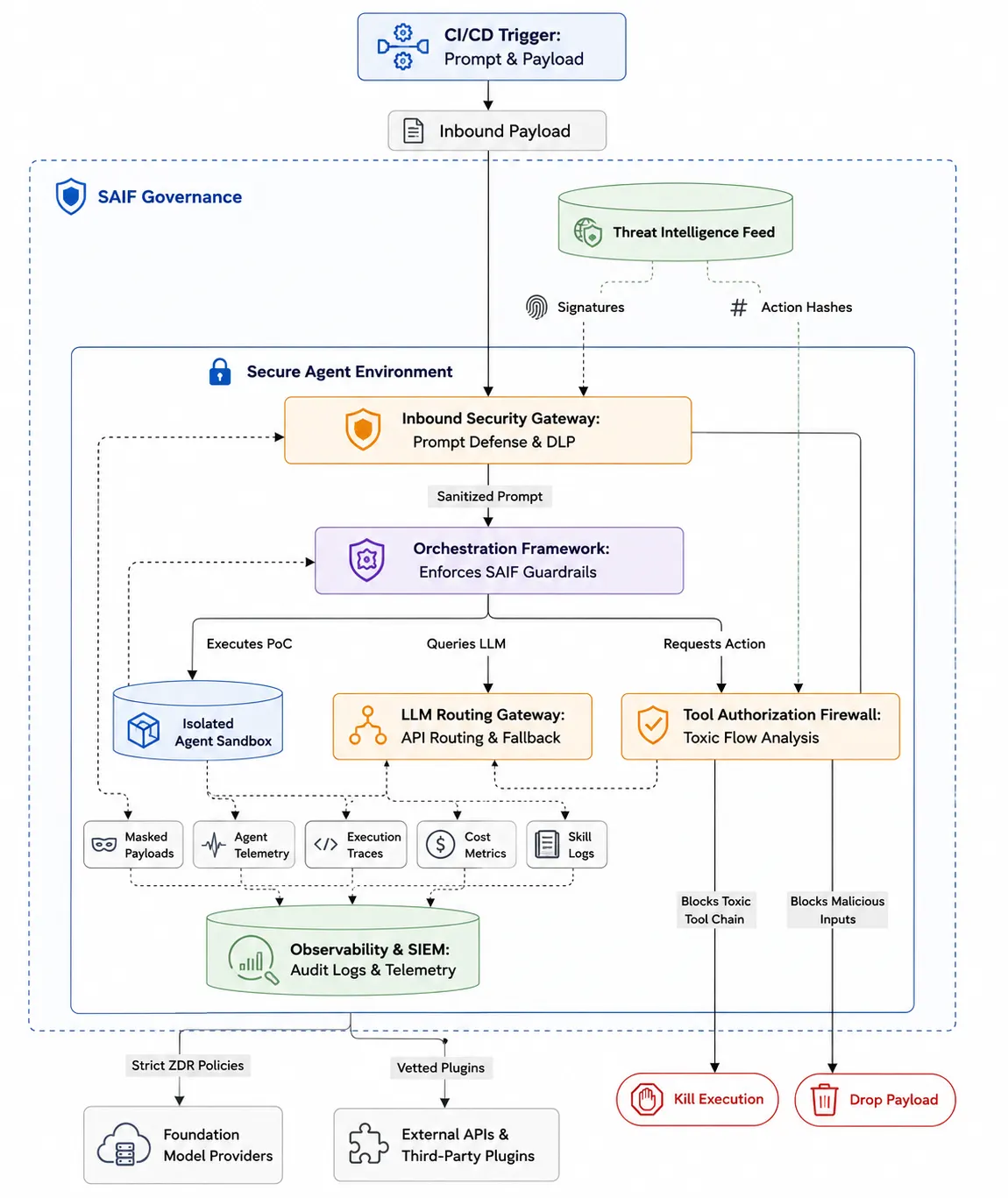
Figure 1: Secure AI Agent Environment Based on Google's Secure AI Framework (SAIF)
1. What This Architecture Demonstrates
The architecture illustrates how AI agents should operate within tightly controlled environments. Every prompt entering the system passes through security gateways, data loss prevention controls, threat intelligence validation mechanisms, authorization firewalls, and observability pipelines before reaching the AI model.
The design emphasizes several key principles:
Defense-in-depth
Zero Trust access
Prompt sanitization
Threat intelligence validation
Runtime observability
Human accountability
2. Data Security Must Occur Before the Model
One of Google's strongest recommendations is that organizations should never assume AI models can adequately protect sensitive information.
Security controls must inspect prompts before they reach the model.
These controls should identify:
Personally Identifiable Information (PII)
Protected Health Information (PHI)
Financial data
Intellectual property
Proprietary source code
Sensitive operational data
Google recommends combining deterministic policy engines with AI-powered guard models capable of detecting prompt injection attacks and malicious instructions.
Importantly, even source code repositories should be treated as untrusted input.
Threat actors can embed hidden instructions within:
Source code comments
Third-party libraries
Documentation files
Open-source dependencies
An AI agent scanning code could unknowingly execute these instructions unless appropriate sanitization mechanisms are in place.
3. Zero Data Retention Becomes Essential
Organizations increasingly rely on external AI providers for advanced language models.
Google advises establishing strict Zero Data Retention (ZDR) agreements to ensure:
Proprietary code remains confidential
Vulnerability findings are protected
Internal architecture details are not retained
Sensitive enterprise information is not used for model training
For regulated industries, these requirements become even more important.
4. Sandboxing and Workload Isolation
AI agents should execute within isolated environments using:
Containerized workloads
Restricted privileges
Segmented networks
Ephemeral infrastructure
This containment strategy reduces the impact of:
Prompt injection attacks
Hallucinated commands
Malicious outputs
Compromised AI agents
The objective is to limit the blast radius of unexpected behavior.
Human-Led Threat Modeling Remains Critical
While AI systems excel at identifying patterns in code, they struggle to understand broader architectural intent.
Organizations increasingly use Retrieval-Augmented Generation (RAG) systems to provide AI models with access to:
Internal documentation
Architecture diagrams
Design specifications
Knowledge bases
Although helpful, documentation is frequently outdated, incomplete, or inconsistent.
Human threat modelers provide context that AI cannot reliably infer.
For example, an AI system may identify an exposed API endpoint but fail to understand why that endpoint exists, what business processes depend on it, or what operational constraints influence its design.
Google therefore recommends continuing to use structured threat modeling frameworks such as:
PASTA
STRIDE
Attack simulations
Architecture reviews
AI can support these activities, but it cannot replace them.
Track One: Enterprise Vulnerability Management
Moving Beyond Traditional Vulnerability Scanning
The first major track within Google's framework focuses on enterprise vulnerability management.
Organizations should continue addressing foundational security weaknesses, including:
Weak authentication controls
Missing MFA
Exposed services
Legacy VPN infrastructure
Service account sprawl
Cloud misconfigurations
AI does not eliminate the need for basic security hygiene.
Instead, AI should help organizations improve prioritization and decision-making.
Risk-Based Vulnerability Management (RBVM)
Traditional vulnerability programs often rely heavily on CVSS scores.
Google argues that severity scores alone are insufficient.
Organizations should instead adopt Risk-Based Vulnerability Management (RBVM), which incorporates:
Vulnerability severity
Asset criticality
Threat intelligence
Exploitability metrics
Business context
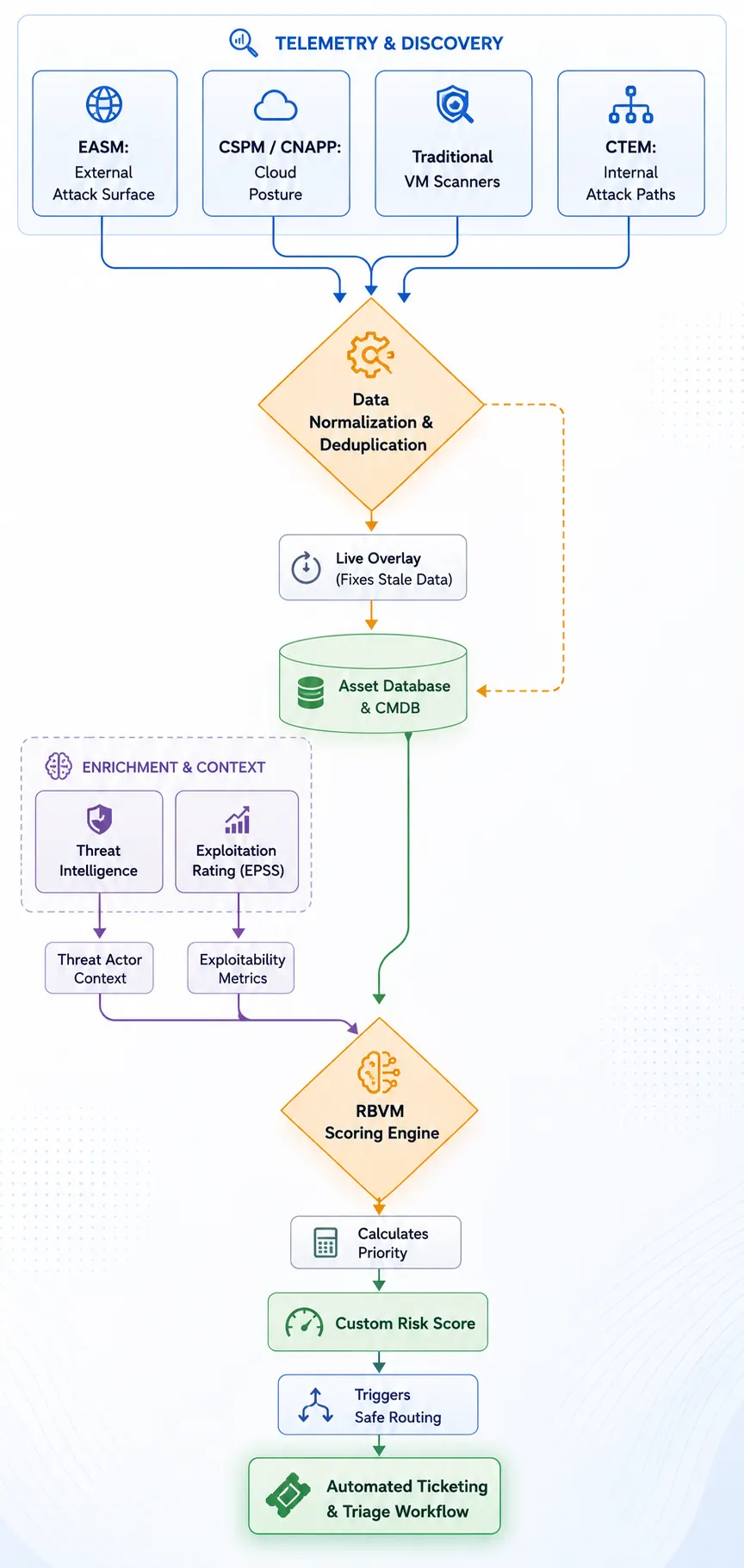
Figure 2: Risk-Based Vulnerability Management Workflow
1. Understanding the RBVM Process
The workflow begins by aggregating findings from multiple sources:
EASM
CSPM
Traditional scanners
CTEM platforms
This data is normalized and deduplicated before enrichment with:
Threat intelligence
Exploit Prediction Scoring System (EPSS) data
Asset context
Configuration management databases
The resulting risk score provides a more accurate representation of actual organizational risk than severity scores alone.
2. Why AI Matters Here
LLMs can assist security teams by:
Analyzing threat intelligence reports
Summarizing exploit trends
Correlating findings
Prioritizing remediation
Reducing alert fatigue
This allows security teams to focus on vulnerabilities most likely to impact business operations.
Containment, Zero Trust, and Observability
Google's framework assumes that some vulnerabilities will inevitably be exploited.
The focus therefore shifts toward limiting attacker movement and reducing impact.
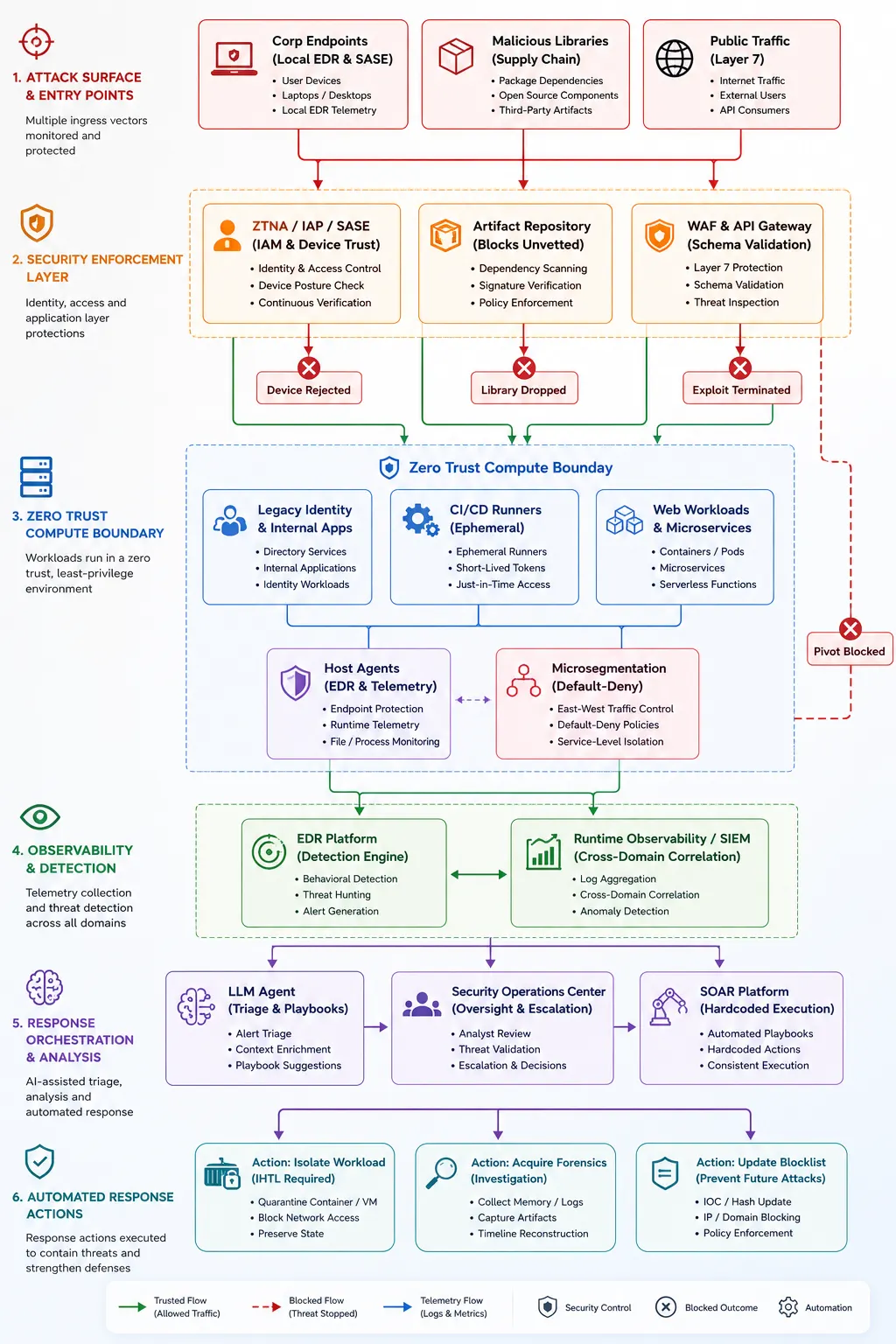
Figure 3: Zero Trust Containment and Observability Architecture
Key Security Layers
The architecture incorporates:
Zero Trust Network Access (ZTNA)
Identity-Aware Proxies (IAP)
Secure Access Service Edge (SASE)
Web Application Firewalls (WAF)
Artifact repositories
Microsegmentation
Endpoint Detection and Response (EDR)
SIEM platforms
SOAR workflows
The goal is to ensure that a successful exploit does not automatically result in widespread compromise.
Observability plays a critical role by providing visibility into:
Workload behavior
Authentication events
Application telemetry
Threat activity
Incident response workflows
Track Two: Product Security and Development
Deterministic Security Tools vs AI Reasoning
A major theme in Google's guidance is understanding the difference between traditional security tools and AI systems.
Static Application Security Testing (SAST) and Dynamic Application Security Testing (DAST) tools operate using deterministic logic.
Given the same inputs, they produce the same outputs.
AI systems operate differently.
They rely on statistical reasoning and probabilistic inference.
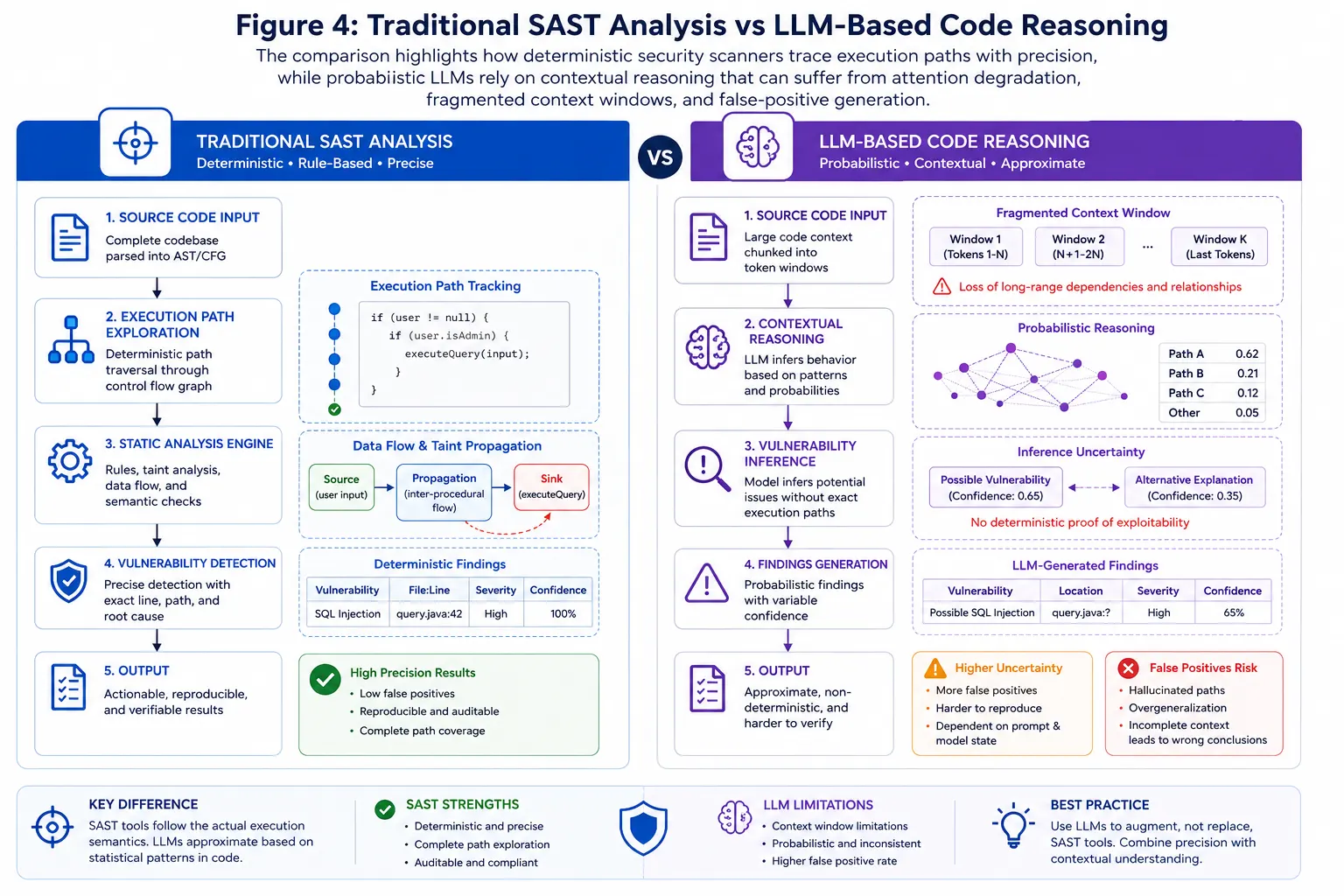
Figure 4: Comparing Traditional Code Analysis and AI Reasoning
Key Difference
Traditional SAST tools:
Follow execution paths
Track tainted data
Identify validation logic
Produce consistent results
LLMs:
Analyze contextual relationships
Simulate execution reasoning
Infer patterns
Can lose context across large codebases
As a result, AI systems may generate:
False positives
Missed vulnerabilities
Contextual misunderstandings
Google recommends using AI as a complement rather than a replacement for deterministic analysis.
Binary vs Architectural Vulnerabilities
Not all vulnerabilities are equally suitable for AI-assisted discovery.
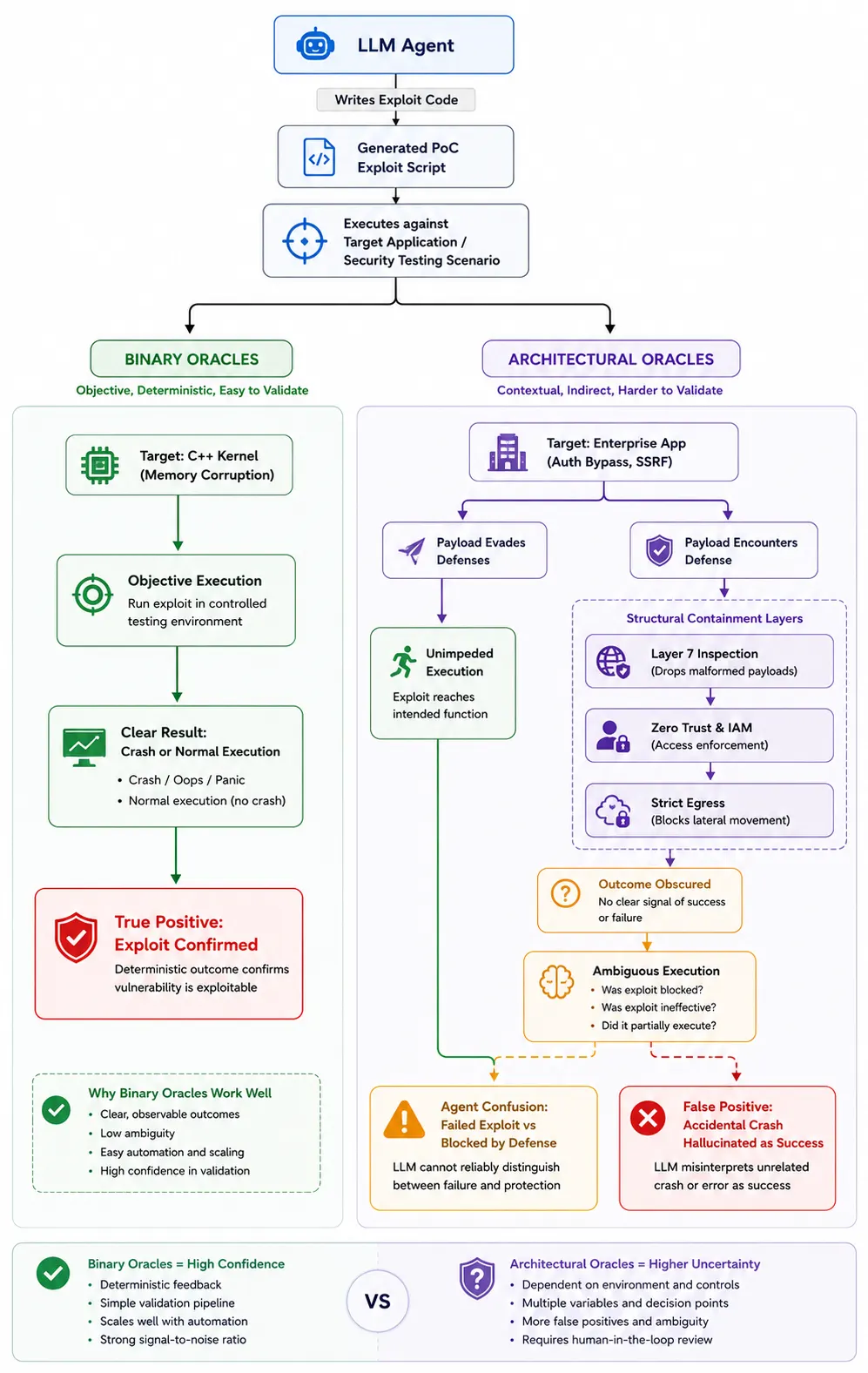
Figure 5: Understanding Where AI Excels and Where It Struggles
1. Binary Vulnerabilities
AI agents perform exceptionally well when evaluating vulnerabilities with objective outcomes.
Examples include:
Memory corruption
Buffer overflows
Use-after-free conditions
These vulnerabilities generate clear signals such as crashes or failed executions.
2. Architectural Vulnerabilities
More complex issues include:
Authorization bypasses
Business logic flaws
Trust boundary violations
Identity management weaknesses
These require contextual understanding that remains difficult for AI systems to validate autonomously.
Human review remains essential.
Targeted AI Deployment Delivers Better Results
Google strongly advises against deploying AI agents indiscriminately.
Instead, organizations should focus on high-value targets.
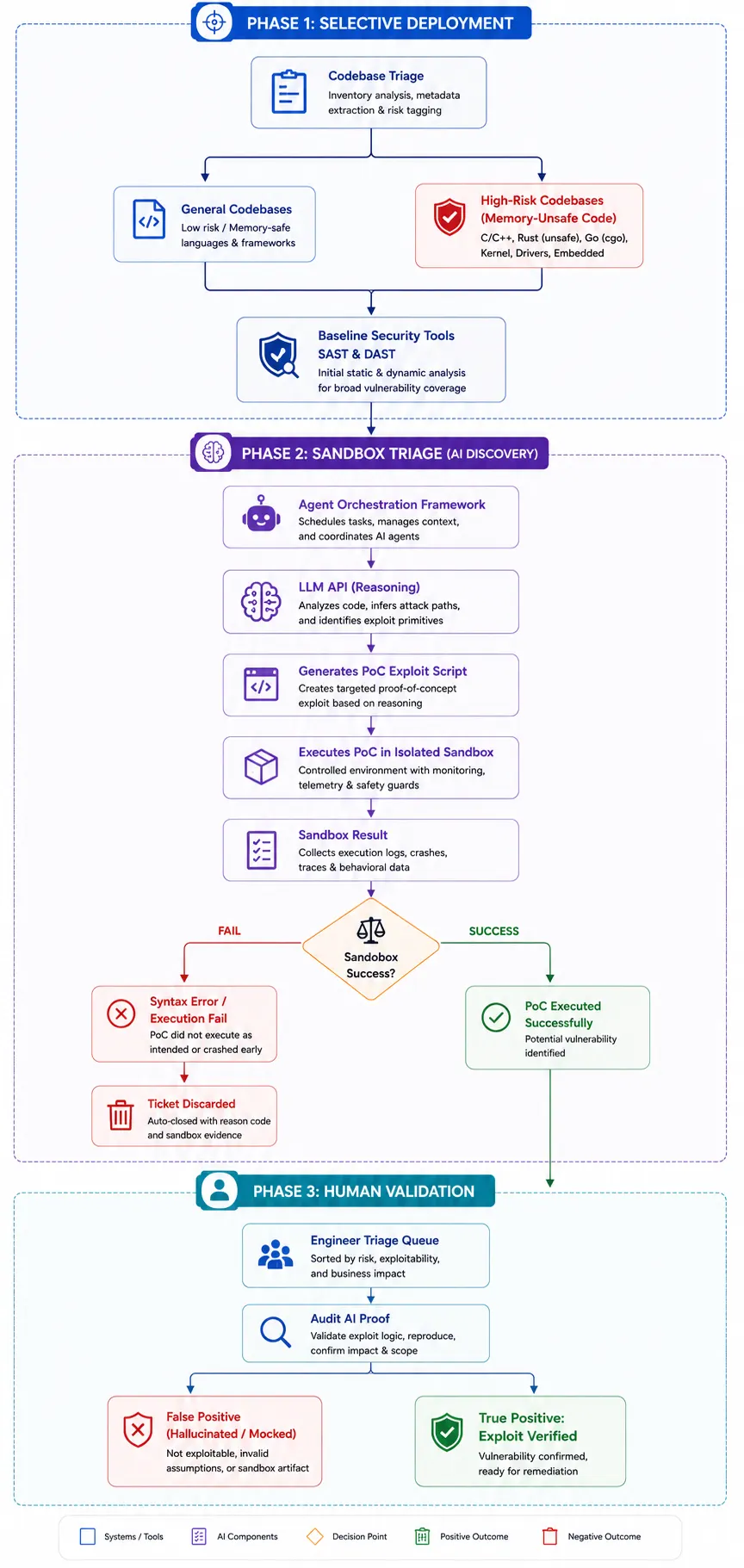
Figure 6: Targeted AI Discovery and Validation Pipeline
Recommended Use Case
Ideal candidates include:
Memory-unsafe codebases
Internet-facing systems
Shared internal libraries
Authentication services
Security-critical infrastructure
The workflow ensures that AI-generated findings undergo:
Sandbox validation
Exploit verification
Human review
Business impact assessment
This reduces false positives while preserving efficiency gains.
AI-Assisted Remediation and Secure Development
Vulnerability discovery is only one part of the security lifecycle.
Organizations must also remediate findings efficiently.
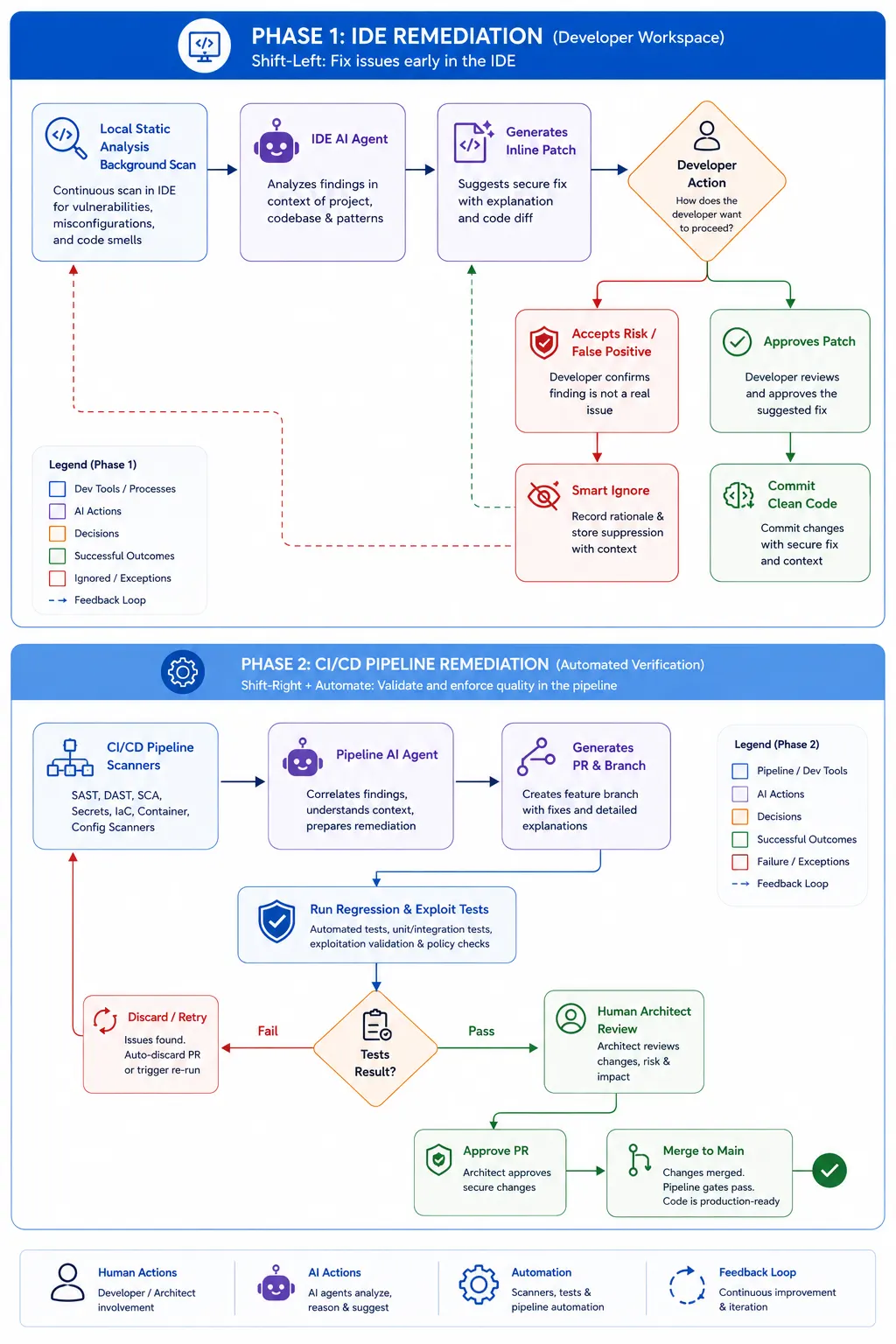
Figure 7: IDE and CI/CD-Based Remediation Workflow
Two Remediation Model
IDE-Based Assistance
AI operates directly within developer environments.
Benefits include:
Early detection
Faster feedback
Reduced remediation costs
Localized code fixes
CI/CD Pipeline Automation
AI systems analyze committed code and generate remediation proposals.
Google recommends:
Automated testing
Regression validation
Pull request generation
Human approval requirements
Direct autonomous deployment should be avoided.
Post-Deployment Governance and Compliance
Even after code is deployed, organizations must maintain governance controls.
Recommended practices include:
Automated rollback mechanisms
Model version pinning
Immutable audit trails
Human approval checkpoints
Compliance documentation
These controls support requirements from:
SOC 2
PCI DSS
FedRAMP
CMMC
Emerging AI regulations including the EU AI Act
Organizations must be able to demonstrate how AI-generated decisions were validated and approved.
Industry Impact and Future Trends
Google's framework reflects a broader industry shift toward human-guided AI security operations.
The future is unlikely to be fully autonomous.
Instead, successful organizations will combine:
AI reasoning
Deterministic security controls
Threat intelligence
Risk-based prioritization
Human oversight
Automated validation
The report also highlights the growing importance of memory-safe programming languages such as Rust.
As AI-assisted migration capabilities mature, organizations may increasingly modernize legacy C and C++ applications to eliminate entire classes of vulnerabilities.
This transition aligns with broader industry efforts to reduce software risk by design rather than relying solely on detection and remediation.
Conclusion
Google's AI-assisted vulnerability management blueprint provides one of the most comprehensive frameworks yet for integrating AI into enterprise cybersecurity operations.
The guidance recognizes both the strengths and limitations of modern AI systems. While AI can dramatically accelerate vulnerability discovery, threat analysis, risk prioritization, and remediation workflows, it remains vulnerable to prompt injection attacks, hallucinations, contextual blind spots, and architectural misunderstandings.
The most effective path forward is therefore not AI replacing security professionals, but AI augmenting them.
Organizations that combine AI capabilities with strong governance, deterministic controls, Zero Trust architectures, risk-based prioritization, runtime observability, and human oversight will be best positioned to defend against increasingly sophisticated cyber threats.
As attackers continue to weaponize vulnerabilities faster than organizations can patch them, the ability to safely operationalize AI may become one of the defining cybersecurity advantages of the next decade.
Source: Google Cloud Blog
About the Author