
Yokogawa Launches Industrial Cyber Resilience Center to Advance OT Cyber Readiness in Southeast Asia
Yokogawa has launched an Industrial Cyber Resilience Center in Singapore to help organizations across Southeast Asia, Oceania and Taiwan assess OT security readiness, train teams and test cyber incident response and recovery capabilities.
Xcademia Team
Xcademia Research Team
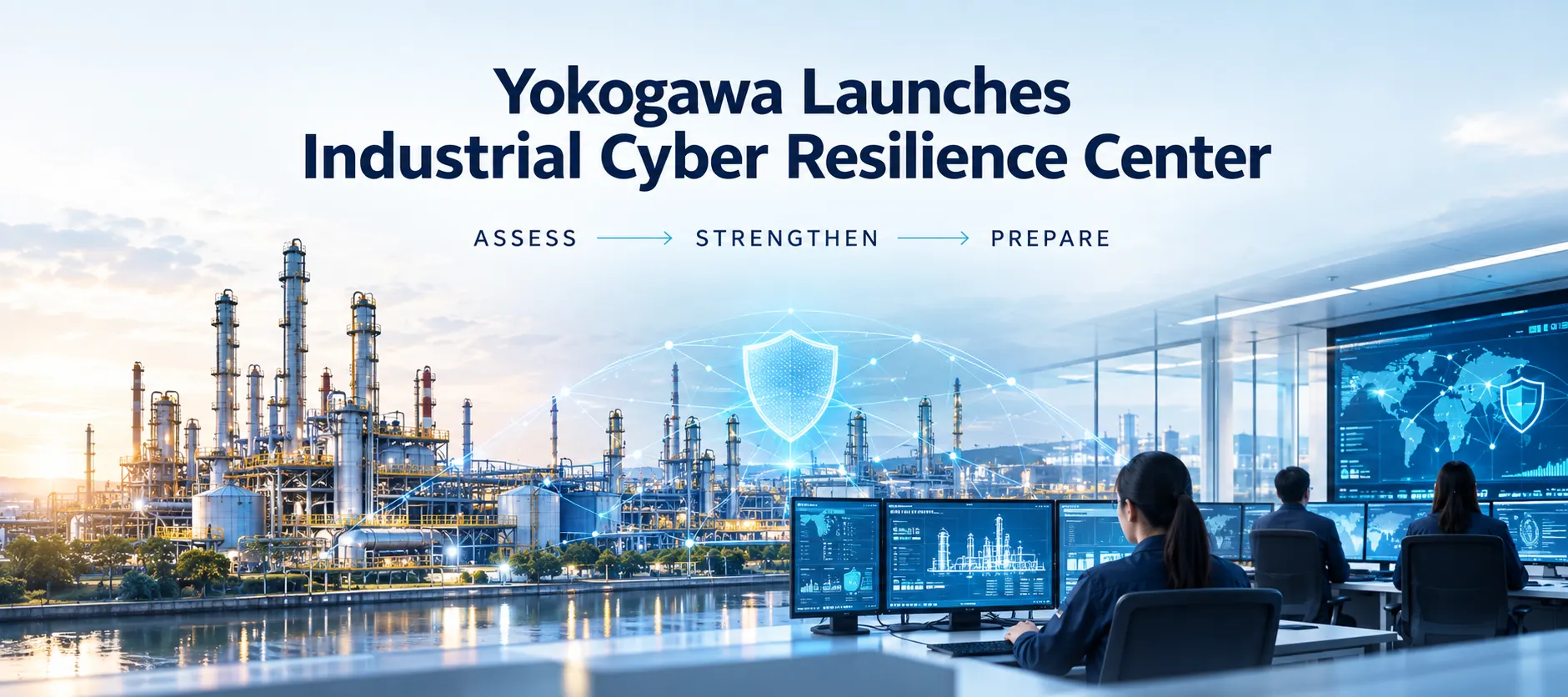
Yokogawa Engineering Asia has launched an Industrial Cyber Resilience Center (ICRC) in Singapore, creating a regional hub focused on operational technology cybersecurity readiness across Southeast Asia, Oceania and Taiwan.
The center will provide cybersecurity training, solutions and services designed to help organizations identify capability gaps, strengthen cyber resilience, and improve their ability to respond to and recover from cyber incidents safely and efficiently.
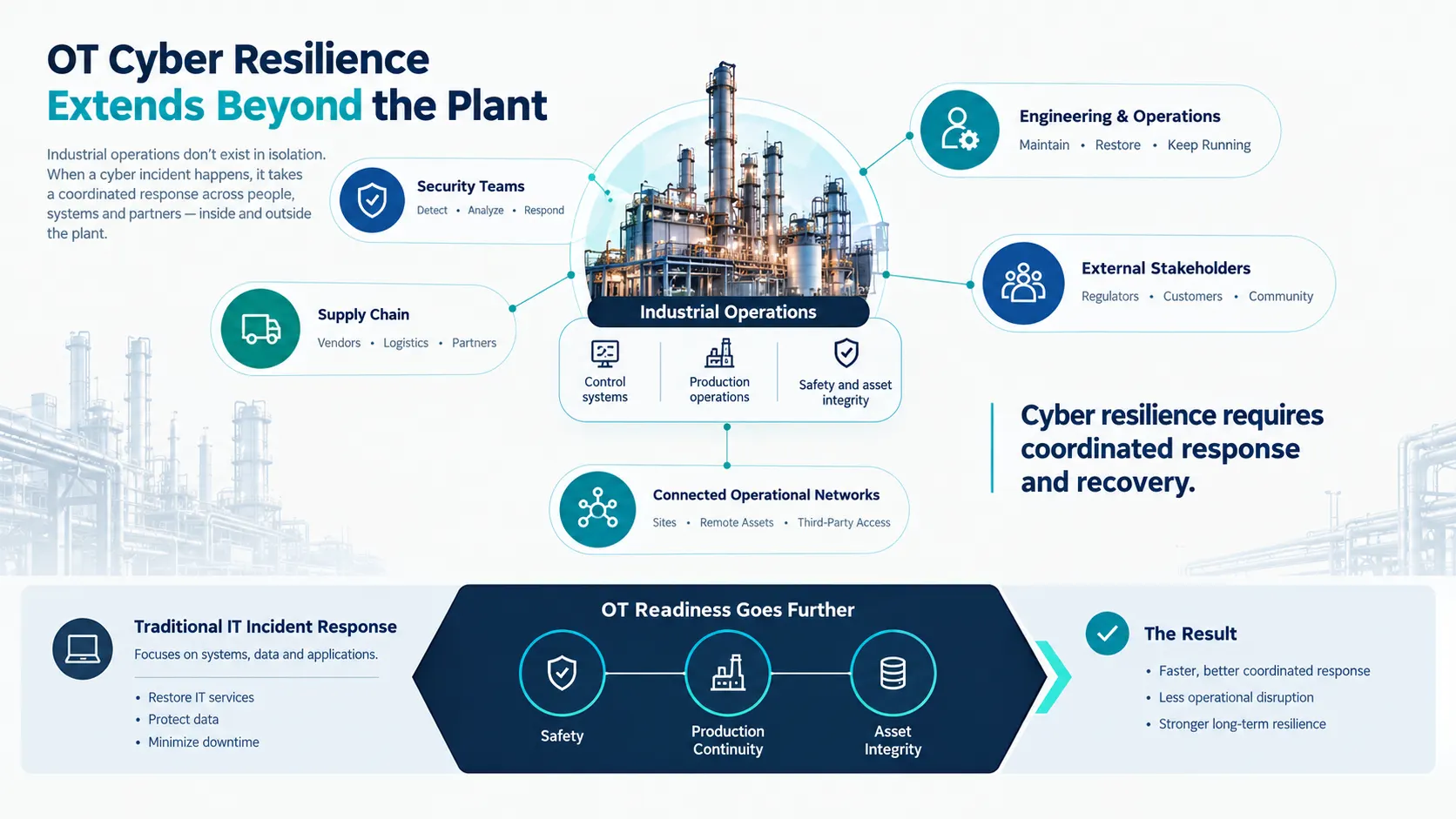
Yokogawa says the initiative is intended to address a growing challenge for industrial organizations: cybersecurity incidents in operational technology environments can affect more than information systems. They can also involve safety, production continuity and asset integrity.
The company says the increasing convergence of information technology and operational technology is creating additional cybersecurity challenges, particularly for organizations that continue to operate legacy systems or rely on IT-focused incident response procedures.
Why OT Cybersecurity Requires a Different Approach
Operational technology environments control or support physical industrial processes. That makes cybersecurity decisions in these environments different from many conventional IT security scenarios.
According to Yokogawa, organizations need to consider safety, availability and operational continuity when responding to cyber incidents affecting OT environments.
The company also points to the growing use of artificial intelligence and automation by both attackers and defenders.
Yokogawa says cyber adversaries are increasingly using automation and AI to identify vulnerabilities, improve deception techniques and conduct attacks at greater speed and scale. At the same time, industrial environments are becoming more interconnected as IT and OT systems converge.
The result is a security environment in which organizations need to prepare not only for detection, but also for decision-making and recovery.
ICRC Uses a Three-Part Cyber Resilience Framework
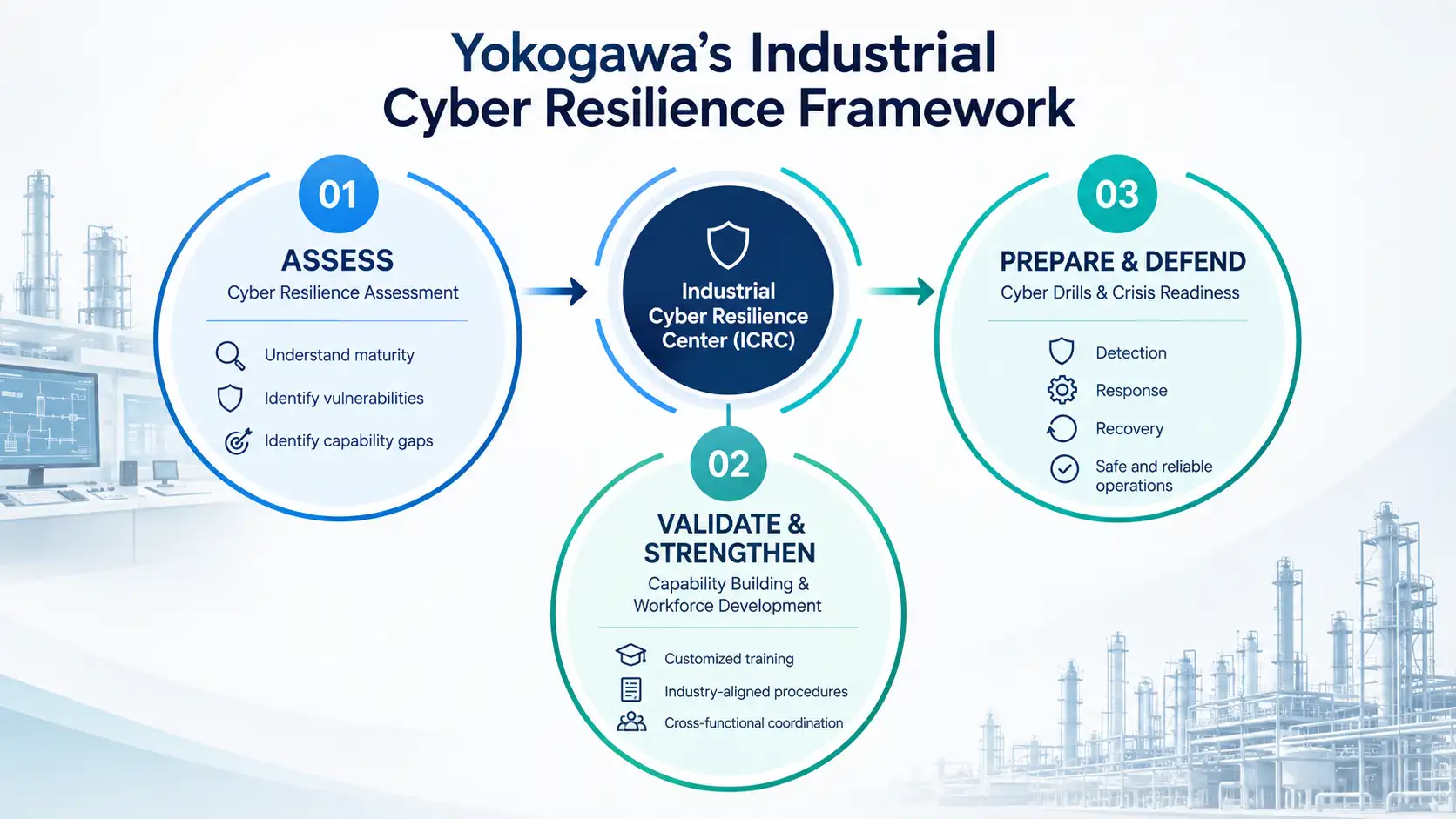
The Industrial Cyber Resilience Center is built around a structured framework covering three main areas: assessment, capability development and cyber exercises.
1. Assess: Cyber Resilience Assessment
The first stage focuses on understanding an organization's cybersecurity maturity, vulnerabilities and capability gaps.
The assessment is intended to help organizations identify where additional capabilities or preparation may be required.
Rather than focusing only on individual security technologies, the framework considers the broader readiness of the organization.
2. Validate and Strengthen: Workforce Development
The second stage focuses on people and processes.
Yokogawa says the center will provide customized training programmes to develop workforce competencies. It will also support procedures aligned with industry regulations and improve coordination between different teams during cyber incidents.
This reflects the operational nature of OT cybersecurity, where security teams may need to coordinate with engineering, operations, safety and other stakeholders when responding to an incident.
3. Prepare and Defend: Cyber Drills and Crisis Exercises
The third stage focuses on practical readiness.
Yokogawa says organizations can use its OT Security Simulator, cyber drill exercises and ResilienceScore solutions to improve their ability to detect, respond to and recover from cyber incidents while maintaining safe and reliable operations.
The emphasis is on testing preparedness rather than relying entirely on documented response plans.
Testing People, Processes and Security Controls
Yokogawa says many organizations have invested in preventive cybersecurity technologies but have fewer opportunities to regularly test how effectively they can respond to and recover from an incident.
The company positions cyber drills as a way to evaluate organizational readiness under realistic conditions.
This includes testing how people respond, how processes work during an incident and how security controls perform within a cyber-physical environment.
The objective is not simply to determine whether an organization can identify an abnormal event. It is also to examine whether stakeholders can make appropriate decisions while maintaining operational requirements.
Yokogawa says the center can help organizations assess operational readiness, validate response plans and improve stakeholder coordination through realistic cyber drill scenarios.
The Cybersecurity Challenge Extends Beyond Individual Organizations
The ICRC's scope also extends beyond a single company's internal security environment.
Yokogawa says cyber resilience increasingly involves coordination among stakeholders, supply chains and interconnected operational networks.
This is particularly relevant for industrial environments where operations can depend on multiple connected systems, suppliers and external organizations.
The company says the center is intended to help strengthen this broader coordination as part of its cyber resilience approach.
AI Is Adding Another Dimension to the Threat Landscape
Yokogawa's announcement also places the ICRC launch within a broader change in the cybersecurity threat environment.
The company says AI is accelerating both cyber attack and cyber defence capabilities.
According to Yokogawa, attackers are using automation and AI to identify vulnerabilities, improve deception techniques and conduct attacks at greater speed and scale.
For industrial organizations, that creates additional pressure to understand not only their technical controls but also their ability to recognize abnormal activity and coordinate an effective response.
The announcement does not provide specific statistics measuring AI-driven attacks or the effectiveness of the ICRC against AI-enabled threats.
Additional details were not disclosed in the announcement.
Yokogawa Highlights Workforce Readiness
The center's focus on training is another central part of the initiative.
Yokogawa says it is investing in advanced capabilities and workforce development to strengthen resilience across IT and OT environments.
The company argues that cybersecurity readiness depends on more than deploying security technologies.
Its framework places equal attention on organizational capabilities, procedures, cross-functional coordination and practical exercises.
This approach reflects the operational consequences that can accompany cybersecurity incidents in industrial environments.
A response that is technically effective but disrupts production or creates safety concerns may not meet the operational requirements of an OT environment.
Cyber Drills Aim to Put Preparedness Under Pressure
One of the more practical elements of the ICRC is its focus on cyber drills.
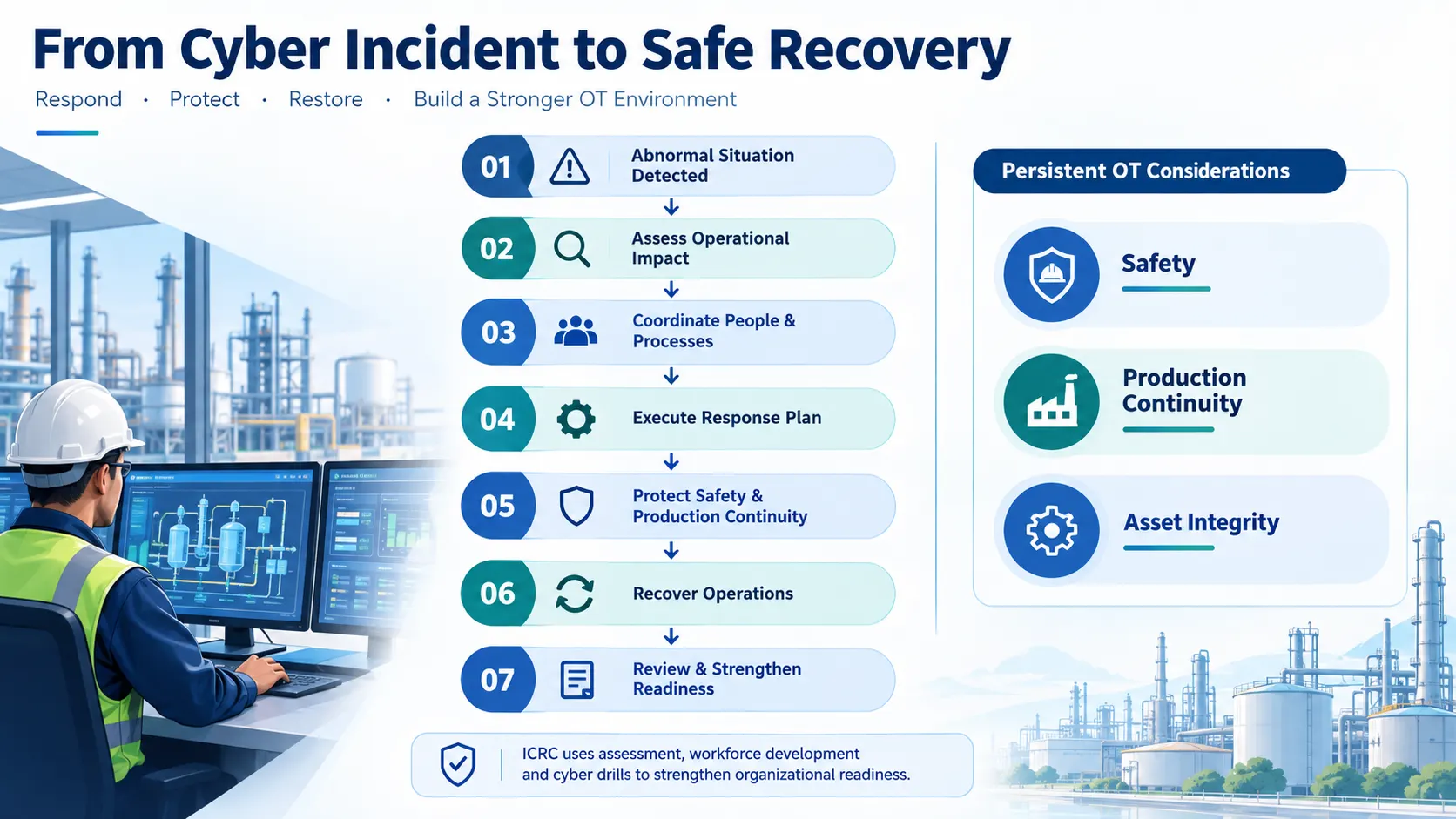
Yokogawa says the center can test people, processes and security controls under realistic cyber-physical conditions.
The goal is to help organizations understand how their preparedness works when an incident requires decisions across multiple functions.
This can include recognizing abnormal situations, coordinating a response, validating existing response plans and preparing for recovery.
The company does not disclose specific drill scenarios, customer results or performance measurements in the announcement.
The company did not provide specific information about this area.
A Regional Hub for Southeast Asia, Oceania and Taiwan
The ICRC is located at Yokogawa's Singapore office and is intended to serve organizations across Southeast Asia, Oceania and Taiwan.
The regional focus places the center within a part of the world where industrial organizations operate across sectors including energy, chemicals, pharmaceuticals, food and other manufacturing environments.
Yokogawa itself provides measurement, control and information solutions across multiple industrial sectors.
The company says it was founded in Tokyo in 1915 and has more than 18,000 employees across a global network of 136 companies spanning 63 countries.
These company figures are provided by Yokogawa and are included here as background rather than independent market data.
Analysis: OT Security Is Moving Toward Operational Resilience
The announcement highlights a broader industry shift toward treating industrial cybersecurity as an operational resilience issue rather than only a technology problem.
In traditional IT environments, an incident response plan may focus heavily on identifying affected systems, containing the threat and restoring services.
OT environments introduce additional considerations because digital systems can be connected to physical processes.
For enterprises, this could mean that cyber readiness increasingly needs to combine technical controls with workforce training, operational procedures and tested response plans.
Yokogawa's ICRC framework reflects that approach by bringing assessment, capability development and practical exercises into one model.
The emphasis on cyber drills is also significant because documented procedures do not necessarily demonstrate how teams will coordinate during a real incident.
Testing those procedures can expose capability gaps before an actual event occurs.
The announcement does not provide independent evidence that the ICRC will reduce incident impact or recovery times. Its stated purpose is to help organizations assess and strengthen their preparedness.
What the ICRC Launch Means for Industrial Cybersecurity
Yokogawa's new center brings together several elements that are increasingly important to OT security:
Cyber resilience assessments
Workforce development
Customized cybersecurity training
Industry-aligned procedures
Cross-functional coordination
Cyber drill exercises
Crisis readiness
OT Security Simulator capabilities
ResilienceScore solutions
Response and recovery preparation
The broader focus is on preparing organizations to operate through cyber incidents while considering safety and operational continuity.
For organizations managing connected IT and OT environments, the approach also recognizes that resilience can depend on coordination across internal teams, supply chains and other connected stakeholders.
Final Takeaway
Yokogawa has launched the Industrial Cyber Resilience Center in Singapore as a regional hub for strengthening OT cybersecurity readiness across Southeast Asia, Oceania and Taiwan.
The center's framework combines assessment, workforce development and cyber drills to help organizations identify capability gaps, validate response plans and prepare for cyber incidents.
The launch comes as Yokogawa points to increasing AI-enabled cyber activity and the growing convergence of IT and OT environments.
The company's central message is that industrial cyber resilience requires more than preventive security technology.
It also requires trained people, defined processes, tested controls and the ability to coordinate decisions when cybersecurity incidents affect operational environments.
For industrial organizations, that makes preparedness and recovery an increasingly important part of the cybersecurity conversation.
Source: Yokogawa Engineering Asia
About the Author