
Thales Launches Luna 8 HSM for Post-Quantum Security
Thales has launched Luna 8, a next-generation hardware security module designed to help organizations protect cryptographic keys and prepare existing security infrastructure for post-quantum cryptography.
Xcademia Team
Xcademia Research Team
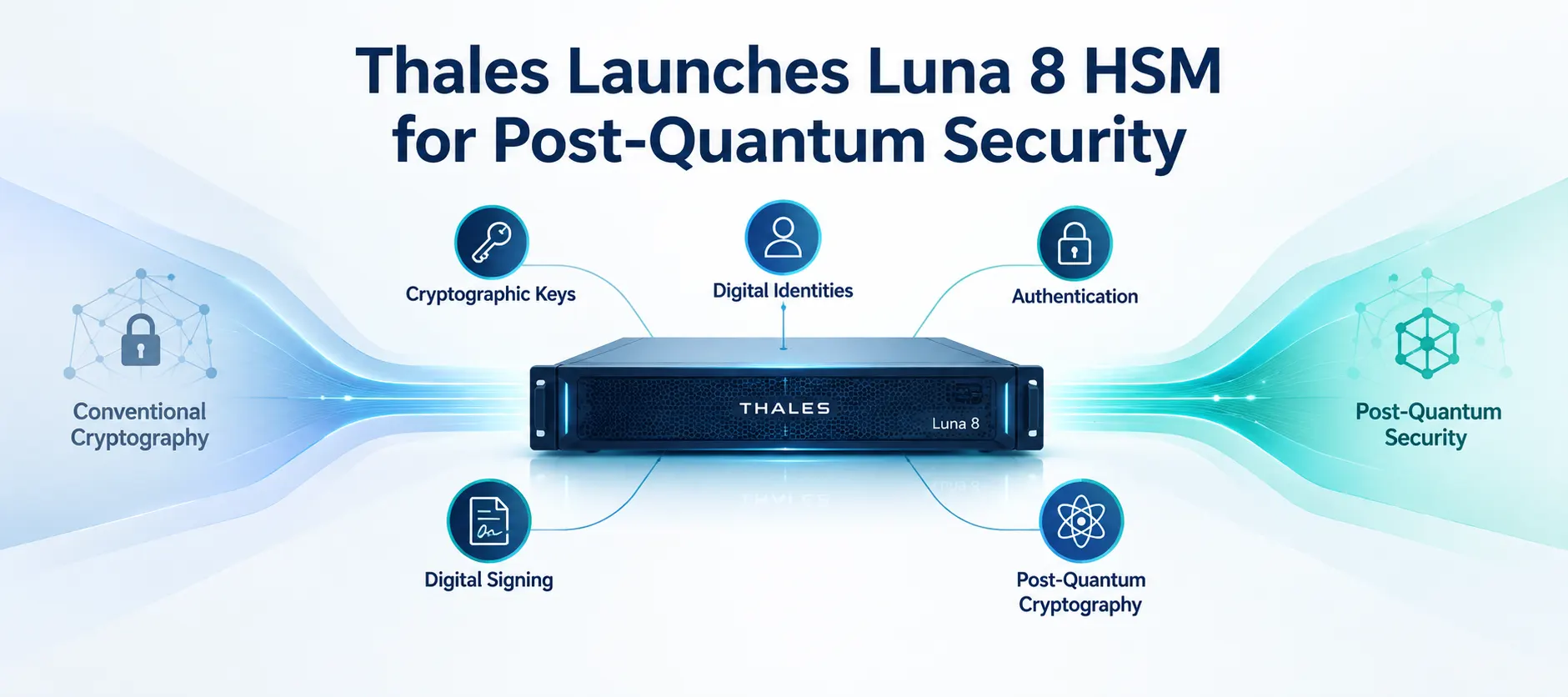
Thales has launched Luna 8, a next-generation hardware security module (HSM) designed to help organizations protect cryptographic keys while preparing for the transition to post-quantum cryptography (PQC).
The announcement comes as organizations assess how future quantum computing capabilities could affect existing encryption technologies.
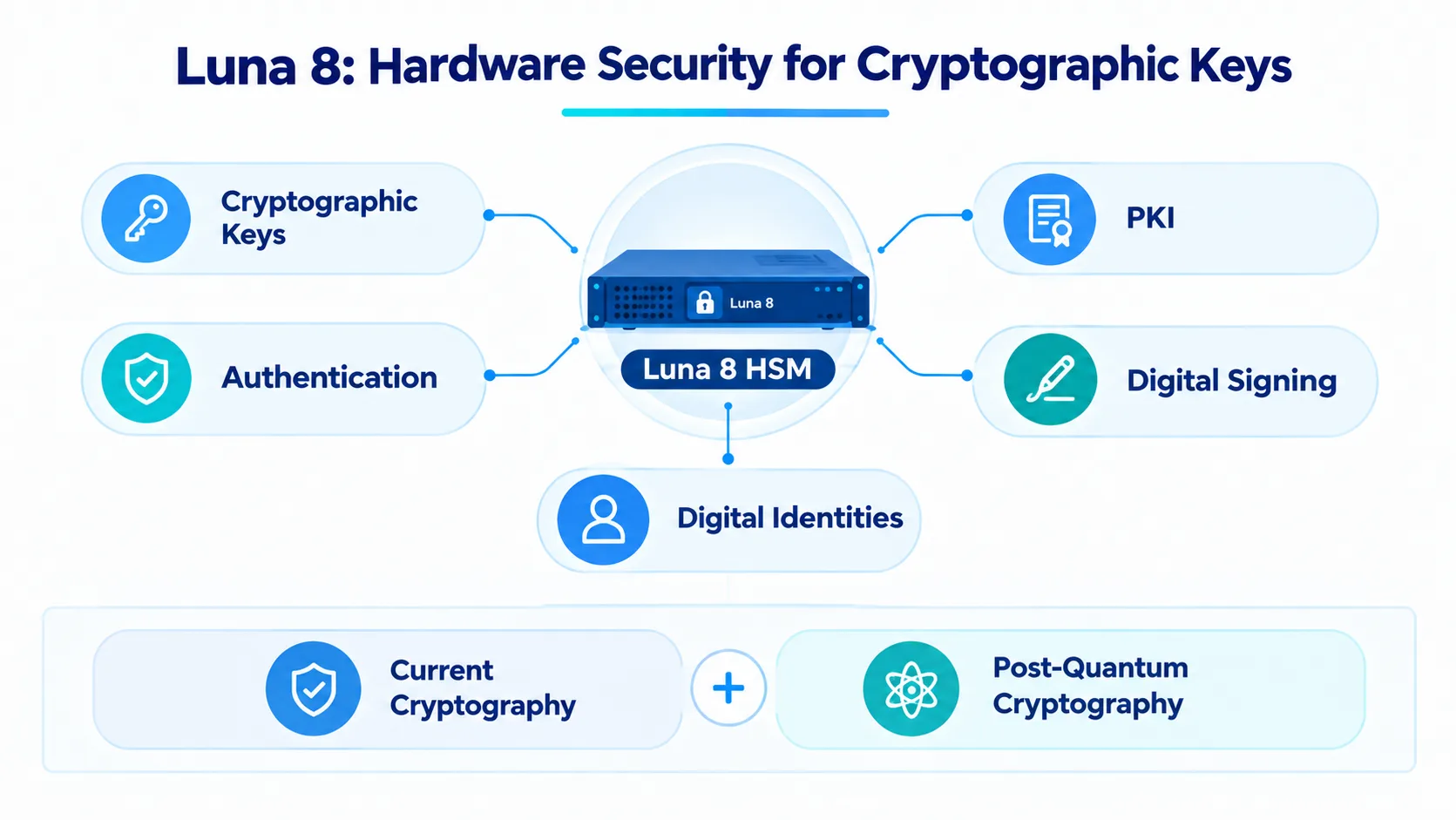
According to Thales, Luna 8 is designed to secure the cryptographic keys used by enterprise services including public key infrastructure (PKI), certificate management, authentication, digital signing and digital identities.
The company says the platform is designed to support both current and post-quantum cryptographic algorithms, giving organizations a path to update their cryptographic infrastructure as standards and security requirements evolve.
Why Post-Quantum Cryptography Is Becoming a Priority
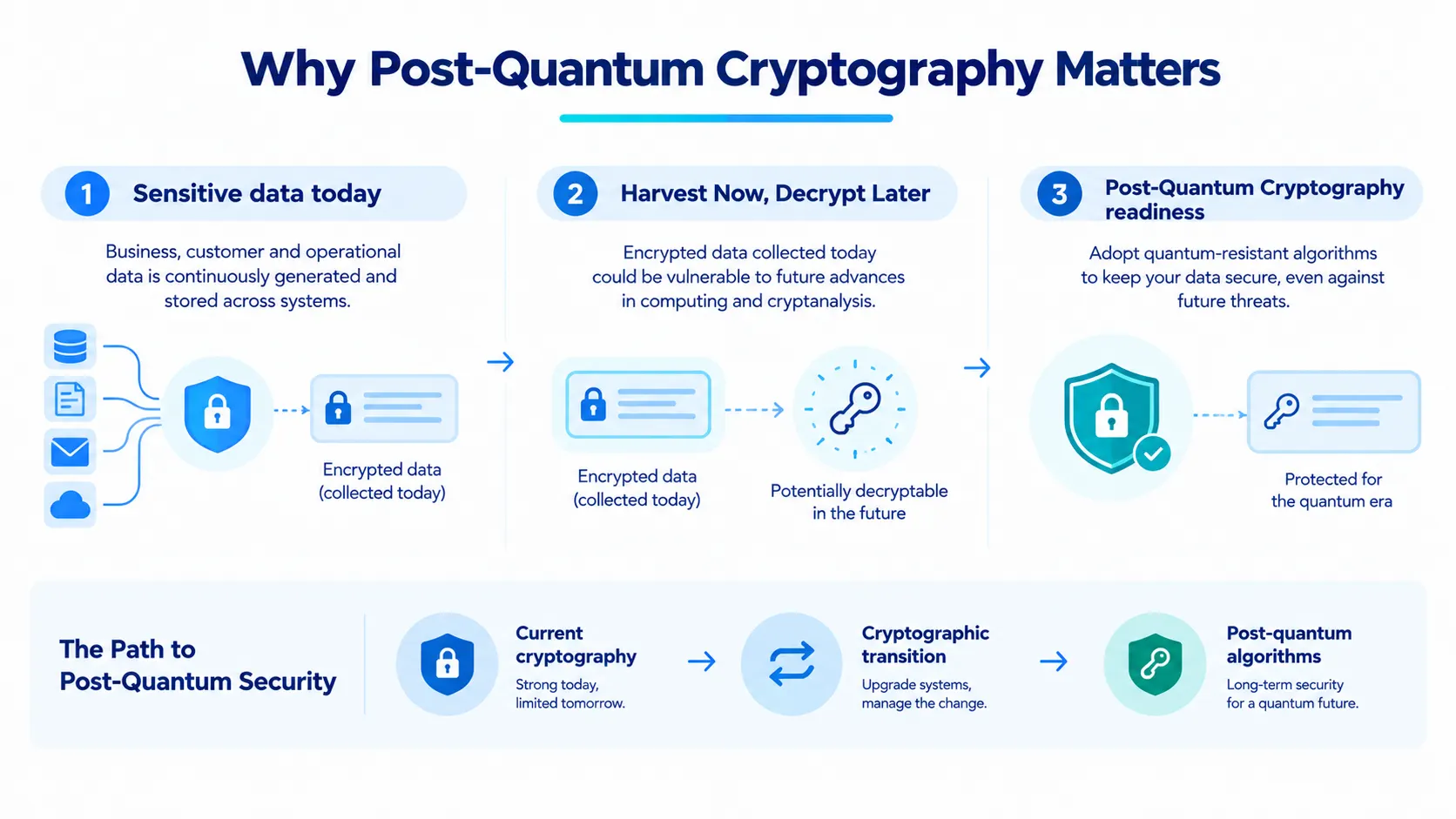
Thales points to its 2026 Thales Data Threat Report, which identifies Harvest Now, Decrypt Later (HNDL) attacks as the top-cited risk in the report.
The company says 59% of organizations surveyed are prototyping and evaluating post-quantum cryptography algorithms as they prepare for the quantum era.
HNDL refers to a scenario in which attackers collect encrypted information today with the intention of attempting to decrypt it later when more capable computing technologies become available.
This creates a reason for organizations to consider the long-term protection of sensitive information rather than focusing only on today's encryption threats.
Thales positions Luna 8 as a hardware foundation for this transition.
What Is Luna 8?
Luna 8 is a hardware security module designed to store, protect and manage cryptographic keys.
HSMs are used to provide a protected environment for cryptographic operations and key management. In enterprise environments, they can support security functions such as authentication, digital signatures and certificate infrastructure.
Thales says Luna 8 is powered by a cryptographic processor designed by the company.
The company also describes the platform as cryptographically agile, meaning its architecture is intended to support changes in algorithms and cryptographic requirements over time.
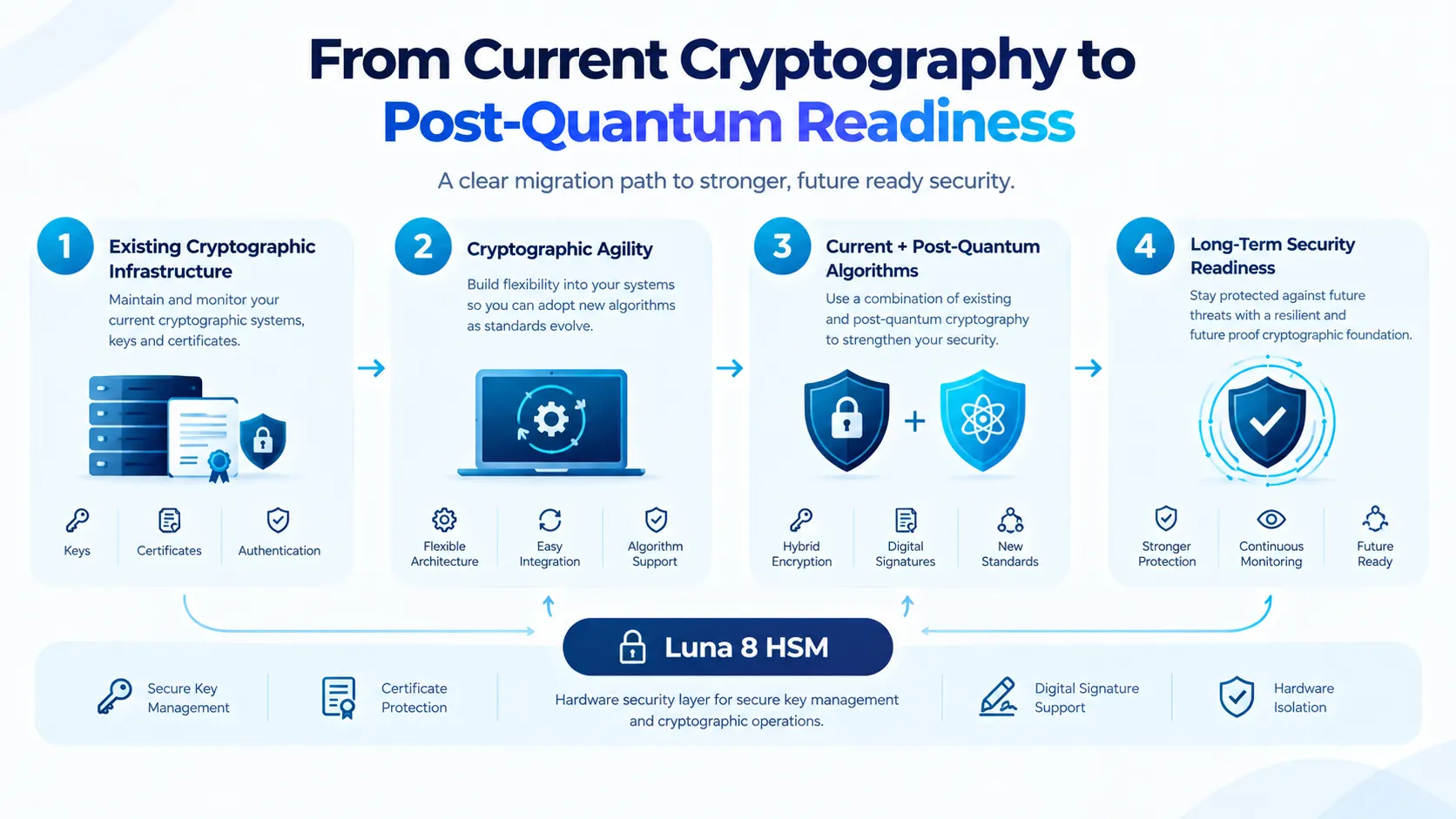
This is particularly relevant to post-quantum migration because organizations may need to introduce new algorithms while continuing to operate existing applications and infrastructure.
Supporting Current and Post-Quantum Algorithms
One of the central features highlighted by Thales is support for both current and post-quantum cryptographic algorithms.
The company says Luna 8 is designed to provide a path toward post-quantum cryptography without requiring organizations to immediately replace existing investments.
Thales also says the appliance uses the same ancillaries and interfaces for existing customers, which it positions as a way to simplify migration without requiring changes to current applications.
The exact migration process will depend on an organization's existing infrastructure and deployment requirements.
The company did not provide specific information about this area.
Performance and Scalability
Thales describes Luna 8 as being designed for demanding cryptographic workloads and says it provides "orders of magnitude faster cryptographic operations."
The company does not provide a specific benchmark or numerical performance figure in the announcement.
Luna 8 is also described as scalable from enterprise deployments to hyperscale environments.
Because the announcement does not provide independent benchmark results or detailed test conditions, these performance and scalability statements should be treated as Thales' product claims rather than independently verified measurements.
Upgradeable Architecture and Cryptographic Agility
Thales says Luna 8 has an upgradeable architecture intended to make it easier to introduce new algorithms, standards and capabilities as security requirements change.
This is part of the company's broader emphasis on cryptographic agility.
For organizations, cryptographic agility is increasingly important because cryptographic standards can evolve over time. A security infrastructure that can accommodate new algorithms may reduce the need for major infrastructure changes when requirements shift.
Luna 8 is therefore positioned not simply as a device for today's key-management requirements, but as infrastructure intended to support a longer transition toward post-quantum cryptography.
The announcement does not specify which future algorithms or standards will be supported beyond its stated post-quantum capabilities.
One Platform for Multiple Cryptographic Uses
Thales says Luna 8 is delivered as a unified hardware appliance supporting a range of cryptographic applications.
The company also says future releases will support payShield 11K, extending the platform to payment HSM use cases involving payment transactions, PINs and cryptographic keys used by banks and payment providers.
This is a future product capability described by Thales and is not presented as a currently available Luna 8 capability in the announcement.
Designed for Enterprise and Hyperscale Environments
Thales says Luna 8 can scale from enterprise deployments to hyperscale environments.
The company positions this scalability as a response to growing cryptographic workloads associated with digital services, AI workloads and expanding enterprise infrastructure.
The announcement does not provide deployment limits, capacity figures or independent performance testing.
Additional details were not disclosed in the announcement.
Availability and Security Assessments
Luna 8 is available as a network appliance, according to Thales.
The company describes it as providing quantum-safe and tamper-resistant security and says it is designed for high-assurance requirements.
Thales also says Luna 8 is being independently assessed against security standards including FIPS 140-3 Level 3 and EU Common Criteria.
This distinction is important.
The announcement does not say that Luna 8 has already achieved those certifications. It says the product is undergoing independent assessment to meet those standards.
Thales Connects AI Workloads With Cryptographic Security
The announcement also places Luna 8 in the context of expanding AI workloads.
As organizations deploy more digital services and AI systems, they continue to rely on cryptographic infrastructure to protect data, identities and communications.
Thales says Luna 8 is designed to address these requirements alongside the transition toward post-quantum cryptography and changing regulatory requirements.
The announcement does not provide specific information about Luna 8's use with particular AI models, AI platforms or AI applications.
Additional details were not disclosed in the announcement.
What Thales Says About Cryptographic Agility
Todd Moore, Vice President of Data Security Products at Thales, said organizations need to build post-quantum readiness through cryptographic agility.
The company argues that Luna 8's custom-designed cryptographic processor and support for current and post-quantum algorithms can help organizations maintain control of their security infrastructure as cryptographic requirements change.
The announcement also includes comments from Jack Zhou, CIO at HKVAX, who discussed the flexibility of the quantum-safe HSM for multiple secure environments and use cases.
ABI Research Vice President of Research Michela Menting also commented on the importance of integration, automation and scalability when organizations modernize cryptographic infrastructure.
These statements represent comments supplied as part of the Thales announcement and should not be interpreted as independent testing of Luna 8's performance.
What Luna 8 Could Mean for Enterprise Security
The launch highlights a broader industry shift toward preparing cryptographic infrastructure before quantum computing creates an immediate operational requirement.
For enterprises, this could mean treating post-quantum migration as an infrastructure planning exercise rather than a last-minute replacement project.
Cryptographic agility is particularly relevant because organizations often operate large environments containing applications, certificates, identities and other systems that depend on cryptographic keys.
A hardware security platform that supports both existing and post-quantum approaches could give organizations a way to manage that transition within their existing security architecture.
However, the exact benefits will depend on each organization's infrastructure, applications, cryptographic dependencies and migration requirements.
The Bigger Picture: Preparing Before the Quantum Transition
Post-quantum cryptography is becoming an increasingly important part of long-term cybersecurity planning.
The immediate challenge for organizations is not simply selecting a new cryptographic algorithm. It also involves identifying where cryptography is being used, understanding which systems depend on particular algorithms and preparing infrastructure for future changes.
Thales is positioning Luna 8 within that broader transition.
The company's approach combines hardware-based key protection with support for current and post-quantum cryptographic algorithms, while emphasizing an upgradeable architecture.
The announcement does not establish when quantum computers will be capable of breaking specific encryption systems, nor does it provide a definitive timeline for the transition.
Final Takeaway
Thales' Luna 8 launch reflects the growing focus on cryptographic readiness as organizations prepare for the potential impact of quantum computing.
The HSM is designed to provide a hardware foundation for protecting cryptographic keys while supporting both current and post-quantum algorithms.
For enterprises, the larger issue is the transition itself. Post-quantum readiness involves more than adopting a new algorithm. Organizations also need infrastructure that can adapt as standards and security requirements evolve.
Luna 8 is Thales' response to that challenge, combining key protection, cryptographic agility and support for post-quantum cryptography in a new HSM platform.
Source: Thales Group
About the Author