
How TelevisaUnivision Used Google Cloud to Stream the 2026 FIFA World Cup to Millions
TelevisaUnivision used Google Cloud Media CDN, direct ISP peering, dedicated capacity, and serverless Valkey infrastructure to deliver 104 FIFA World Cup matches with 100% platform availability.
Xcademia Team
Xcademia Research Team
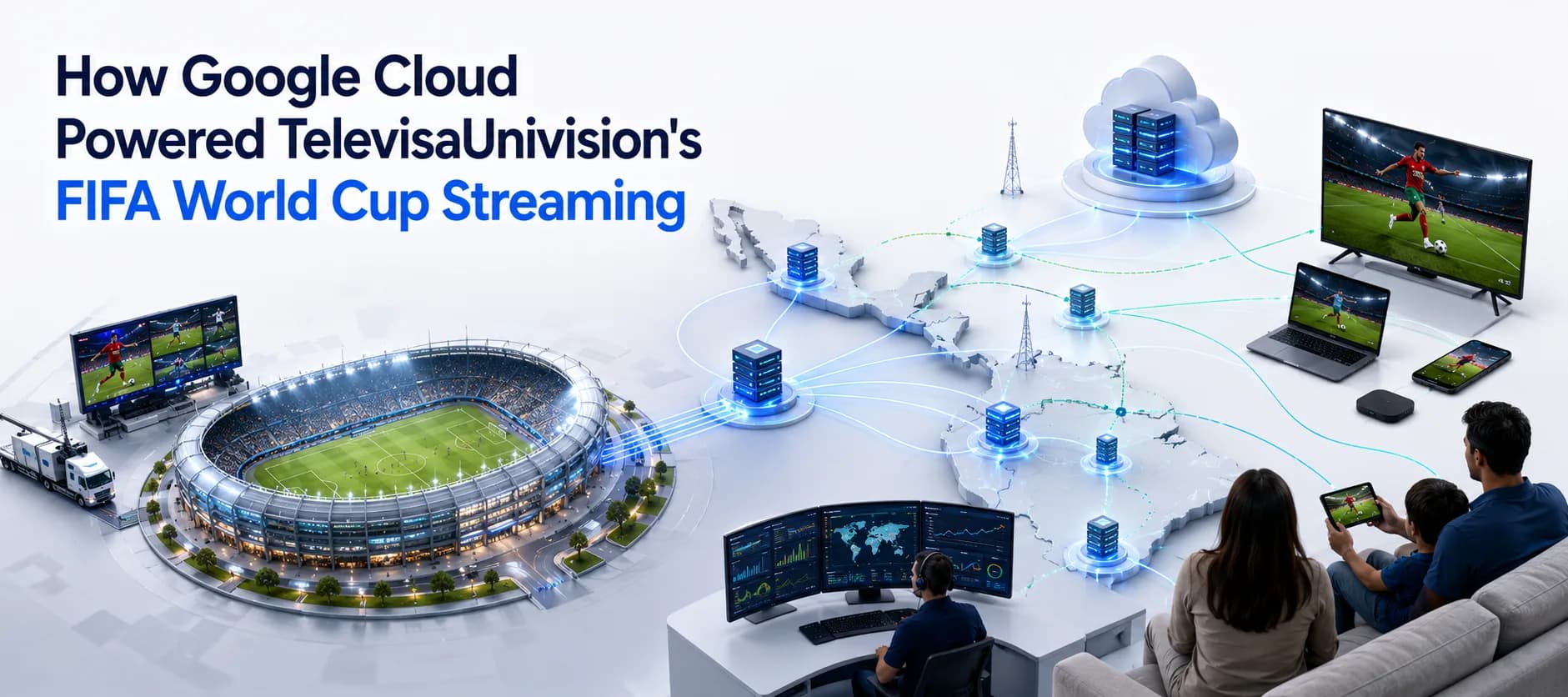
The Infrastructure Challenge Behind FIFA World Cup Streaming
Live sports streaming is one of the most demanding workloads for modern digital infrastructure. A major match can trigger enormous traffic spikes within seconds, while millions of viewers expect uninterrupted playback, fast logins, and consistent video quality.
Those demands became especially significant during the 2026 FIFA World Cup, when Mexico hosted matches and competed on home soil. For TelevisaUnivision, the leading Spanish-language media company, the tournament placed extraordinary pressure on its ViX streaming platform and supporting infrastructure.
A failed stream during a decisive moment can have consequences beyond a temporary technical problem. Playback interruptions, slow authentication at kickoff, or degraded stream resolution can affect customer satisfaction, subscriber retention, and trust in the platform.
To prepare for the tournament, TelevisaUnivision partnered with Google Cloud to build an infrastructure strategy designed to handle massive live-streaming demand across Mexico, Central America, and South America.
The resulting architecture combined Media CDN, direct ISP peering, dedicated regional capacity, and serverless infrastructure powered by Memorystore for Valkey 9.0.
TelevisaUnivision reported that the joint infrastructure delivered 100% platform availability with zero downtime across all 104 matches, while TelevisaUnivision and ViX recorded 675 million views.
Why TelevisaUnivision Chose Google Cloud
Delivering live video across Latin America presents unique networking challenges.
The region includes a highly fragmented ISP environment, while international traffic can encounter cross-border transit bottlenecks. For a major live event, these constraints can become particularly problematic because traffic can increase dramatically within moments of a match beginning.
TelevisaUnivision therefore needed more than conventional content delivery infrastructure. According to Google Cloud, the company was looking for a strategic technology partner that could work alongside its engineering teams on network capacity, infrastructure resilience, and custom feature development.
TelevisaUnivision selected Google Cloud Media CDN based on two primary factors: the platform's architecture and Google's customer-focused approach.
The resulting strategy focused on moving content closer to viewers, establishing more direct network paths, reserving sufficient capacity, and ensuring that supporting application services could scale alongside streaming demand.
Media CDN Brings Streaming Closer to Viewers
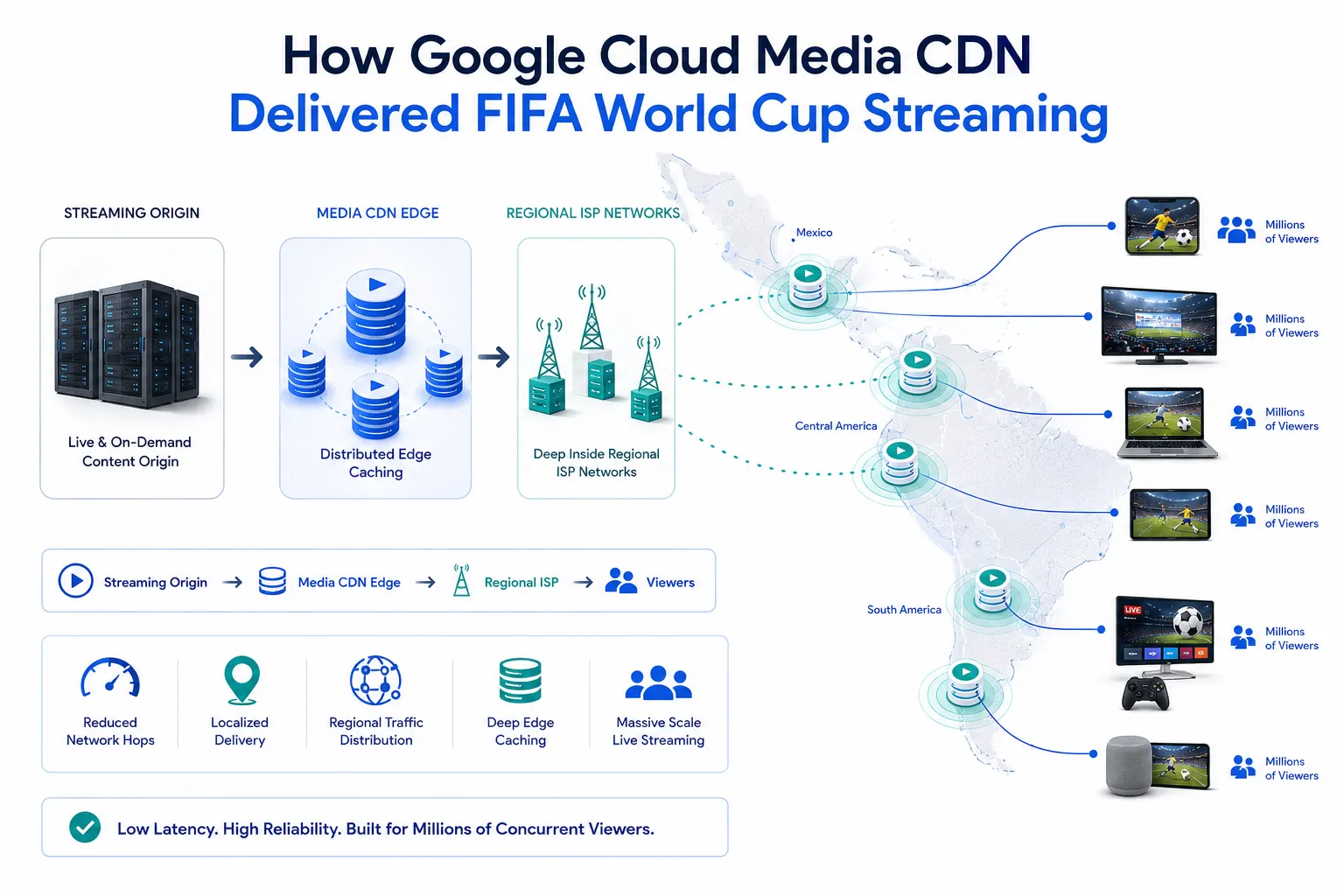
A central component of the architecture was Google Cloud Media CDN.
Media CDN provided globally distributed infrastructure designed to absorb large live-streaming traffic spikes while protecting origin infrastructure.
One of the key elements was in-ISP deep edge caching.
Media CDN placed cache nodes deep inside local ISP networks across Mexico and Central and South America. This positioned video segments close to viewers and allowed them to be delivered within a single network hop.
For a live sports platform, this proximity can be particularly important. When large numbers of viewers request content around the same time, placing content closer to users can help improve delivery efficiency and reduce dependence on congested network paths.
Direct ISP Peering Helps Bypass Network Bottlenecks
Another important element of the architecture was direct connectivity with major regional telecommunications operators.
Google Cloud says TelevisaUnivision established direct peering connections with providers including América Móvil and Telefônica.
These connections allowed the architecture to bypass congested international transit routes.
For a global live event, network path efficiency can have a direct impact on reliability. Rather than allowing traffic to depend entirely on longer international routes, direct ISP relationships provided a more direct path between content delivery infrastructure and local networks.
This approach was particularly relevant for TelevisaUnivision because its audience spans multiple countries and network environments across Latin America.
The combination of localized edge caching and direct ISP connectivity created a delivery architecture designed around the realities of regional internet infrastructure.
Dedicated Capacity Protects Against Traffic Surges
TelevisaUnivision also reserved dedicated live-event capacity within the region.
According to Google Cloud, this provided dedicated allocated headroom and helped isolate livestream traffic from potential "noisy neighbor" risks.
The importance of dedicated capacity becomes clear during high-profile matches.
Streaming demand does not necessarily increase gradually. A major match can cause sudden traffic spikes as viewers simultaneously start streams, authenticate, or interact with the platform.
By reserving capacity ahead of the event, TelevisaUnivision could prepare its infrastructure for periods of extreme demand and reduce the risk of resource contention.
Sub-Millisecond Sessions With Valkey 9.0
Content delivery was only one part of the streaming challenge.
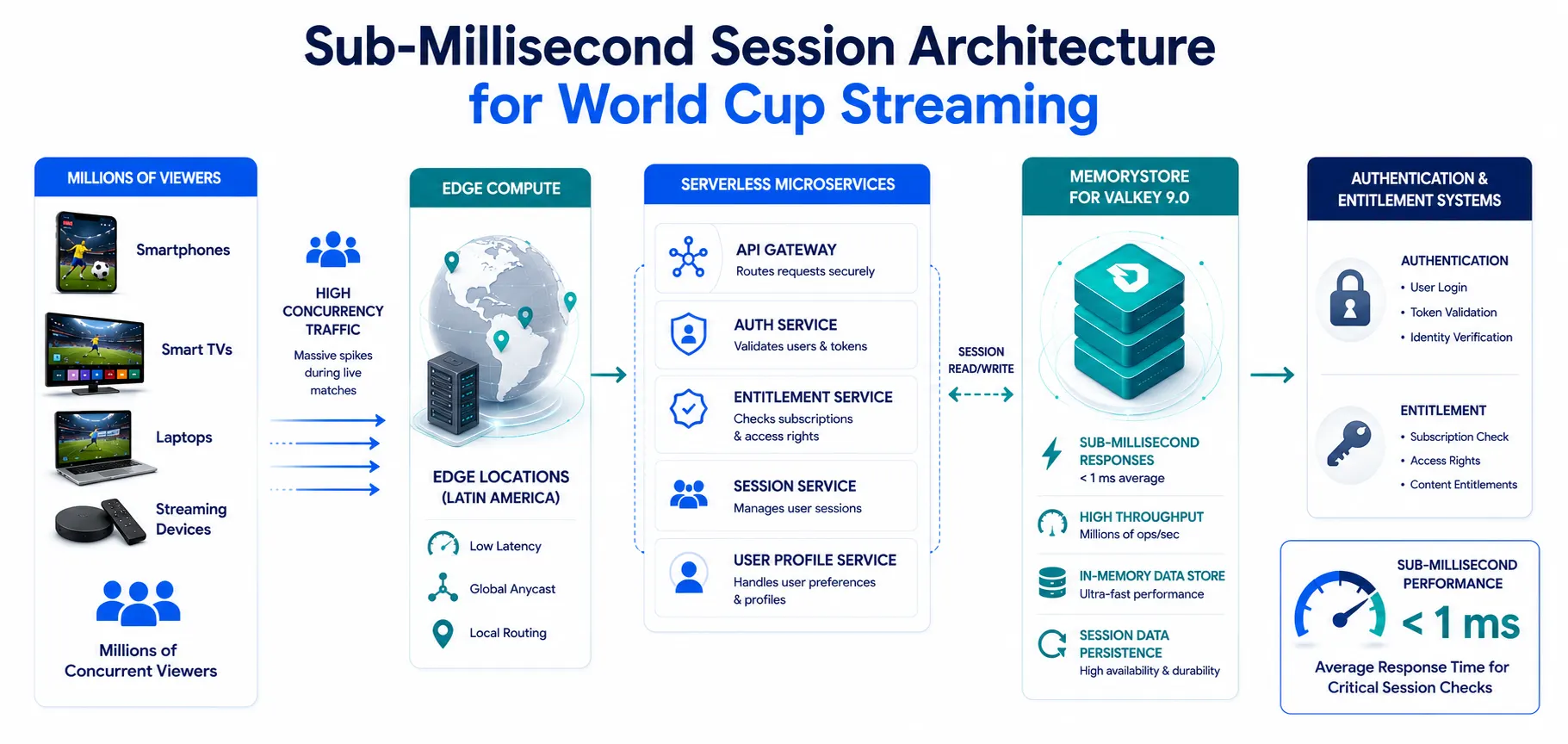
Behind every viewer session are application services responsible for tasks such as authentication and entitlement checks. These services can experience their own traffic spikes when large numbers of users join a live event simultaneously.
To address this requirement, TelevisaUnivision migrated its session store to Memorystore for Valkey 9.0.
The session store operated as part of serverless microservices on edge compute and was designed to provide extremely fast responses for critical application operations.
According to Google Cloud, the architecture delivered sub-millisecond response times for authentication and entitlement checks while automatically scaling to process peak API traffic without requiring manual capacity reservations.
This helped TelevisaUnivision handle application-level traffic spikes alongside the much larger demands generated by live video delivery.
24/7 Co-Engineering During All 104 Matches
Infrastructure was only one part of TelevisaUnivision's World Cup strategy.
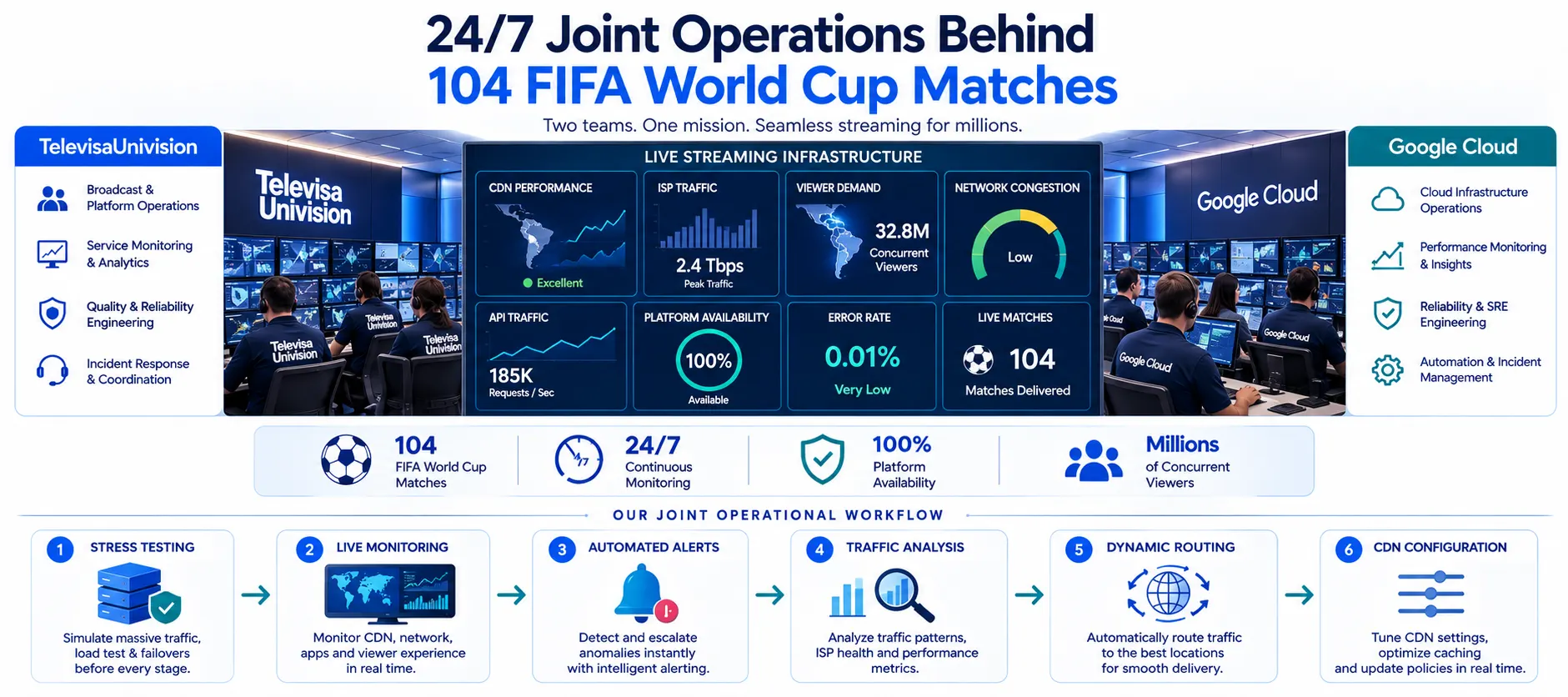
The companies also established a joint operational model in which TelevisaUnivision engineers and Google Cloud specialists worked together throughout the tournament.
According to Google Cloud, the teams operated 24/7 joint war rooms for all 104 matches.
These command centers provided a shared operational environment where engineers could monitor infrastructure performance, identify emerging issues, and respond to changes in network conditions.
Google Cloud's Customer Reliability Engineering teams also provided round-the-clock proactive monitoring and automated alerting.
This approach meant the infrastructure was supported by continuous operational oversight throughout the tournament rather than simply being deployed and left to operate independently.
Stress Testing and Real-Time Traffic Management
Before the tournament began, the joint teams conducted extensive stress tests and simulated failovers.
These exercises helped evaluate how the platform would respond under extreme conditions and identify potential weaknesses before live matches began.
During matches, unified telemetry allowed joint operational leads to monitor network behavior and respond dynamically.
When regional ISP congestion emerged, the teams could dynamically route traffic and adjust CDN configurations.
This operational model complemented the underlying infrastructure architecture.
Media CDN, direct peering, dedicated capacity, and Valkey provided the technical foundation, while continuous monitoring, stress testing, and joint operational authority provided an additional layer of resilience.
A Battle-Tested Blueprint for Global Live Streaming
The results reported by TelevisaUnivision and Google Cloud demonstrate the scale of the infrastructure deployed for the tournament.
Across 39 consecutive days, the joint infrastructure delivered:
Metric | Result |
|---|---|
Total matches broadcast | 104 live matches |
Platform availability | 100% |
Reported downtime | 0 |
Cumulative views | 675 million views |
Tournament execution | 39 consecutive days |
The results highlight the importance of combining multiple infrastructure layers rather than relying on a single technology.
Localized edge delivery helped bring content closer to viewers. Direct ISP peering provided more direct network paths. Dedicated capacity provided additional headroom for major traffic surges. Serverless infrastructure and Valkey supported critical application services behind viewer sessions.
At the same time, continuous monitoring, stress testing, simulated failovers, and joint operational teams provided the operational layer required to manage a high-stakes global event.
Building the Future of Live Sports Streaming
The 2026 FIFA World Cup demonstrated how demanding large-scale live sports streaming can be for modern digital infrastructure.
For TelevisaUnivision, the challenge was not simply delivering video to a large audience. The company needed to maintain reliable streaming performance across a complex regional network environment while handling sudden traffic spikes associated with major sporting events.
According to Google Cloud, the partnership combined localized Media CDN delivery, direct ISP connectivity, dedicated capacity, sub-millisecond serverless session processing, and 24/7 operational collaboration to address those challenges.
TelevisaUnivision reported 100% platform availability with zero downtime across 104 matches, alongside 675 million cumulative views across TelevisaUnivision and ViX.
The broader lesson extends beyond the World Cup. High-profile live events require infrastructure that can scale rapidly, operate close to users, adapt to changing network conditions, and be supported by teams capable of responding in real time.
For broadcasters and streaming platforms preparing for similarly demanding events, the TelevisaUnivision and Google Cloud deployment provides a practical example of how edge delivery, cloud infrastructure, network connectivity, and operational engineering can work together at global scale.
Source: Google Cloud Blog
About the Author