
Harnessing AI in Cybersecurity: How Organizations Can Stay Ahead of AI-Powered Threats
As cybercriminals increasingly use AI to automate phishing, malware, and fraud campaigns, organizations must adopt integrated AI-driven security platforms to detect threats faster, reduce analyst workload, and strengthen cyber resilience.
Xcademia Team
Xcademia Research Team
Harnessing AI in Cybersecurity: How Organizations Can Stay Ahead of AI-Powered Threats
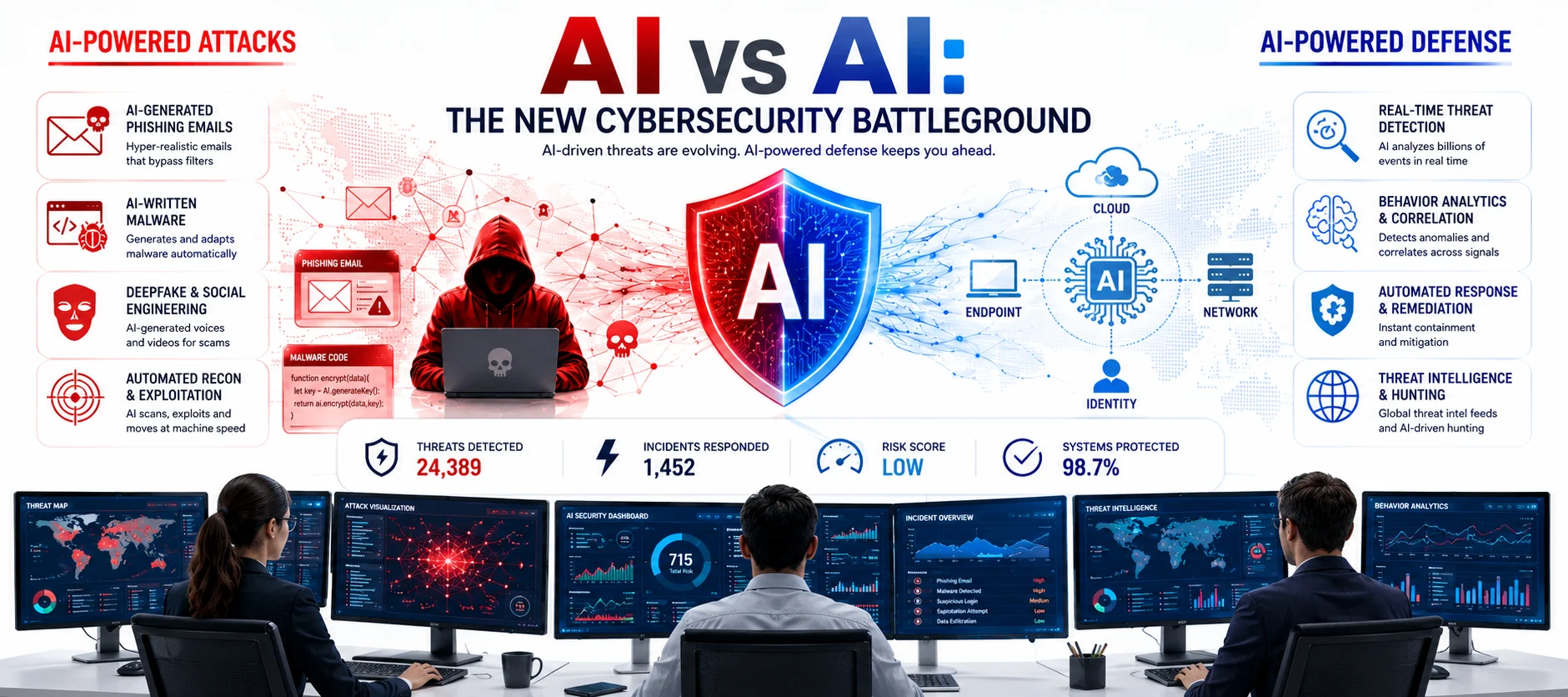
Artificial intelligence is rapidly transforming cybersecurity. While security vendors are leveraging AI to improve threat detection and response, cybercriminals are adopting the same technology to automate attacks, create convincing phishing campaigns, and scale malicious operations at unprecedented speed.
This growing AI arms race is forcing organizations to rethink traditional security strategies. The challenge is no longer whether businesses should adopt AI, but how they can implement it effectively to stay ahead of increasingly sophisticated AI-driven threats.
According to Kaspersky's 2026 global study, nearly every organization across the Asia-Pacific region plans to incorporate AI into security operations. However, attackers are moving just as quickly. Research shows that 43 percent of organizations believe cybercriminals are using AI to increase the effectiveness of their attacks, while 21 percent believe attackers are already ahead in the technological race.
The Rise of AI-Powered Cyber Threats
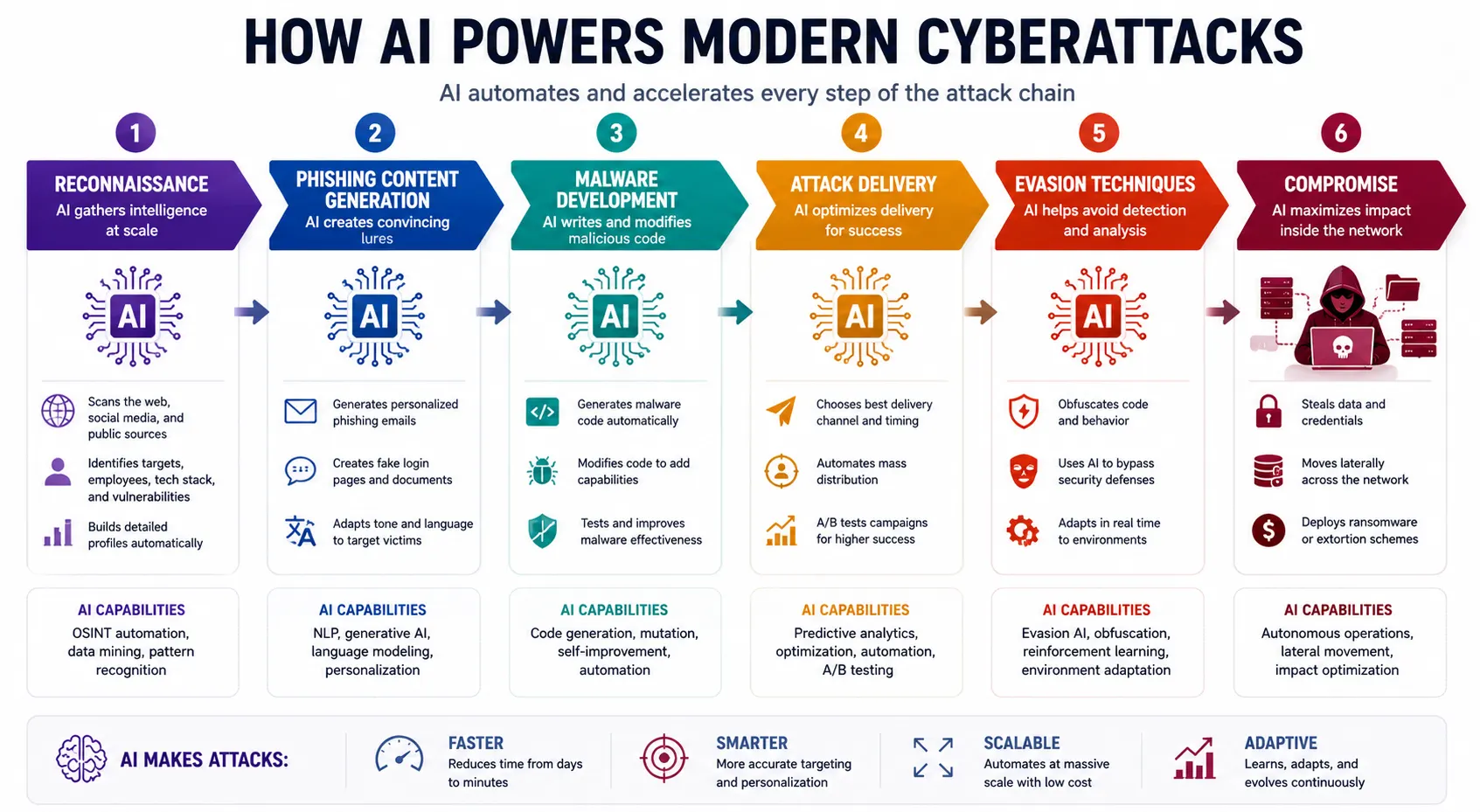
AI has significantly lowered the barriers for cybercriminals. Tasks that previously required specialized expertise can now be automated and executed at scale.
Threat actors are increasingly using generative AI throughout the attack lifecycle, including:
Creating realistic phishing emails
Generating malicious code
Enhancing malware evasion techniques
Conducting automated reconnaissance
Improving social engineering campaigns
Developing deepfake-based fraud schemes
This shift enables attackers to launch more sophisticated campaigns faster and at lower cost than ever before.
RevengeHotels Campaign: A Real-World Example
Kaspersky's Global Research and Analysis Team (GReAT) highlighted this trend through its investigation of the RevengeHotels campaign targeting hospitality businesses across Latin America.
The attackers used AI-generated code and AI-assisted phishing techniques to create more convincing attack content and more evasive malware payloads. This demonstrated how AI can dramatically improve both the effectiveness and scalability of cyberattacks.
Financial Institutions Under Pressure
The financial sector has become a prime target for AI-enhanced attacks.
In 2025, Kaspersky recorded more than 530,000 attempted financial phishing attacks across Southeast Asia. Thailand experienced the highest number of incidents, followed by Indonesia, Malaysia, Vietnam, Singapore, and the Philippines.
Attackers are increasingly using AI to:
Model victim behavior
Personalize phishing messages
Conduct targeted fraud campaigns
Manipulate financial markets
Probe infrastructure for weaknesses
The speed and precision of AI-driven attacks make them far more difficult to detect using traditional security approaches.
Emerging Risks in the Entertainment Industry
The entertainment sector is also facing new AI-related challenges.
Studios, streaming platforms, and content owners are encountering threats such as:
AI-generated deepfakes
Content fraud
Identity impersonation
Intellectual property abuse
AI-assisted attacks against content delivery infrastructure
As AI-generated content becomes more realistic, distinguishing legitimate media from malicious or fraudulent content is becoming increasingly difficult.
Why Speed Has Become the Biggest Threat
The common factor across today's cyber threats is speed.
AI removes many of the manual bottlenecks that previously limited attackers. Activities that once took days or weeks can now be completed within minutes.
This includes:
Faster target identification
Rapid phishing campaign creation
Automated malware adaptation
Real-time attack optimization
As a result, defenders have less time to detect and respond before damage occurs.
How Security Vendors Are Using AI for Defense
To counter these evolving threats, cybersecurity providers are embedding AI throughout the detection and response lifecycle.
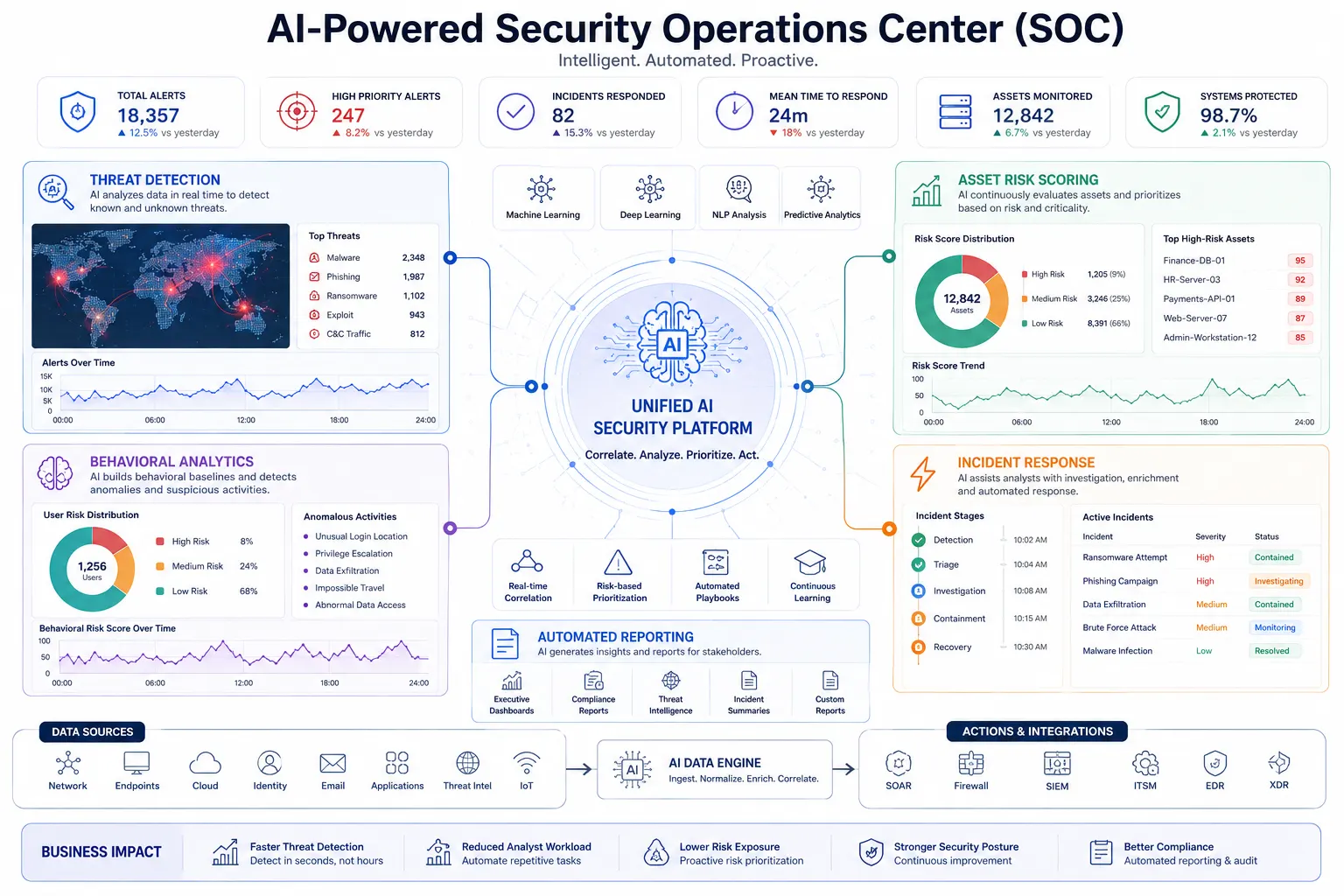
Modern AI-powered security platforms help organizations:
Detect anomalies automatically
Correlate security events
Prioritize risks
Accelerate investigations
Reduce analyst workload
Improve incident response speed
Rather than replacing human analysts, AI acts as a force multiplier that helps security teams manage growing volumes of alerts and threats.
Behavioral Analytics and Threat Detection
One of the most effective uses of AI is behavioral analysis.
AI systems can establish a baseline of normal user activity and automatically identify suspicious behavior, such as:
Unusual login locations
Abnormal access patterns
Account takeover attempts
Insider threats
This enables faster detection without requiring manual review of thousands of log entries.
AI-Driven Asset Risk Scoring
AI can continuously evaluate enterprise assets based on detected security events.
Instead of treating every alert equally, AI helps security teams identify:
High-risk systems
Critical vulnerabilities
Correlated attack patterns
Priority remediation targets
This allows organizations to focus resources where risk exposure is greatest.
AI-Powered Incident Summarization
Security teams often struggle with alert fatigue and investigation bottlenecks.
AI-powered incident summarization helps by automatically explaining:
Attack chains
Initial entry points
Adversary actions
Impact assessments
Recommended next steps
By presenting information in clear language, AI enables analysts to understand incidents faster and respond more effectively.
AI Security Assistants
Advanced AI assistants can support cybersecurity teams by:
Deobfuscating command lines
Explaining suspicious activity
Generating investigation reports
Assisting with threat hunting
Reducing cognitive workload
These capabilities are particularly valuable for organizations facing cybersecurity talent shortages.
Key Challenges of AI Implementation
While AI offers substantial benefits, successful implementation requires careful planning.
Data Quality and Visibility
AI systems depend on high-quality data.
Organizations with fragmented environments often struggle because security data is spread across multiple tools and platforms.
For AI to be effective, organizations need centralized visibility across:
Endpoints
Networks
Identity systems
Cloud environments
Integration Complexity
Adding isolated AI features to an already fragmented security stack can increase complexity rather than reduce it.
Organizations should evaluate how AI integrates with existing workflows instead of focusing solely on feature lists.
Skills and Change Management
Some AI tools require extensive configuration and specialized expertise.
Businesses should prioritize solutions that embed intelligence directly into analyst workflows rather than introducing additional complexity.
Responsible AI Governance
As AI becomes a core component of security operations, governance becomes increasingly important.
Organizations should establish frameworks covering:
Transparency
Accountability
Data protection
Regulatory compliance
Ethical AI usage
Strong governance ensures AI remains effective, trustworthy, and aligned with business objectives.
Practical Steps for Organizations
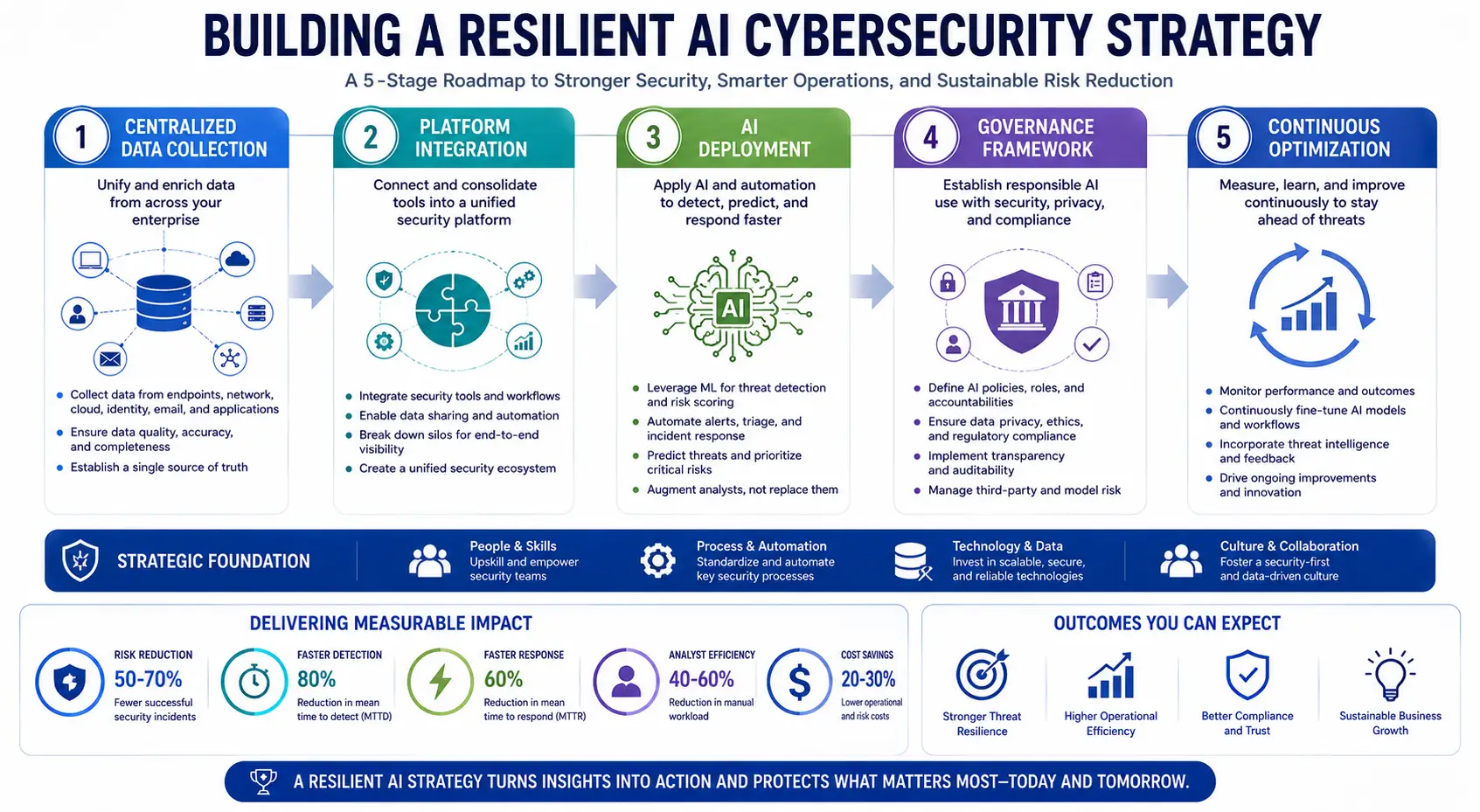
Security leaders can improve AI adoption outcomes by following several best practices:
Consolidate Security Data
Centralize telemetry and security data before introducing AI-driven analytics.
Focus on Workflow Integration
Measure success by analyst efficiency and operational improvements rather than the number of AI features available.
Choose Unified Platforms
Prioritize solutions where AI capabilities are built directly into the platform rather than added as separate components.
Establish Governance Policies
Develop AI governance standards aligned with regulatory requirements and vendor accountability practices.
Implement Gradually
Deploy AI in phases with measurable objectives to validate effectiveness before scaling across the organization.
Building a Resilient AI Security Future
The cybersecurity landscape is entering a new era where both defenders and attackers have access to powerful AI capabilities.
Organizations can no longer rely solely on traditional security approaches. Success will depend on integrating AI into everyday security operations, improving visibility across environments, and establishing strong governance frameworks.
The most effective cybersecurity strategies will not be built around standalone AI tools. Instead, they will rely on unified platforms that combine detection, response, automation, and intelligence into a cohesive defense ecosystem.
As AI continues to reshape the threat landscape, organizations that invest in integrated, well-governed AI security capabilities will be best positioned to stay ahead of increasingly sophisticated cyber threats.
About the Author