
Google Threat Intelligence and Wiz ASM Join Forces to Help Security Teams Prioritize Real-World Cyber Risks
Google Cloud is integrating Google Threat Intelligence with Wiz Attack Surface Management to help organizations prioritize exploitable vulnerabilities based on real-world attacker activity, AI-powered exposure analysis, and faster risk remediation.
Xcademia Team
Xcademia Research Team
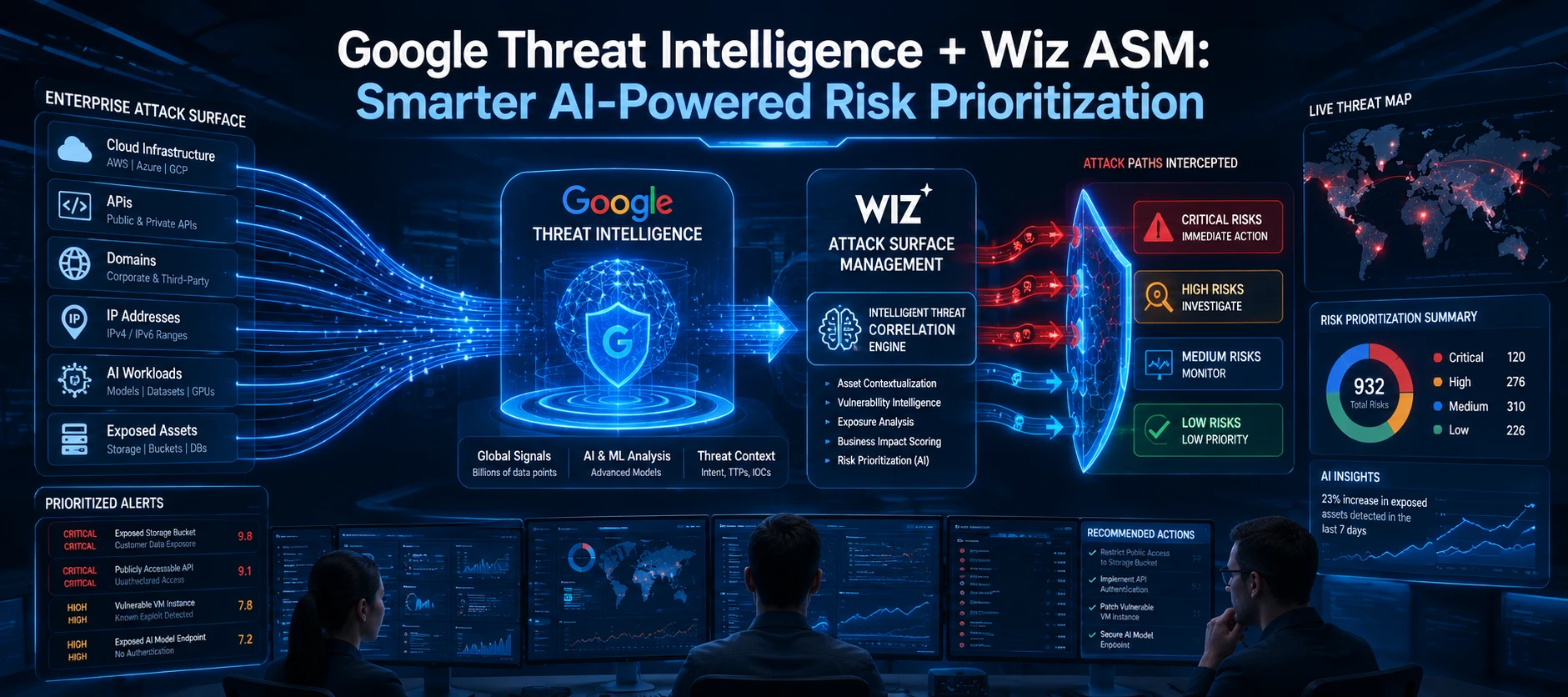
Google Cloud Strengthens Proactive Cyber Defense with Google Threat Intelligence and Wiz ASM Integration
As cyber threats continue to evolve at unprecedented speed, security teams face a growing challenge: determining which vulnerabilities actually matter. Thousands of alerts and exposed assets compete for attention every day, while attackers increasingly leverage artificial intelligence to discover and exploit weaknesses faster than ever before.
To address this challenge, Google Cloud has announced new integration efforts between Google Threat Intelligence (GTI) and Wiz Attack Surface Management (ASM). The collaboration aims to help organizations move beyond reactive vulnerability management by combining real-time threat intelligence with AI-driven attack surface analysis.
Rather than treating every vulnerability equally, the new approach enables security teams to focus on exposures that are actively being targeted by threat actors.
Why Traditional Vulnerability Prioritization Falls Short
Most organizations operate complex hybrid environments spanning cloud infrastructure, Software-as-a-Service (SaaS) platforms, on-premises systems, APIs, and AI workloads. This creates a constantly expanding external attack surface.
Traditional vulnerability scanners often generate thousands of findings, but they rarely answer the most important question:
Which vulnerabilities are attackers actually exploiting today?
Security teams frequently spend valuable time patching lower-risk issues while high-impact vulnerabilities remain exposed. Google's latest initiative seeks to eliminate this uncertainty by correlating validated exposures with live adversary intelligence.
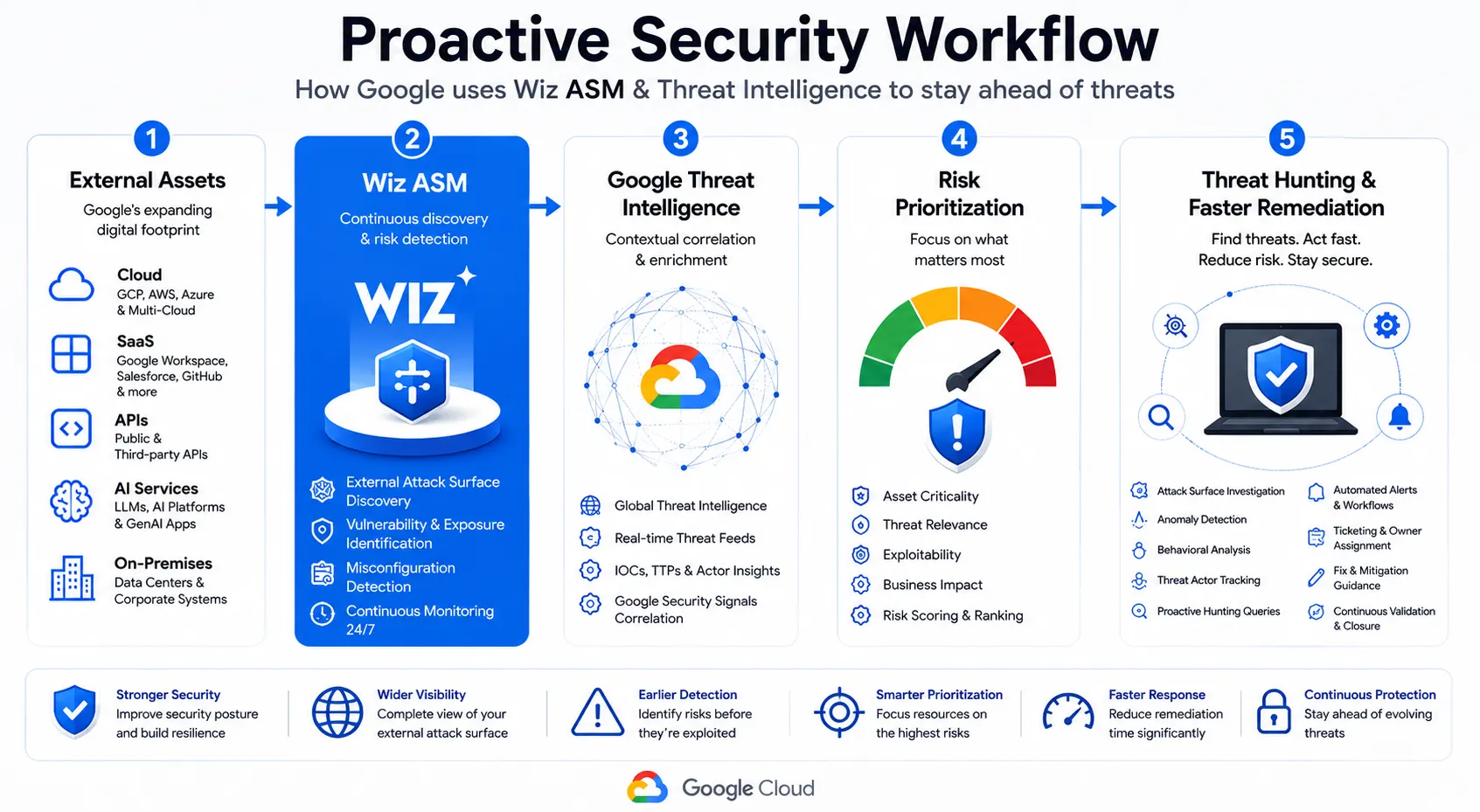
How the Integration Works
The upcoming integration combines two complementary security capabilities.
Google Threat Intelligence
Google Threat Intelligence provides global visibility into cybercriminal activity by continuously monitoring:
Threat actor campaigns
Command-and-control infrastructure
Malware operations
Exploitation trends
Active attack techniques
Its intelligence platform helps defenders understand how adversaries operate in real-world attacks instead of relying solely on theoretical vulnerability scores.
Wiz Attack Surface Management
Wiz ASM continuously discovers and analyzes an organization's internet-facing assets across multiple environments, including:
Cloud infrastructure
AI workloads
SaaS platforms
APIs
Public IP addresses
Domains
On-premises systems
The platform validates whether vulnerabilities are actually exploitable instead of simply reporting their existence.
It also detects:
Misconfigurations
Default credentials
Exposed secrets
Sensitive data exposure
Security weaknesses across hybrid environments
AI-Powered Detection Goes Beyond Traditional Scanning
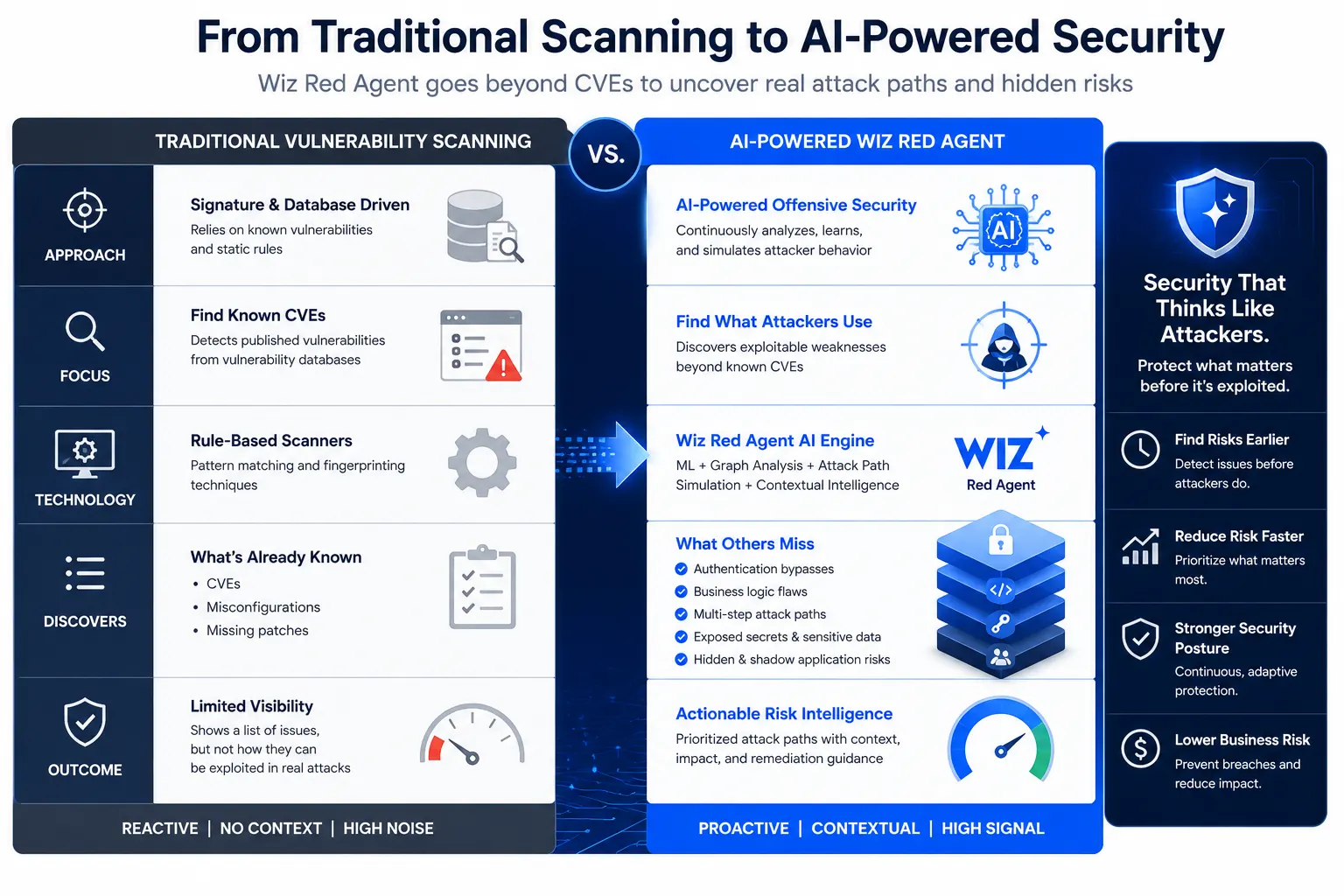
One of the most significant capabilities introduced through this collaboration comes from the Wiz Red Agent.
Unlike conventional scanners that primarily identify known CVEs, the AI-powered Red Agent reasons about application behavior to uncover more sophisticated vulnerabilities.
These include:
Authentication bypass vulnerabilities
Business logic flaws
Multi-step attack chains
Complex application workflows
Logic-based exploitation paths
These categories of vulnerabilities are often difficult for rule-based scanners to identify because they require contextual understanding rather than simple signature matching.
Prioritizing Vulnerabilities Based on Active Threats
The core value of the integration lies in correlating exposure data with live threat intelligence.
Instead of simply presenting a list of vulnerabilities ranked by severity scores, the system will identify which exposed assets are currently being targeted by attackers in the wild.
This enables security teams to:
Prioritize remediation based on real-world exploitation
Reduce alert fatigue
Allocate resources more effectively
Focus on vulnerabilities posing immediate business risk
By combining external exposure analysis with active threat intelligence, organizations can make faster and more informed security decisions.
Improved Threat Hunting with Attacker Context
Google also plans to enrich security alerts with attacker behavior information.
When a high-risk vulnerability is identified, defenders will receive contextual guidance describing how attackers typically operate after exploitation.
This may include information about:
Common attacker techniques
Host commands
Malware execution patterns
Post-exploitation behavior
Indicators for threat hunting
Rather than only identifying a vulnerability, security teams gain actionable intelligence to investigate whether attackers have already established a foothold inside their environment.
This reduces investigation time while improving incident response effectiveness.
Native Integration Planned for Greater Automation
Google Cloud says it is working toward a deeper native integration where exposure data from Wiz ASM will automatically feed into the Google Threat Intelligence correlation engine.
Once implemented, this automation will continuously compare an organization's validated exposures against Google's global intelligence feeds.
The result is an evolving risk model that reflects current attacker activity instead of static vulnerability ratings.
This automated correlation is expected to improve:
Security operations efficiency
Vulnerability management
Threat hunting
Incident prioritization
Overall cyber resilience
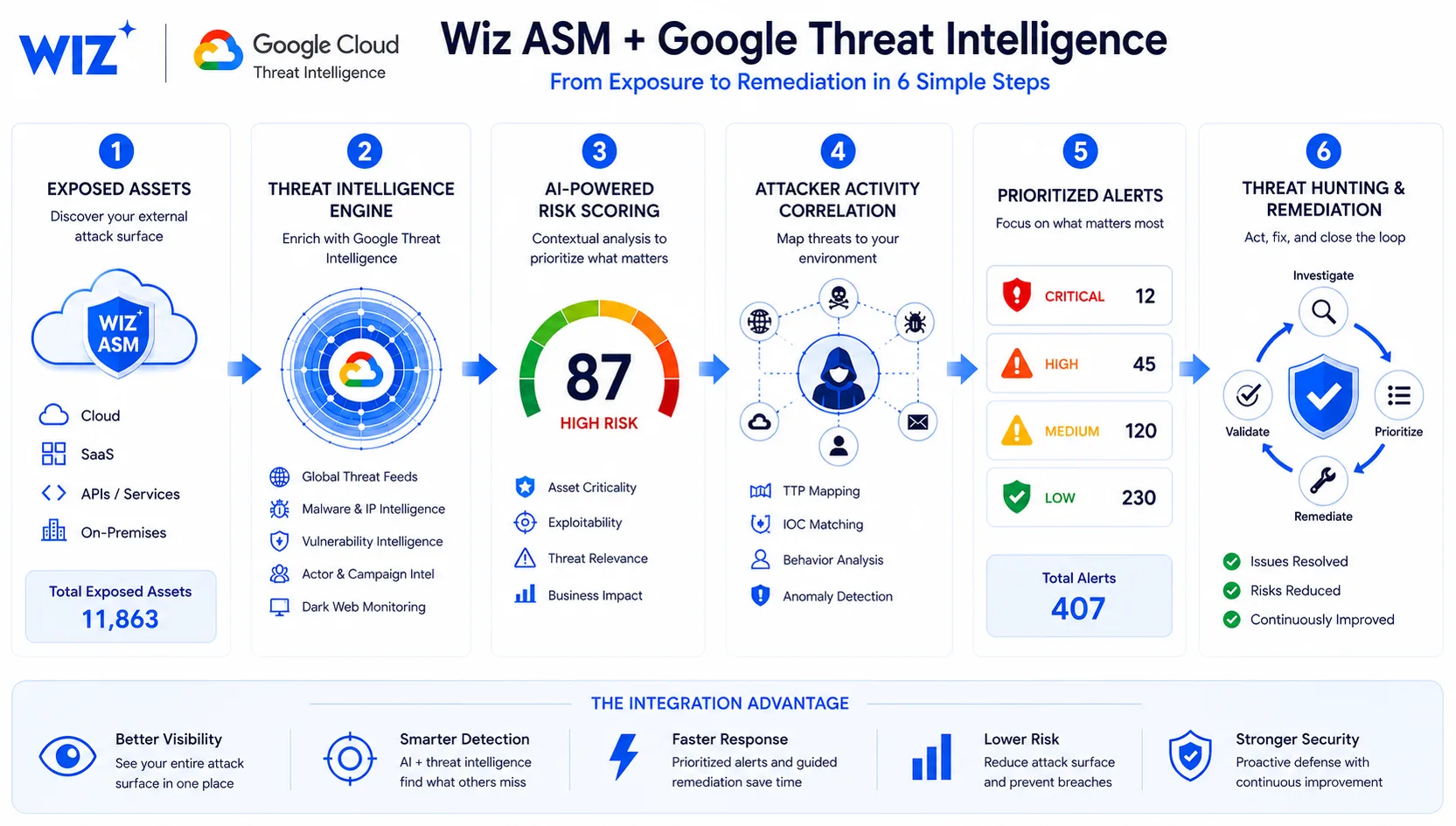
Helping Organizations Shift to Proactive Security
Modern security strategies increasingly require organizations to predict attacker behavior instead of merely responding after compromise.
By combining attack surface visibility, AI-powered vulnerability discovery, and global threat intelligence, Google Cloud and Wiz aim to help organizations identify the exposures that represent the greatest operational risk.
The integration reflects a broader industry trend toward intelligence-driven security operations, where remediation priorities are determined by active adversary behavior rather than vulnerability volume alone.
For enterprises managing complex hybrid environments, this approach has the potential to significantly reduce noise while allowing security teams to focus on threats that matter most.
Final Thoughts
As AI continues to reshape both cyberattacks and cyber defense, organizations need security platforms capable of adapting just as quickly.
The planned integration between Google Threat Intelligence and Wiz Attack Surface Management represents a significant step toward proactive cybersecurity by combining real-time adversary intelligence with validated exposure management and AI-powered vulnerability discovery.
Instead of chasing endless alerts, security teams can prioritize the vulnerabilities attackers are actively exploiting, enabling faster remediation, smarter threat hunting, and a stronger overall security posture.
Source: Google Cloud Blog
About the Author