
Google Named a Leader in IDC MarketScape 2026 as Gemini Enterprise Accelerates Enterprise AI Adoption
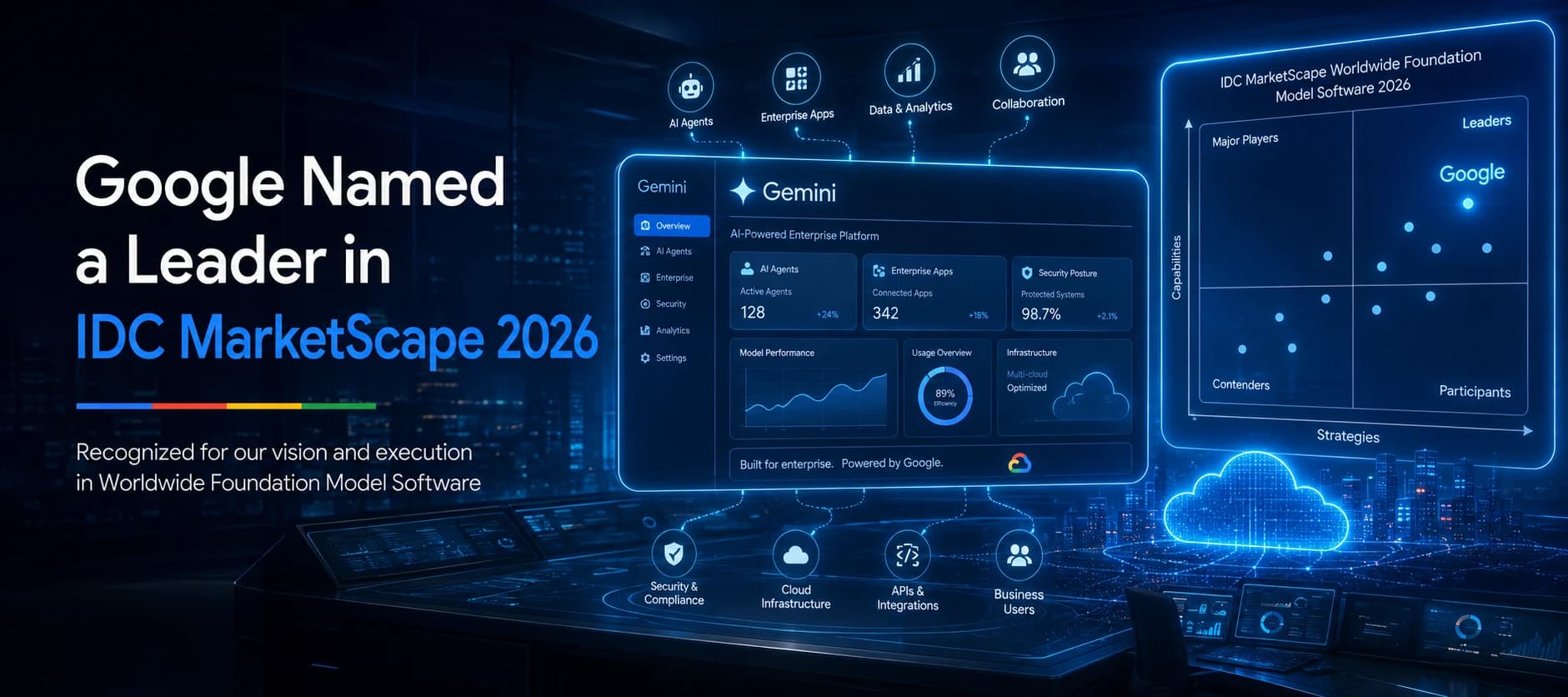
Google has been named a Leader in the 2026 IDC MarketScape for Worldwide Foundation Model Software, highlighting its enterprise-focused AI strategy, Gemini Enterprise platform, and next-generation agentic AI capabilities.
Xcademia Team
Xcademia Research Team
Google Earns Leadership Position in IDC's 2026 Foundation Model Assessment
Google has been recognized as a Leader in the IDC MarketScape: Worldwide Foundation Model Software 2026 Vendor Assessment, reinforcing its position as one of the major players shaping the future of enterprise artificial intelligence.
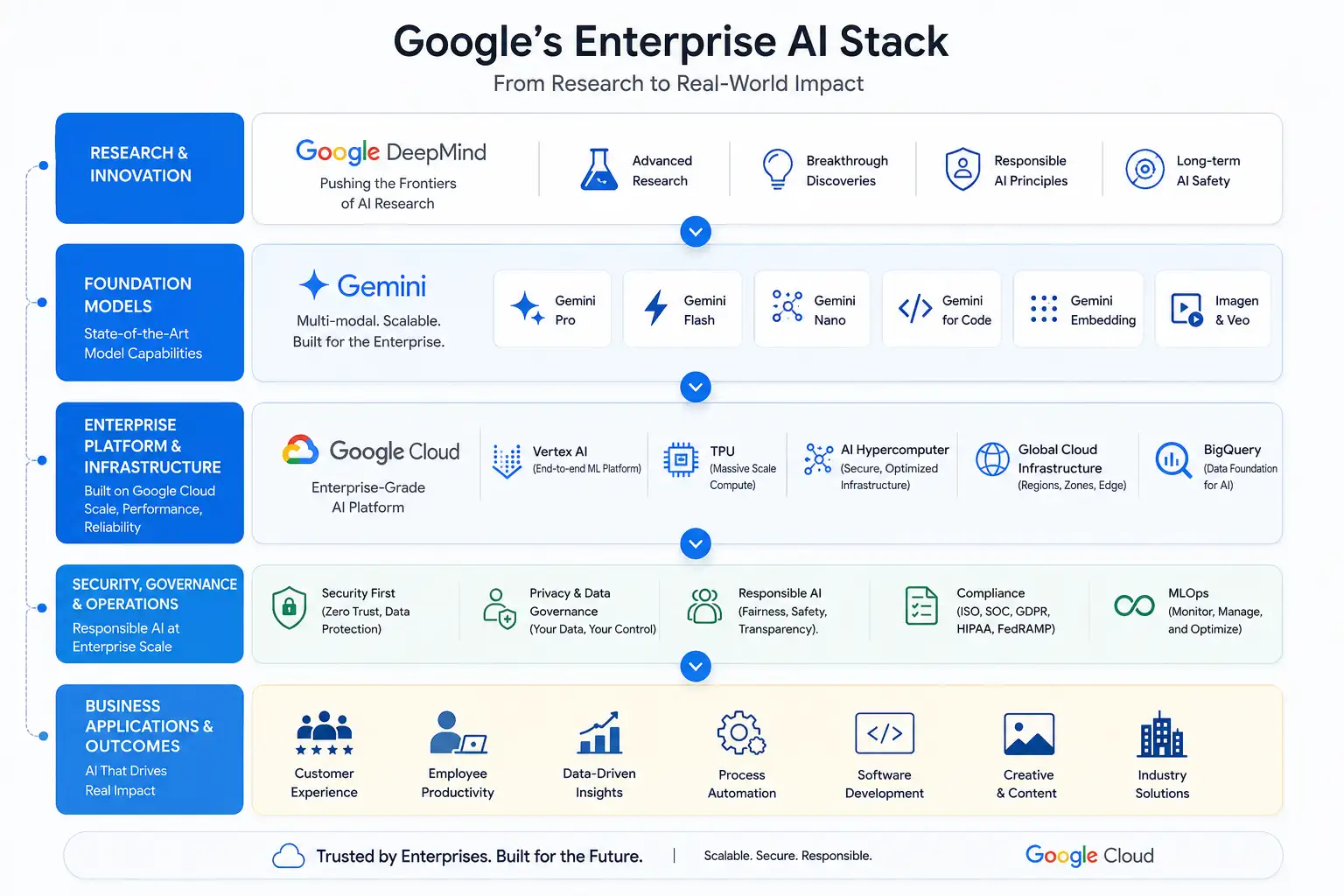
The recognition reflects Google's long-term strategy of combining advanced AI research with enterprise-grade infrastructure, security, governance, and scalability. While many organizations continue to experiment with generative AI, Google is focusing on delivering production-ready AI systems that businesses can deploy securely across critical operations.
According to Google, this recognition validates its approach of transforming cutting-edge research from Google DeepMind into practical business solutions powered by a fully integrated AI technology stack.
Google's Enterprise-First Approach to AI
Long before generative AI became a mainstream business priority, Google invested heavily in the foundational technologies required for large-scale enterprise operations.
These investments include:
Global cloud infrastructure
Enterprise security frameworks
Data management platforms
AI model development
Governance and compliance capabilities
Google argues that successful enterprise AI adoption depends on more than powerful models. Organizations also require reliability, security, predictable performance, and strong governance controls to safely deploy AI at scale.
This enterprise-focused philosophy has become a key differentiator as businesses increasingly move from AI experimentation toward operational deployment.
The Rise of Agentic AI in the Enterprise
One of the central themes of Google's announcement is the transition toward agentic AI.
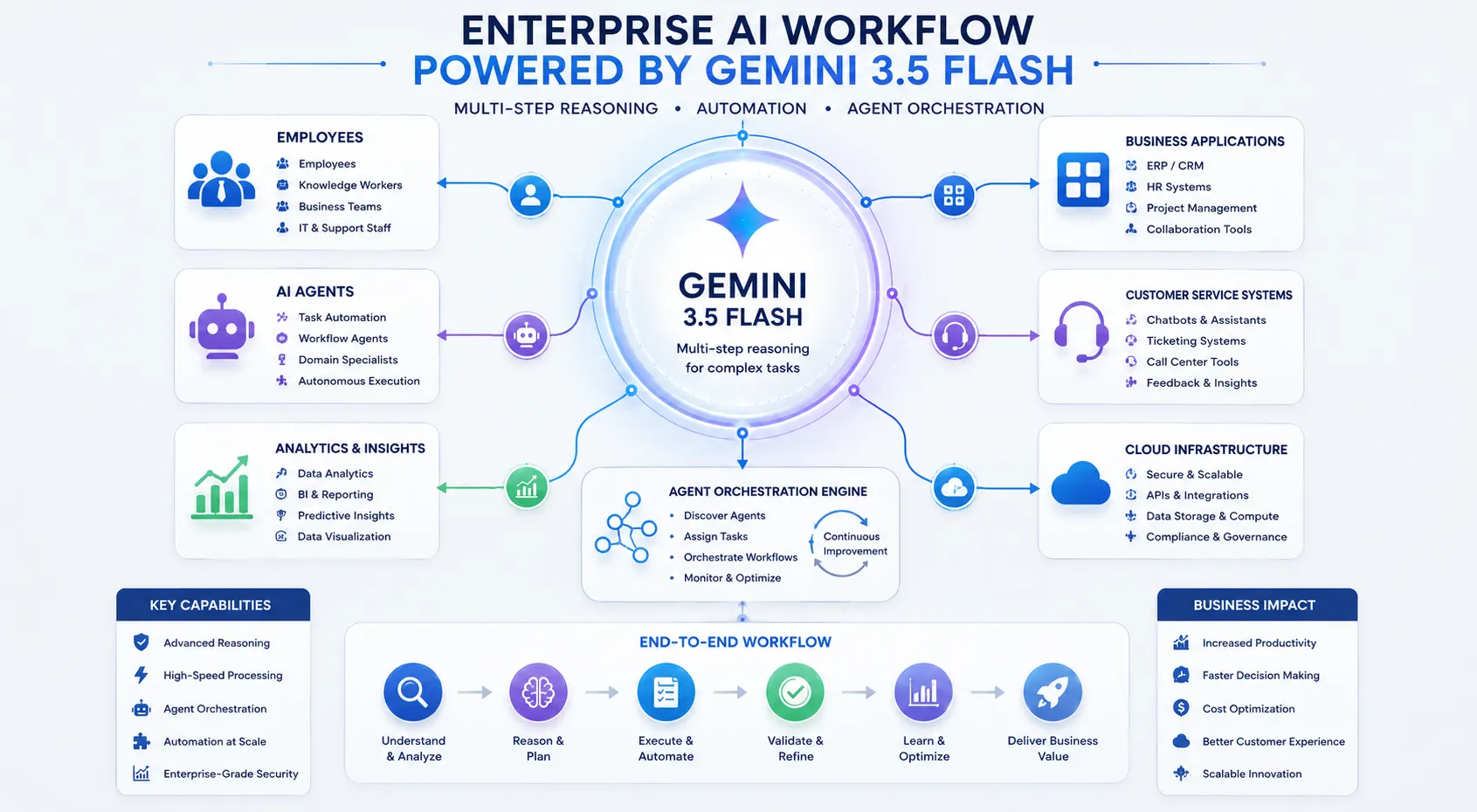
Agentic AI refers to AI systems that can perform multi-step tasks, make decisions, interact with tools, and complete workflows with limited human intervention.
Rather than simply responding to prompts, modern AI agents can:
Access business systems
Retrieve information
Execute workflows
Coordinate multiple tasks
Support decision-making processes
Google believes this shift represents the next major phase of enterprise AI adoption.
According to the company, organizations derive the greatest value from foundation models when they are equipped with memory, tools, and operational autonomy that allow them to function as intelligent digital partners.
Gemini Enterprise: Google's Unified AI Platform
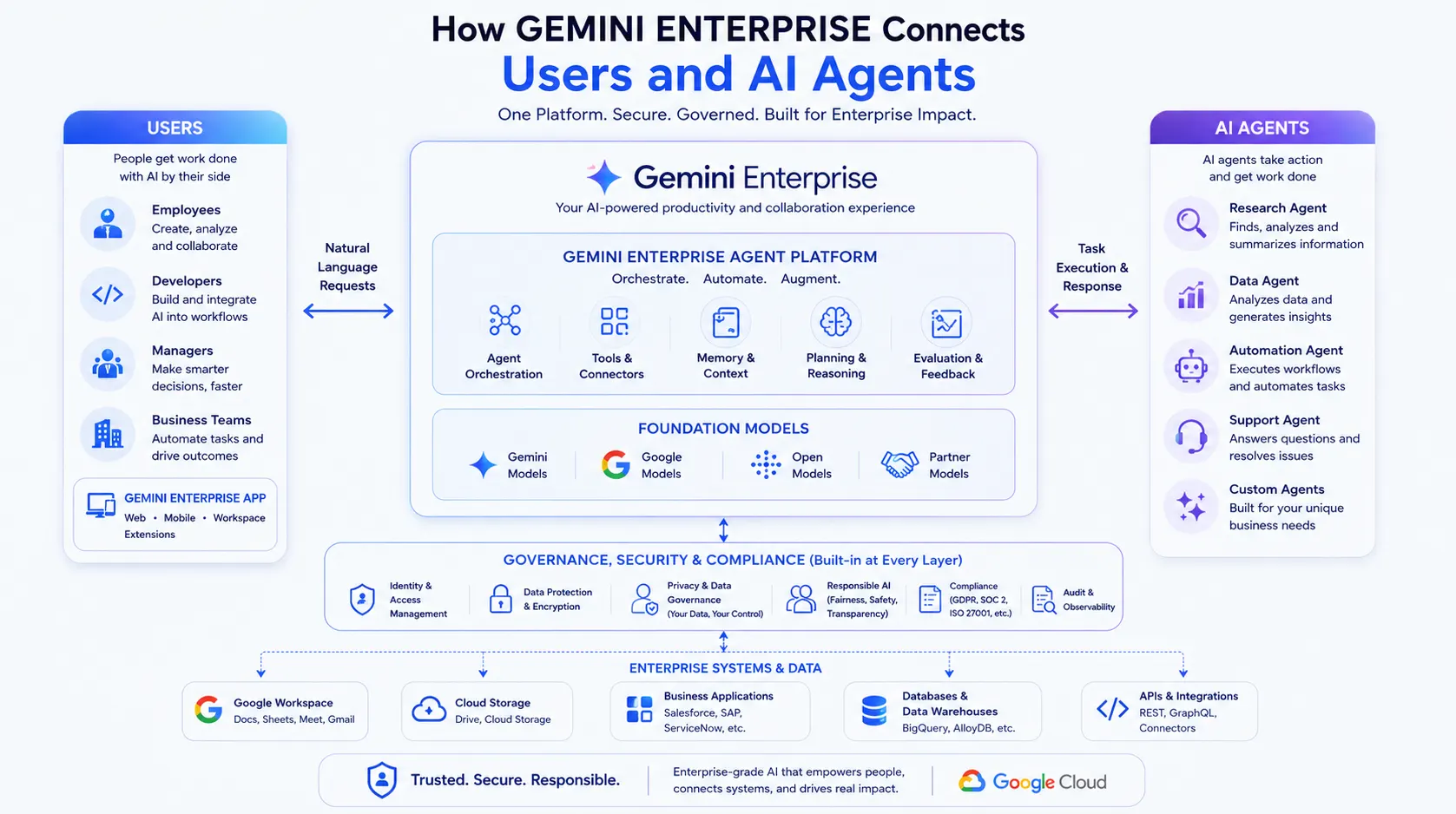
To support this evolution, Google is positioning Gemini Enterprise as its comprehensive enterprise AI ecosystem.
The platform combines:
Gemini Enterprise App
The Gemini Enterprise app serves as the primary interface through which employees interact with AI across business operations.
Business users can leverage AI to:
Generate content
Analyze information
Discover insights
Access enterprise knowledge
Automate routine work
Gemini Enterprise Agent Platform
Behind the scenes, developers use the Gemini Enterprise Agent Platform to build, orchestrate, deploy, and manage AI agents.
The platform simplifies complex tasks such as:
Agent development
Workflow orchestration
Scaling AI deployments
Governance management
Performance optimization
Security enforcement
A key advantage highlighted by Google is that agents created on the platform can be immediately surfaced within the Gemini Enterprise app, allowing employees to access custom AI tools without additional deployment complexity.
Security and Governance Built Into the Foundation
As enterprises adopt increasingly autonomous AI systems, governance and security have become major concerns.
Google emphasizes that Gemini Enterprise incorporates:
Enterprise-grade security controls
Governance frameworks
Risk management capabilities
Cryptographic identity systems
Built-in compliance mechanisms
These controls are integrated directly into the platform rather than added later as separate layers.
This approach is designed to help organizations accelerate AI deployment while maintaining visibility and control over how agents access data and perform actions.
Gemini 3.5 Flash Powers Next-Generation AI Agents
At the core of Google's enterprise AI strategy is Gemini 3.5 Flash, part of the latest Gemini model family announced during Google I/O 2026.
According to Google, Gemini 3.5 Flash is optimized for:
High-speed AI interactions
Multi-step reasoning
Long-horizon agentic tasks
Complex workflow execution
Enterprise-scale deployments
Unlike earlier AI systems that focused primarily on conversational responses, Gemini 3.5 Flash is designed to coordinate sophisticated sequences of actions across business environments.
Google states that the model benefits from a co-design approach in which AI models and underlying hardware infrastructure are developed together. This enables more efficient training and stronger reasoning capabilities across successive model generations.
Expanding Developer Access
Google is also expanding developer access to its latest AI capabilities.
Developers can build AI-powered applications and agents using Gemini 3.5 Flash through:
Gemini Enterprise Agent Platform
Google AI Studio
Antigravity
This flexibility allows organizations to create both internal and customer-facing AI solutions while maintaining consistency across Google's AI ecosystem.
Business users meanwhile gain direct access to Gemini 3.5 Flash through the Gemini Enterprise application, helping organizations bring advanced AI capabilities to everyday workflows.
What This Means for the AI Industry
Google's leadership designation in the IDC MarketScape highlights a broader trend within the AI industry.
Organizations are increasingly evaluating AI vendors not solely on model performance but on their ability to deliver complete enterprise ecosystems that include:
Infrastructure
Security
Governance
Agent development tools
User applications
Operational scalability
As AI adoption matures, businesses are prioritizing platforms capable of supporting production workloads rather than isolated experimentation.
Google's strategy reflects this market shift by emphasizing a unified, end-to-end AI architecture that integrates research, infrastructure, models, applications, and governance into a single platform.
Looking Ahead
The future of enterprise AI is increasingly centered on autonomous agents that can assist employees, automate business processes, and execute complex workflows.
Google's recognition as a Leader in the IDC MarketScape 2026 assessment suggests growing confidence in its ability to deliver enterprise-ready AI solutions that balance innovation with operational requirements.
With Gemini Enterprise, Gemini 3.5 Flash, and its expanding agent ecosystem, Google is positioning itself to play a significant role in the next phase of enterprise AI transformation, where intelligent agents become a standard part of daily business operations.
Source: Google Cloud Blog
About the Author