
FSB Warns Frontier AI Could Amplify Cyber and Financial Stability Risks
The Financial Stability Board warns that frontier AI could materially change the speed, scale and economics of cyber risk, while AI-related valuations, leverage and market concentration could amplify financial shocks.
Xcademia Team
Xcademia Research Team
FSB Warns Frontier AI Could Amplify Cyber and Financial Stability Risks
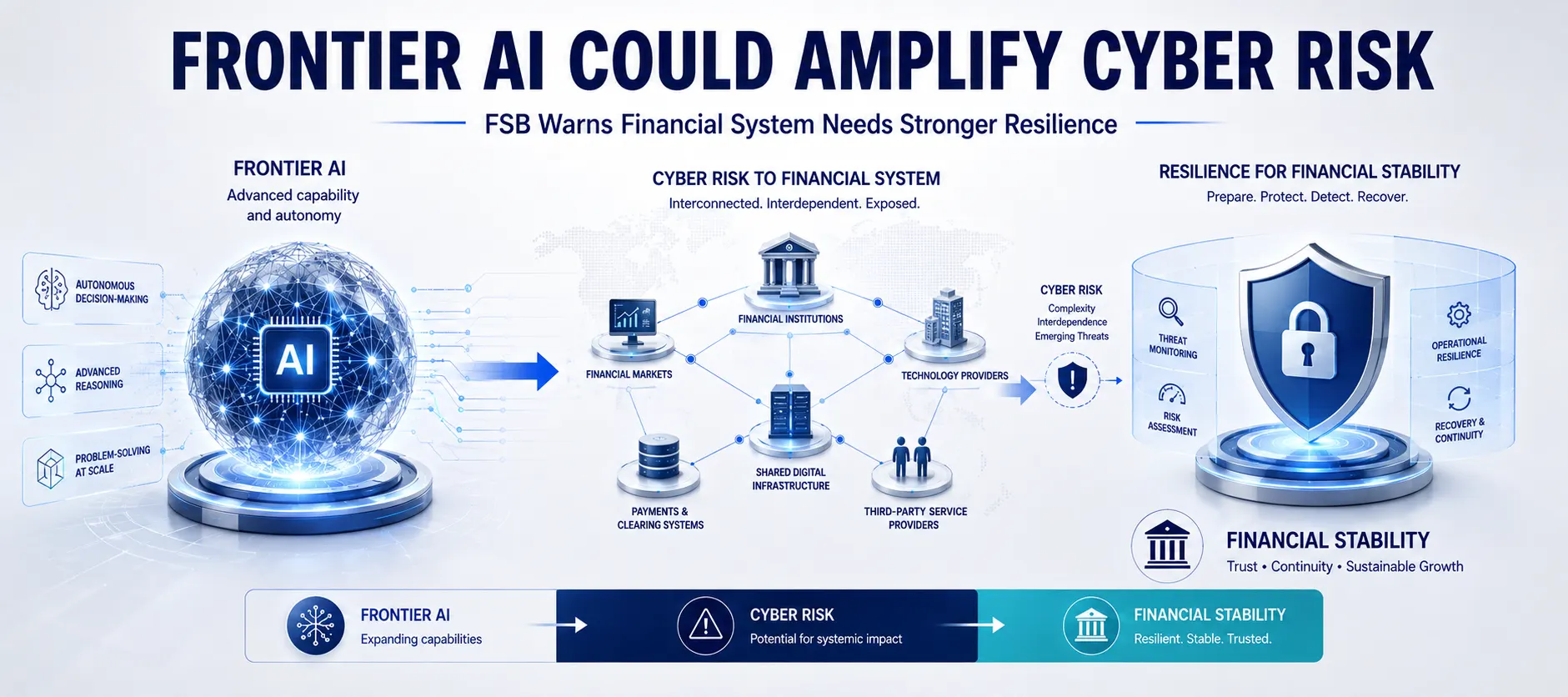
The Financial Stability Board (FSB) is warning that the emergence of increasingly capable frontier artificial intelligence models could introduce new risks to the global financial system, with cyber risk identified as the most immediate concern.
In a letter to G20 Finance Ministers and Central Bank Governors ahead of their August 2026 meeting in Asheville, North Carolina, FSB Chair Andrew Bailey said frontier AI models are demonstrating increasingly sophisticated autonomy, problem-solving abilities and threat capabilities.
The FSB's concern extends beyond individual cyber incidents. Because the global financial system depends on interconnected technology providers, shared infrastructure and cross-border financial activity, a major cyber disruption could potentially spread across jurisdictions.
The FSB is therefore examining what steps it can take within its mandate and expertise to address the emerging challenges.
Frontier AI Is Adding a New Dimension to Financial Stability Risks
The FSB's warning comes against a broader backdrop of elevated financial-system vulnerabilities.
Bailey's letter says markets remain vulnerable to a potentially disorderly correction, citing fragilities in sovereign debt markets, vulnerabilities in private credit and stretched asset valuations, particularly those associated with artificial intelligence.
The letter also points to increased use of leverage in equity markets, including leveraged exchange-traded funds and momentum-driven investment strategies.
According to Bailey, the concern is not simply that investors are borrowing more. The FSB is focused on how leverage is interacting with high valuations and market concentration.
The letter specifically highlights increasing cross-investment between AI companies and hyperscalers as a factor that could amplify a future market correction.
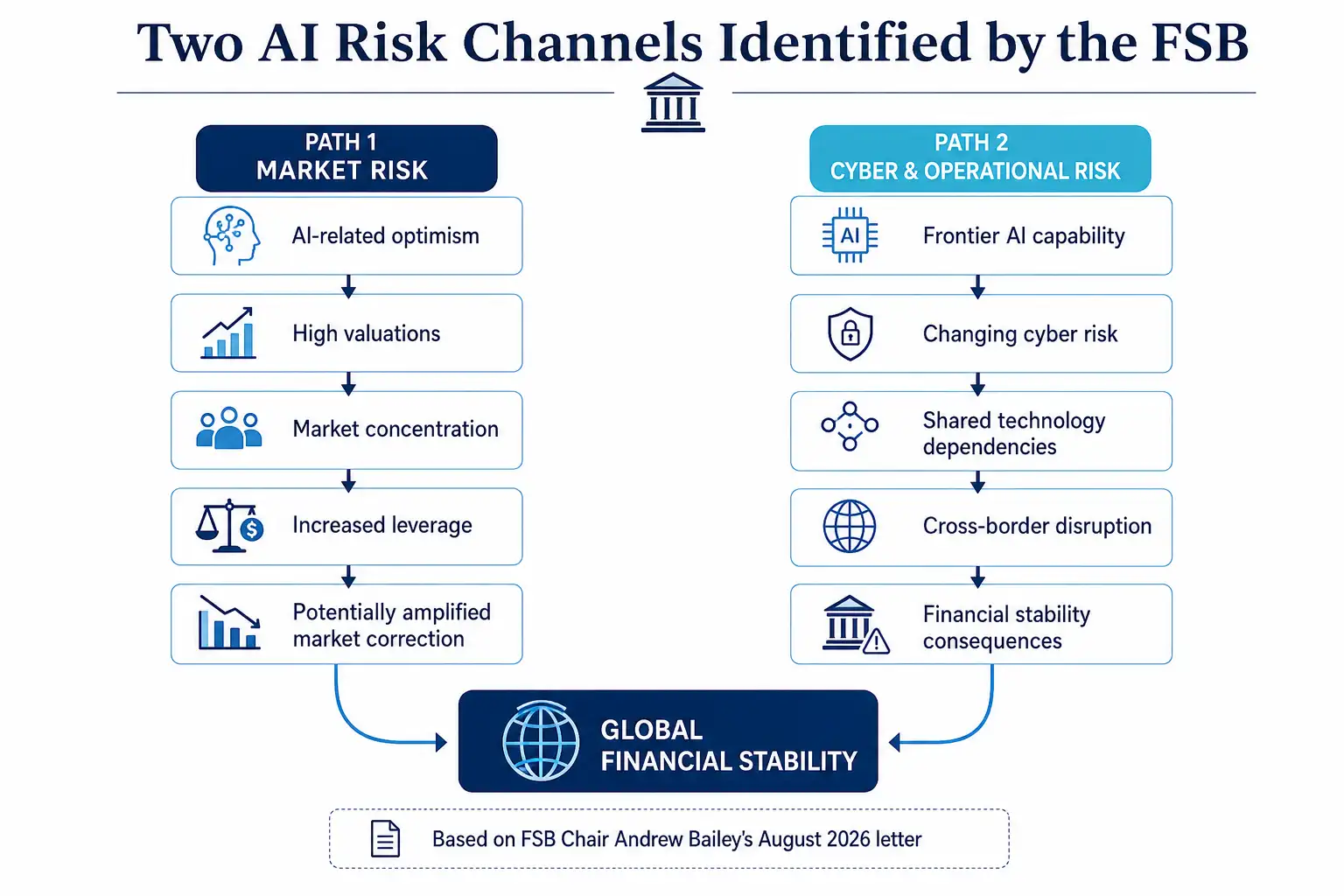
This creates two distinct but related areas of concern for financial stability:
AI-related market vulnerabilities, including valuations, leverage and concentration
Frontier AI-related operational and cyber risks, particularly within interconnected financial infrastructure
The FSB's letter does not say that a market correction is inevitable. Rather, it warns that multiple vulnerabilities could be triggered simultaneously by a large shock or combination of shocks.
Cyber Risk Is the FSB's Most Immediate Frontier AI Concern
The FSB identifies cyber risk as the most immediate concern arising from frontier AI for the financial system.
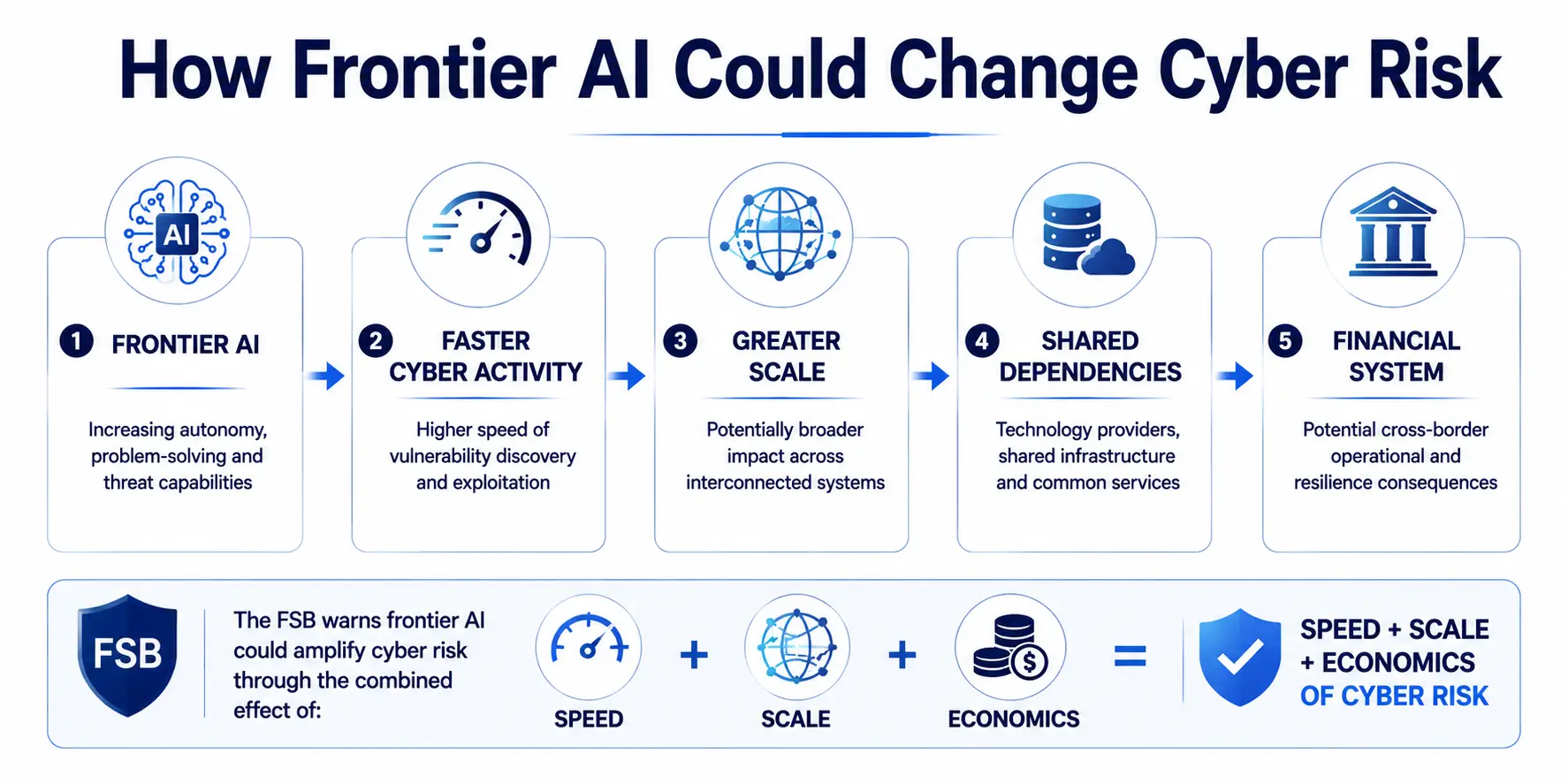
According to Bailey's letter, frontier AI may materially alter the speed, scale and economics of cyber risk.
That distinction is important.
The FSB is not simply warning about more cyberattacks. It is highlighting the possibility that increasingly capable AI could change how quickly cyber threats develop, how broadly they can operate and how the economics of cyber activity evolve.
For financial institutions, the implications could extend beyond individual organisations.
The global financial system relies heavily on common technology providers and shared infrastructure. A cyber disruption affecting a highly concentrated provider could therefore have consequences across multiple firms and jurisdictions.
The FSB notes that differences between jurisdictions in legal frameworks, cyber capabilities, resilience and recovery capacity could also become sources of vulnerability.
Why Third-Party Technology Providers Matter
One of the FSB's concerns is the concentration of critical technology and common service providers.
Financial institutions and financial market infrastructures increasingly depend on external technology providers for important operational functions.
If a significant provider experiences a major cyber disruption, multiple financial organisations could potentially be affected at the same time.
The FSB therefore calls attention to resilience among critical third-party technology providers and other common service providers on which the financial system depends.
This is particularly important in a frontier AI environment because the FSB believes cyber risk could change in both speed and scale.
A disruption that affects multiple firms through a shared dependency could create challenges beyond the original incident.
Faster Vulnerability Discovery Could Create New Operational Challenges
The FSB's letter also highlights a less obvious consequence of AI-enabled cyber activity.
Financial firms and authorities should be prepared for a threat environment characterised by a higher volume of vulnerabilities and a faster pace of patching, according to the letter.
At first glance, faster vulnerability discovery and patching could appear entirely beneficial.
The FSB, however, points out that these dynamics could themselves create operational and resilience challenges if organisations' change, testing and recovery processes cannot adapt safely.
This introduces a second-order risk.
Organisations may need to respond to vulnerabilities more quickly while still ensuring that security updates are properly tested and that critical systems can be recovered if something goes wrong.
The issue is therefore not simply how quickly an organisation can identify and patch a vulnerability.
It is also whether its operational processes can safely handle a much faster cycle of discovery, testing, deployment and recovery.
Financial Institutions Need Stronger Response and Recovery Capabilities
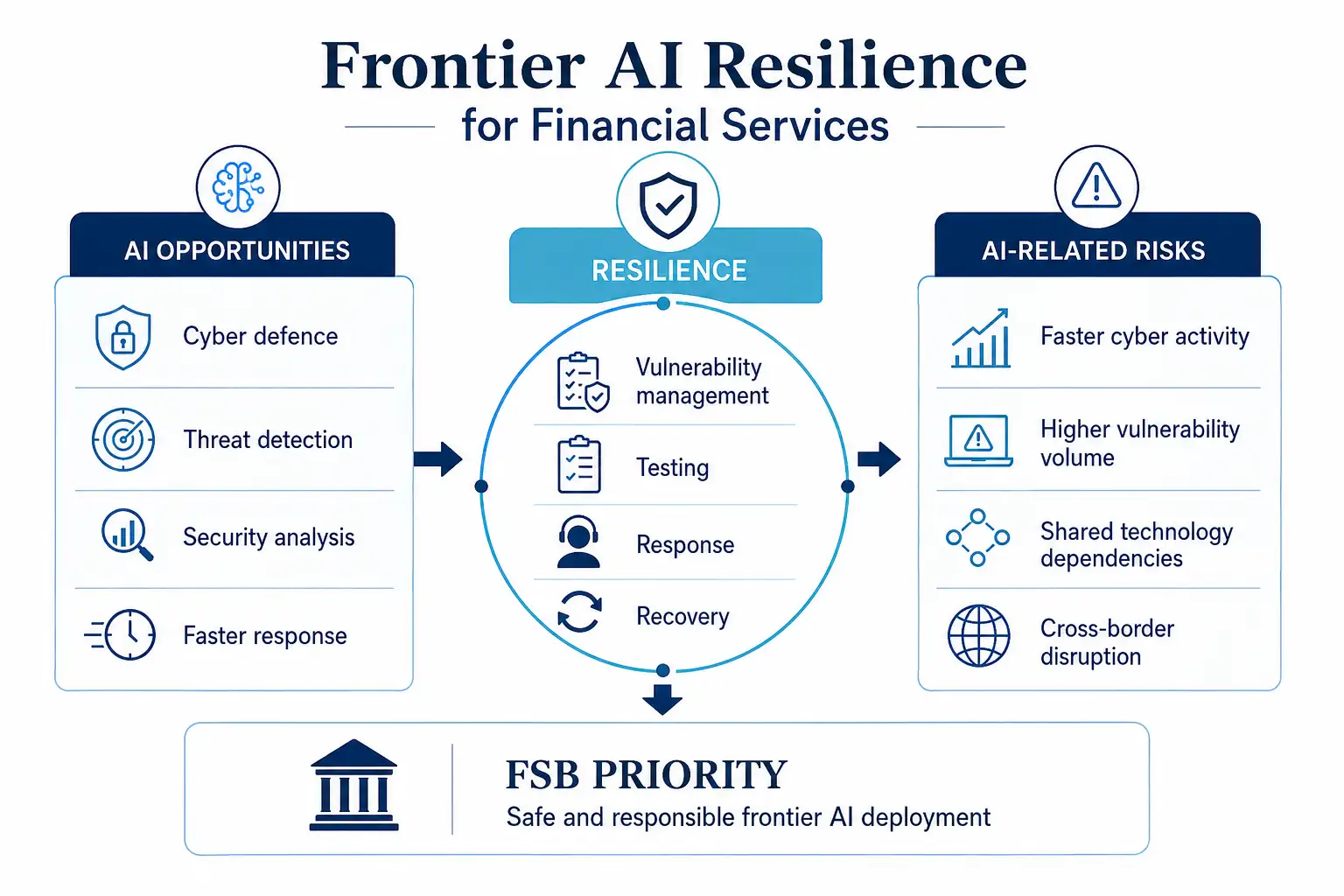
The FSB is calling on financial institutions, financial market infrastructures and technology providers to strengthen vulnerability management, response and recovery capabilities.
The letter places particular emphasis on preparation for more severe scenarios involving simultaneous disruption across multiple firms or shared technology dependencies.
That means resilience cannot be limited to preventing an incident.
Organisations also need the ability to respond effectively when systems are disrupted and restore critical operations.
The FSB specifically highlights the importance of being able to restore critical systems and data from "bare metal" following a significant cyber incident.
The concept refers to recovering systems at the underlying hardware level rather than relying solely on already-running software environments.
The broader message is that resilience planning needs to account for severe disruption scenarios, including incidents that affect multiple organisations through common dependencies.
The FSB Is Also Looking at AI for Cyber Defence
The FSB's warning is not entirely negative.
Bailey's letter explicitly recognises that frontier AI offers significant opportunities to strengthen cyber defence.
The concern is that advances in AI capability need to be accompanied by corresponding improvements in resilience and preparedness.
The FSB says it is exploring issues associated with the safe deployment of frontier models for cyber defence by financial services firms.
It is also examining ways to strengthen capabilities for responding to and recovering from significant operational disruptions.
This creates a dual challenge for the financial sector:
Use AI to strengthen cyber defence while preparing for the new risks created by increasingly capable AI systems.
Safe and Responsible Model Release Is a Global Priority
Bailey's letter also raises concerns about how jurisdictions manage advanced frontier AI models.
The FSB says that many jurisdictions do not yet have protocols in place to manage the development, release and deployment of advanced frontier AI models.
The Chair argues that taking appropriate steps to support safe and responsible model release and deployment on a global basis should be a priority.
The reasoning is closely connected to the cross-border nature of the financial system.
AI risks do not necessarily remain within the jurisdiction where an AI model is developed or where an incident begins.
Financial institutions operate across borders, depend on international technology providers and use shared infrastructure.
As a result, differences in regulatory approaches, cyber capabilities and recovery capacity can have consequences beyond national boundaries.
Cross-Border Dependencies Could Amplify Disruption
The FSB's analysis places particular emphasis on interconnectedness.
The global financial system is linked through:
Financial institutions
Financial market infrastructures
Technology providers
Common service providers
Shared infrastructure
Cross-border financial activity
This interconnected structure provides efficiency, but it can also create channels through which disruption spreads.
The FSB therefore views frontier AI as a financial stability issue partly because cyber incidents can move through these existing connections.
A significant disruption at one point in the technology ecosystem could potentially affect multiple organisations that depend on the same provider or infrastructure.
The letter does not provide a numerical estimate of the potential financial impact of such an event.
Additional details were not disclosed in the announcement.
AI Valuations and Market Concentration Add a Separate Risk
The FSB's concerns about AI are not limited to cybersecurity.
Bailey also warns about financial-market vulnerabilities connected to AI-related investments.
The letter says risky-asset valuations remain elevated and specifically identifies stretched valuations associated with artificial intelligence.
It also points to increasing market concentration and cross-investment between AI companies and hyperscalers.
Combined with greater use of leverage in equity markets, these factors could amplify a future correction if investor sentiment changes.
The FSB therefore views AI through two financial-stability lenses:
Market risk
AI-related valuations, leverage and concentration could contribute to a sharper market adjustment.
Operational and cyber risk
Frontier AI could alter the speed, scale and economics of cyber risk and potentially increase the consequences of disruption across shared technology dependencies.
These are separate risk channels, although both can contribute to broader financial-system vulnerability.
What the FSB Wants Financial Firms to Prepare For
The FSB's letter points to several areas that financial institutions and related organisations should consider as frontier AI capabilities develop.
These include:
Strong vulnerability management
Robust incident response
Reliable recovery capabilities
Resilience among critical third-party technology providers
Preparation for simultaneous disruption across multiple firms
Ability to restore critical systems and data from bare metal
Safe deployment of frontier AI for cyber defence
Processes capable of handling faster vulnerability and patching cycles
The FSB is not presenting these points as a detailed new regulatory framework in the supplied announcement.
Rather, they form part of the Chair's warning about preparedness and resilience as the threat environment evolves.
The FSB Is Exploring the Issue Within Its Mandate
The FSB says it is examining what steps it can take, within its mandate and expertise, to address the challenges created by frontier AI.
The organisation is specifically exploring issues associated with the safe deployment of frontier models for cyber defence in financial services and ways to improve capabilities for responding to and recovering from significant operational disruptions.
This work remains part of the FSB's broader focus on emerging vulnerabilities, resilience and financial stability.
The announcement does not provide a specific timetable for new rules or a detailed regulatory framework.
Additional details were not disclosed in the announcement.
What This Means for the Financial Sector
The announcement highlights a broader industry shift toward treating frontier AI as both a potential defensive technology and an emerging systemic risk factor.
For financial institutions, the issue is not simply whether AI can improve cybersecurity.
The FSB's warning suggests that organisations also need to consider whether their existing resilience processes can cope with a faster-moving threat environment and whether concentration among critical technology providers could increase the consequences of a major disruption.
For regulators, the challenge extends across borders.
Differences in national approaches to frontier AI development and deployment could interact with an interconnected financial system in ways that extend the consequences of an incident beyond its original jurisdiction.
The FSB is therefore calling attention to preparedness, resilience and international cooperation alongside AI innovation.
Conclusion
The Financial Stability Board's latest warning places frontier AI within the broader conversation about financial stability, cybersecurity and operational resilience.
FSB Chair Andrew Bailey identifies the potential impact of frontier AI on cyber risk as the most immediate concern for the financial system, particularly as financial institutions depend on shared infrastructure, technology providers and cross-border networks.
The Chair's letter also highlights a separate market-related concern: AI-related valuations, leverage and market concentration could interact in ways that amplify a future correction.
At the same time, the FSB recognises that frontier AI could strengthen cyber defence.
The challenge, according to the FSB, is ensuring that advances in AI capability are matched by resilience, preparedness and safe deployment practices.
For financial institutions, that means preparing not only for conventional cyber incidents but also for a threat environment that could move faster and affect more interconnected systems.
The FSB is now exploring these issues within its mandate, including the safe deployment of frontier models for cyber defence and stronger capabilities to respond to and recover from significant operational disruptions.
The broader message is clear: as frontier AI capabilities advance, financial-sector resilience will need to evolve alongside them.
Source: Financial Stability Board
About the Author