
AGNTCon + MCPCon Japan 2026 to Focus on Production-Ready Agentic AI
The Linux Foundation has announced the AGNTCon + MCPCon Japan 2026 schedule, bringing developers and industry leaders to Tokyo to explore agent security, interoperability, evaluation, governance and production-scale agentic AI.
Xcademia Team
Xcademia Research Team
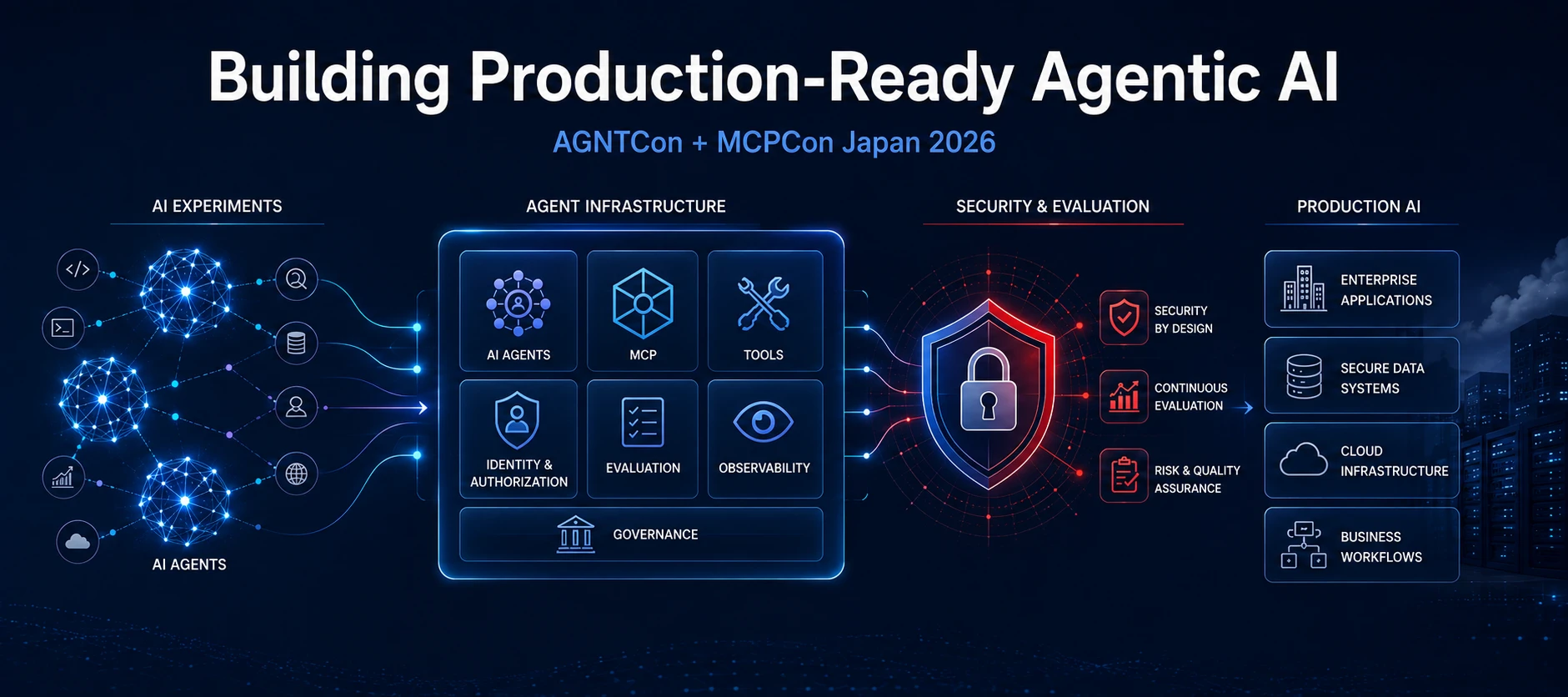
The move from experimental AI agents to production systems is creating a new set of engineering and security challenges.
The Linux Foundation's Agentic AI Foundation (AAIF) has published the official schedule for AGNTCon + MCPCon Japan 2026, a two-day conference scheduled for September 10-11, 2026, at Belle Salle Shibuya Garden in Tokyo.
The event will bring together developers, researchers, technology companies and open source contributors to discuss how agentic AI systems can be designed, evaluated, secured and operated in real-world environments.
The program focuses on practical issues emerging as AI agents gain access to enterprise data, internal tools and business workflows.
These include trust boundaries, authorization, auditability, agent evaluation, interoperability, observability, security and multi-agent coordination.
According to the Linux Foundation, the program includes more than 40 sessions across nine tracks.
AGNTCon + MCPCon Japan Targets Production Agentic AI
The conference is being organized around a central challenge facing the agentic AI ecosystem: moving beyond prototypes toward systems that can operate reliably in production.
As AI agents become capable of interacting with tools, applications and enterprise data, organizations must address questions that go beyond model performance.
For example:
What should an AI agent be allowed to access?
How should trust be established between multiple agents?
Where should approval gates be enforced?
How can agent actions be audited?
How can organizations evaluate agent behavior before deployment?
How should different agent frameworks and protocols interoperate?
The Linux Foundation says these practical challenges are reflected throughout the conference program.
Mazin Gilbert, Executive Director of the Agentic AI Foundation, said the adoption of open agent frameworks and protocols in Japan reflects demand for reliable, secure and interoperable AI systems.
He also highlighted areas including tool integration, sandboxing, multi-agent coordination, evaluation and enterprise governance.
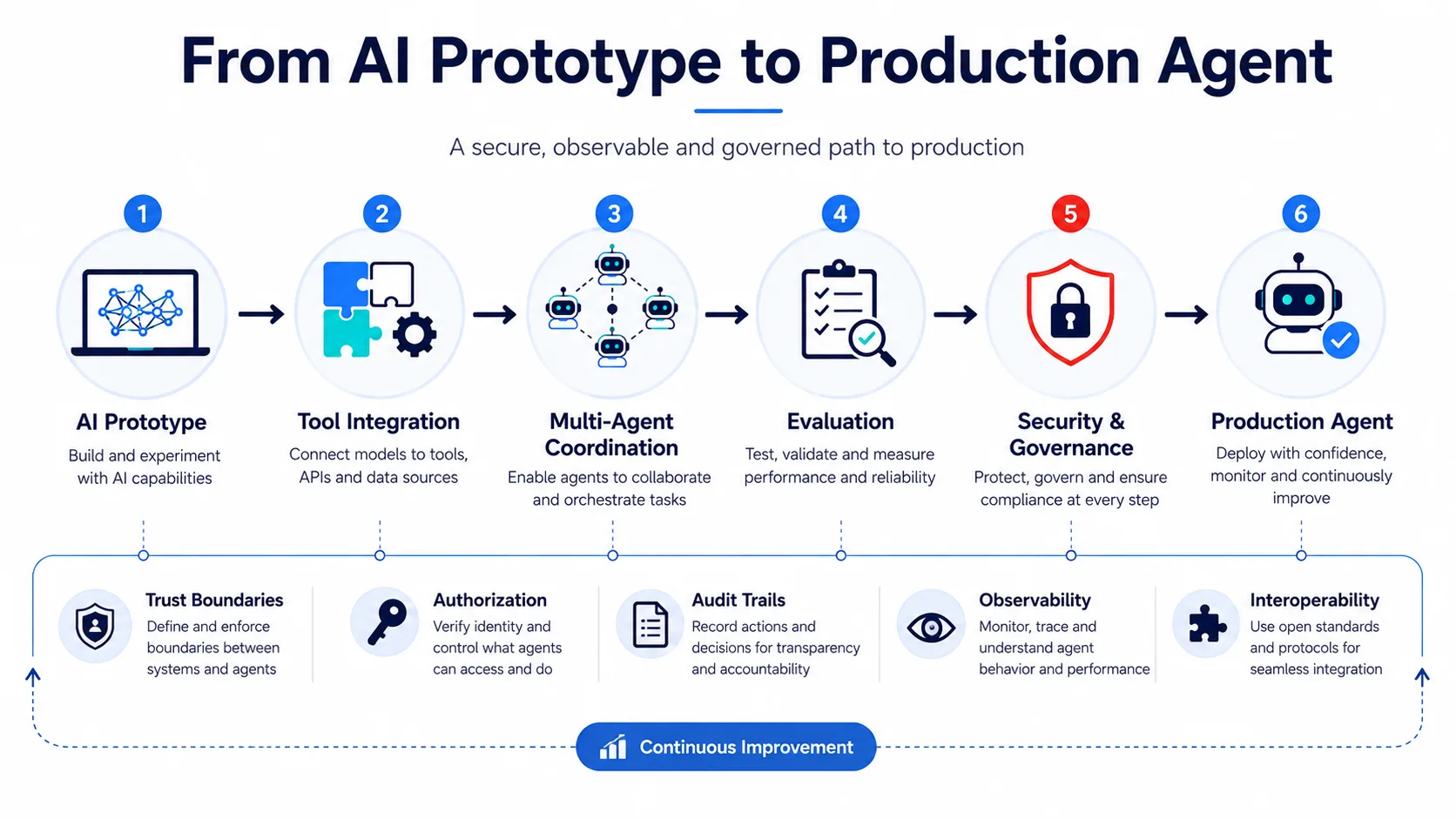
Trust Boundaries Become Critical for Agent Systems
One of the major themes at AGNTCon + MCPCon Japan is the design of trustworthy agent systems.
As multiple agents interact with each other and with enterprise resources, organizations need to establish clear boundaries around access and decision-making.
The conference program specifically highlights questions around:
Agent permissions
Trust boundaries
Human oversight
Approval mechanisms
Audit trails
Multi-agent interactions
One highlighted session is "Designing Trust Boundaries for Agent-to-Agent Systems: Lessons Learned from a Technical PoC", presented by Ryuji Iijima of SoftBank Corp.
The session reflects a broader engineering challenge: agent-to-agent communication introduces additional interactions that need to be considered when designing secure systems.
The source does not provide technical details about SoftBank's proof of concept beyond the session description.
Additional details were not disclosed in the announcement.
Building an Open Agentic Stack
The conference also focuses on the growing ecosystem of open source frameworks and protocols supporting agentic AI.
The Linux Foundation notes that production agent systems can involve multiple components, including:
Open source frameworks
Orchestration layers
Authentication systems
Observability tools
Multi-agent architectures
Communication protocols
This means building an agent platform can involve integrating multiple technologies rather than deploying a single framework.
One highlighted session, "What's Missing in the Open Agentic Stack: Lessons From OSS Integration," will feature Tatsuya Sato and Satoshi Ito from Hitachi.
The session is positioned around lessons from integrating open source technologies into agentic systems.
This emphasis on integration reflects an important issue for the emerging agent ecosystem: individual tools and frameworks need to work together effectively if organizations are going to build larger production systems.
Agent Evaluation Moves Into Focus
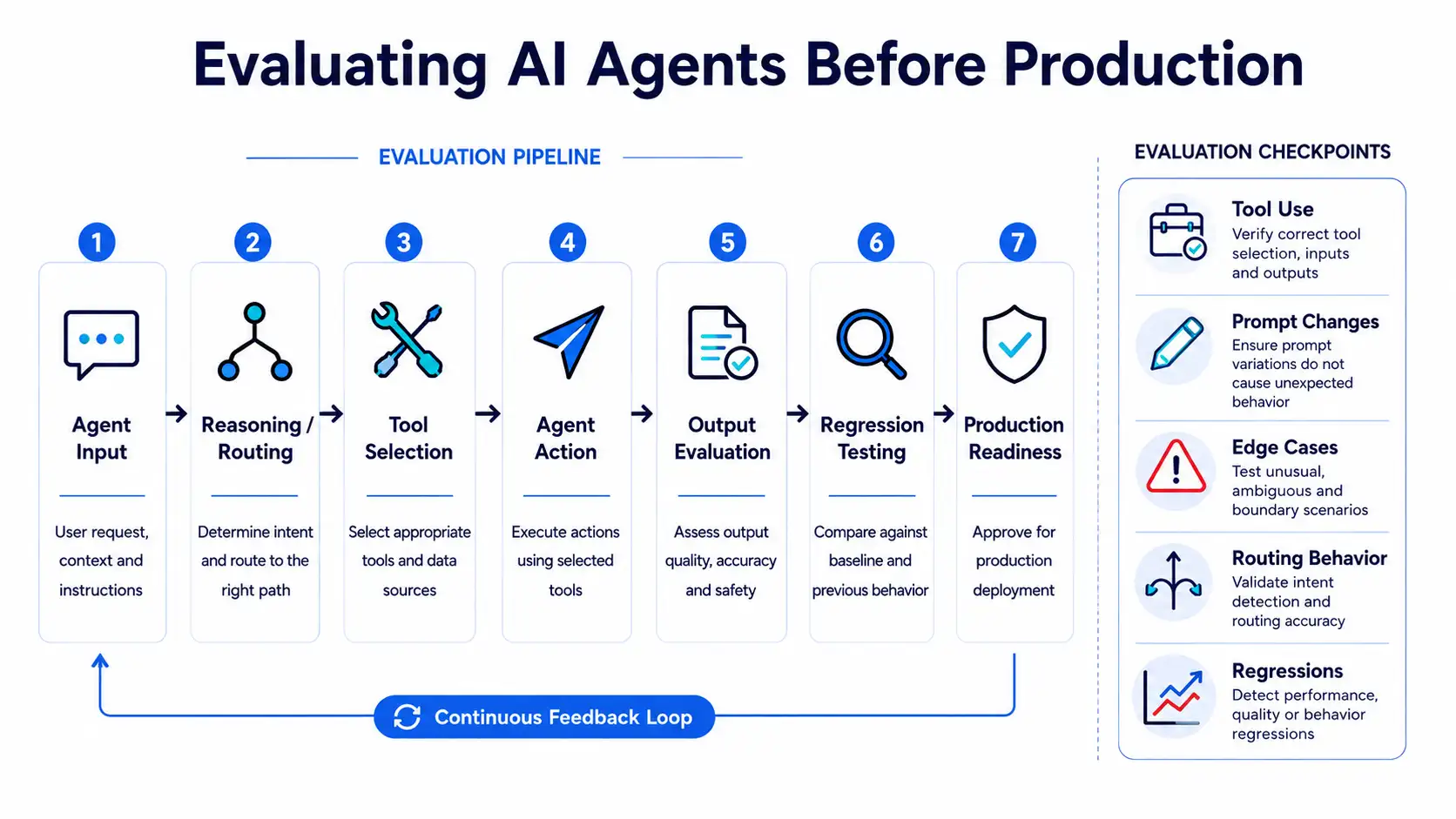
Agent evaluation is another major theme of the event.
Traditional software testing can verify whether an application produces expected outputs under predefined conditions. Agentic systems can introduce more variable behavior because agents may make decisions, select tools, follow different paths and respond differently to changing context.
The conference therefore includes sessions focused on evaluating agent behavior before production deployment.
One highlighted session is "From Clicks To Context: Building an Open-Source Evaluation Pipeline for AI Agents," presented by Inês Bolaños of PagerDuty.
The program describes evaluation areas including:
Routing behavior
Tool usage
Prompt changes
Regression testing
Edge cases
Agent behavior measurement
The objective is to make agent behavior more measurable and repeatable before systems reach production.
Nine Tracks Cover the Agentic AI Ecosystem
AGNTCon + MCPCon Japan will feature nine technical tracks covering different aspects of agentic AI development and deployment.
The Linux Foundation identifies areas including:
Building Reliable Agent Systems
Multi-Agent and Distributed Systems
Agentic Engineering
Interoperability, Protocols & Standards
The program also covers areas related to governance, security, observability and enterprise deployment.
Speakers are expected from a broad group of technology companies and organizations, including Adobe, Anthropic, Google, IBM, JPMorgan Chase, Microsoft, Red Hat and Uber, alongside Japanese organizations such as Hitachi, SoftBank and NTT.
The event therefore brings together both international technology companies and Japan's open source and AI engineering community.
MCPCon Brings Protocols and Tool Integration Into the Discussion
The MCPCon portion of the event focuses specifically on the Model Context Protocol (MCP) ecosystem.
The Linux Foundation says the MCP track will cover topics including:
Authorization and identity
Transport specifications
Task lifecycle specifications
MCP infrastructure
Operating MCP infrastructure at scale
The program will also feature a keynote from David Soria Parra, a Member of Technical Staff at Anthropic and co-creator of the protocol.
MCP has become an important part of discussions around connecting AI applications and agents with external tools and data.
The focus on authorization, identity and infrastructure at the conference shows that protocol design is becoming closely connected with the operational requirements of agentic systems.
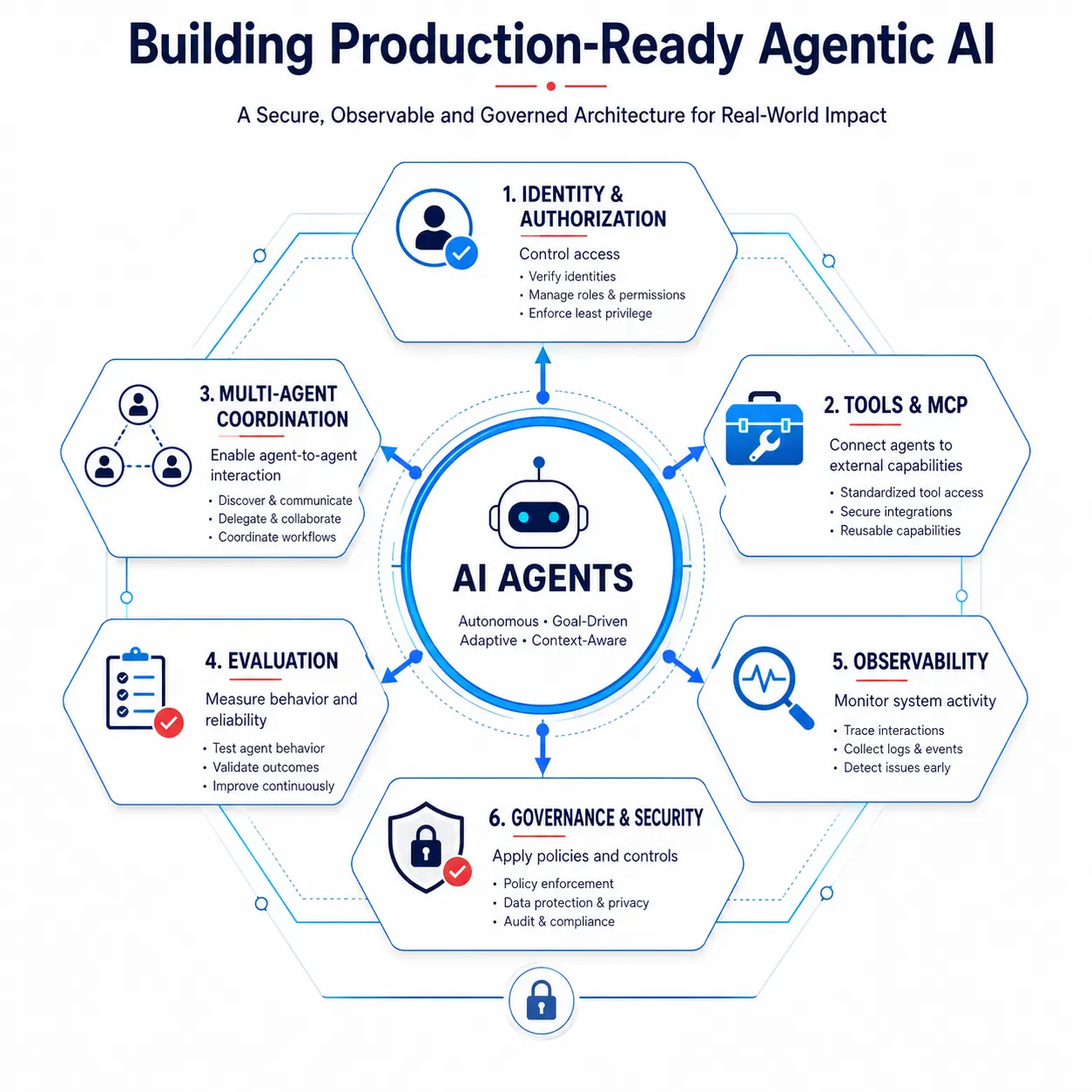
Security and Governance Are Becoming Core Agent Engineering Issues
Agentic AI introduces a different operational model from conventional applications.
An agent may need to access tools, interact with other agents, retrieve information and perform actions based on changing inputs.
That creates additional questions around authorization and governance.
The conference program specifically highlights:
Security:
How can organizations establish appropriate controls around agents and their interactions?
Governance:
Where should policies and approval mechanisms be enforced?
Observability:
How can organizations understand agent activity in production?
Auditability:
How can agent actions be recorded and reviewed?
Interoperability:
How can agents and tools communicate across different technologies?
These concerns are increasingly connected rather than isolated.
A production agent architecture may need to address several of them simultaneously.
Certification and Hands-On Opportunities
The event will also provide attendees with discounted access to the Model Context Protocol Associate (MCPA) Certification.
According to the Linux Foundation, the certification pathway provides developers and architects with an opportunity to validate technical proficiency in MCP standards, tooling and ecosystem practices.
This adds a practical skills component to the conference alongside the technical sessions.
The announcement does not provide further details about the certification examination format or assessment methodology.
Additional details were not disclosed in the announcement.
AGNTCon + MCPCon Japan Takes Place in September
AGNTCon + MCPCon Japan 2026 is scheduled for:
September 10-11, 2026
Location: Belle Salle Shibuya Garden, Tokyo, Japan
The Linux Foundation says standard registration is available until September 11 at 23:59 JST.
The conference is supported by industry sponsors including:
Platinum: Hitachi
Gold: Akamai
Gold: Auth0 by Okta
Gold: Neo4j
Gold: StepFun
The event is hosted by the Agentic AI Foundation, an initiative of the Linux Foundation focused on the open agentic AI stack.
The Agentic AI Foundation and the Open Agentic Stack
The Agentic AI Foundation describes itself as a neutral home for development of an open standard agentic AI stack.
The foundation's founding projects include:
MCP
goose
agentgateway
According to the Linux Foundation, these projects are intended to support standards and protocols that allow agents to operate across platforms.
The foundation emphasizes transparent governance and broad industry participation as the agentic AI ecosystem develops.
The broader objective is to establish infrastructure that can support agentic AI beyond individual vendors or proprietary platforms.
Why Production-Ready Agentic AI Is Becoming the Focus
The conference's agenda reflects a broader change in how organizations are approaching AI agents.
Early AI deployments often focused on experimentation and individual applications.
Production deployments introduce additional requirements.
Agents need to operate within defined permissions. Their interactions with tools need to be controlled. Their behavior needs to be evaluated. Systems need to be observable, and organizations need mechanisms for governance and oversight.
This means the engineering challenge is no longer limited to building an agent that can perform a task.
It increasingly involves building an environment in which the agent can operate safely and reliably.
The AGNTCon + MCPCon Japan program reflects this transition by bringing security, interoperability, evaluation and governance into the same conversation as agent development.
What This Means for Developers and Enterprises
For developers, the conference highlights the growing importance of engineering practices around agent reliability, evaluation, tool integration and interoperability.
For enterprise technology teams, the focus on authorization, governance and observability highlights the operational requirements that emerge when agents interact with business systems.
For the open source community, the event provides a forum for discussing how frameworks, protocols and infrastructure can work together.
The development reflects growing demand for common approaches to building and operating agentic AI systems.
It does not mean there is a single architecture or technology that organizations should adopt.
Instead, the conference agenda illustrates the range of technical decisions involved in moving agentic AI into production.
The Bigger Question: How Do Agents Operate Safely at Scale?
The next stage of agentic AI development is likely to depend on more than increasingly capable models.
Production systems also need mechanisms for managing interactions, permissions, tools, evaluation and governance.
That makes infrastructure and standards an increasingly important part of the agentic AI discussion.
AGNTCon + MCPCon Japan 2026 is positioned around these practical challenges, bringing together contributors from the open source ecosystem and enterprise technology organizations.
The event's emphasis on production readiness suggests that the conversation is shifting from what AI agents can do toward how organizations can build and operate them responsibly at scale.
Conclusion
AGNTCon + MCPCon Japan 2026 highlights how the agentic AI conversation is moving toward the practical requirements of production deployment.
The event will bring together developers, open source contributors and enterprise technology leaders to discuss challenges spanning agent reliability, multi-agent coordination, security, evaluation, interoperability, observability and governance.
The emphasis is significant because deploying an AI agent into a production environment involves more than connecting a model to a prompt.
Organizations also need to consider what agents can access, how they interact with tools and other agents, how their behavior is evaluated and how their activity can be monitored and governed.
The MCPCon track adds another important dimension by focusing on protocols, authorization, identity and infrastructure for the growing MCP ecosystem.
For developers and technology leaders, the conference offers a view into the engineering challenges emerging around production agentic AI.
The broader direction is clear: as AI agents move closer to real business workflows, reliability, security, interoperability and governance are becoming core parts of the agent engineering stack.
Source: The Linux Foundation
About the Author